Category: Translation

  • War and Peace – Morihei Ueshiba, Lost in Translation

    War and Peace – Morihei Ueshiba, Lost in Translation

    “The Art of War” vs “The Art of Peace“

    Translation can be a tricky and often thankless task.

    That gets more problematic these days with the rise of AI translation methods.

    I’ll note here that AI translation is often very, very, good, but on niche topics, like Aikido, it’s often very, very bad, and that’s largely due to small mis-translations that are difficult to catch unless you have the ability to read and understand the original text. In other words, AI can accelerate translation, but not replace it (yet).

    For example, I’ve seen both Gemini Pro and ChatGpt mistranslate things as simple as Morihei Ueshiba’s name. Another AI translation text translated the phrase “The Art of Peace” in English as “The Technique of Peace” in Japanese – “technique” in the sense of something like “shiho-nage”. Obviously, this leads to the possibility of misunderstanding to a reader who does not (or can not) compare the translation to the original text.

    Still, critical evaluation of translated text, and alternative translations, are an important part of examining the historical record.

    I’ve discussed some of the issues surrounding translation in modern Aikido here:

    “Morihei Ueshiba, Budo and Kamae: Why we don’t know how to stand up and walk.“

    “Arms and Elbows: Morihei Ueshiba, Lost in Translation“

    “Morihei Ueshiba: Untranslatable Words“

    “Drinking wine with O-Sensei“

    I would also like to direct your attention to this essay from Aikido Journal founder and editor Stanley Pranin, “O-Sensei’s Spiritual Writings: Where did they really come from?“, which highlights some additional issues with source materials:

    “Recently, due to the publication of a series of books whose authorship has been attributed to Morihei Ueshiba, founder of aikido, I have felt compelled to weigh in on the subject of what O-Sensei actually did write during his career as a martial artist. The answer is in brief, “almost nothing.”

    The published books containing quotations attributed to Morihei Ueshiba available in various Western languages are based on “sanitized” Japanese versions of Morihei’s words.”

    Translations are also influenced by the style choices made by the translators themselves (this is discussed, a bit, in the linked essays above).

    Interpretive translations, often referred to as “poetic” translations, are usually more readable and attractive to the average reader, and can sometimes give greater insight into the nuance of the original text…and sometimes not, the drawback being that one is at the mercy of the translator’s interpretation and bias.

    Literal translation, on the other hand, can be much more accurate, depending upon the type of source material, the drawback being that it can miss some or all of the nuance of more abstract material.

    The best translations attempt to reach some balanced middle ground appropriate to the source material.

    However, whatever the style choices that are made by the translator, accuracy and faithful representation of the source material counts.

    This is one of those (to borrow a catchphrase).

    Here is a popular quotation from “The Art of Peace”, translated by John Stevens:

    “The Art of Peace begins with you. Work on yourself and your appointed task in the Art of Peace.”

    One of the difficulties with the texts translated by John Stevens is that he virtually never cited or included his original sources, making it extremely difficult (often impossible) to determine what was actually said by Morihei Ueshiba. Not to mention that the source materials themselves were sometimes comprised:

    “What is problematic for Prof. Stevens is that he has no way of verifying the authenticity of the Japanese text that he is using as a source.”

    “Beautiful! Inspiring!… But Did O-Sensei Really Say It?” – Aikido Journal

    In this case, the original text appears to have been drawn from “Aiki Shinzui” (合気神髄).

    “Aiki Shinzui” was largely assembled from lectures that Morihei Ueshiba gave after the war and then compiled by Sadateru Arikawa and Masatake Fujita for the Aikikai’s “Aikido Shimbun” (合気道新聞).

    This work was translated into English by John Stevens and published as “The Secret Teachings of Aikido“, but… please keep in mind the caveats given here.

    As a caution (and as Stanley Pranin noted above), those lectures were edited for content by the Aikikai, with much of the more problematic content eliminated. For example, the ultra-nationalist sentiments that Morihei Ueshiba continued to express after the war, and much of the more difficult esoteric language through which Morihei Ueshiba made his explanations:

    “Basically, my view is this. Almost without exception, quotes of O-Sensei published in Japanese were heavily edited by the staff of the Aikikai Hombu Dojo prior to publication. Although I would not go so far as to say that these edited writings violate the spirit of O-Sensei’s thinking, they alter considerably the vocabulary and forms of expression employed by Morihei, and strip out much of the Shinto-based religious context he would customarily use in his speech.”

    “Hey Stan! Did O-Sensei really say this?” by Stanley Pranin

    Additionally, there were numerous difficulties with the transcriptions themselves, leading to numerous errors – a Japanese researcher actually made a long (but still partial) list of some of those errors some years ago.

    Masatake Fujita and Morihei Ueshiba

    Masatake Fujita himself discussed the difficulties that he experienced in “Interview with Aikido Shihan Masatake Fujita, Part 2“:

    Q: I’ve heard that you were the one running the tape recorder at those sessions…

    A: That’s right. At that time the machine was still an open reel tape recorder about the size of a mikan (orange) crate. But when I held the microphone in front of his eyes he’d strike a pose and become formal. (laughing) So in order to record the natural voice of O-Sensei, as much as possible I tried to hold the microphone where he couldn’t see it and record him in secret. Then we would write it down and edit it for the Aikido Shimbun. Arikawa Shihan had a passion for that, and I would assist him, so I did the editing for both the Aikido Shimbun and “Aiki Shinzui” (合氣神髄 / published in Japanese in 2002).

    Q: The words of the Founder are really difficult to understand, were you able to understand them?

    A: No, no, I didn’t understand any of that stuff! (laughing) I really had to study hard. Also, when I was editing O-Sensei’s words it was especially difficult to determine which were the correct Kanji to use.

    Q: It must have been very difficult to just listen to the lectures and then put it all together afterwards!

    A: It was very difficult, so it took many years. It was especially difficult to transcribe the words from tape. It could lead you to a nervous breakdown! (laughing) I worked on it for a long time.

    So, moving on – finally…

    Here is the original Japanese quotation, from “Aiki Shinzui” (合気神髄):

    合気はまず己れから始まる。己れを磨き、己れに与えられた天命を果たせ。

    And here is a direct translation of the Japanese from “Aiki Shinzui” above:

    “Aiki begins with oneself. Polish yourself and fulfill the heavenly mission that has been given to you.”

    As you may have noticed – “The Art of Peace” does not exist in the original Japanese, as it does not appear in in any of the original Japanese quotations from which these quotations were drawn in the publication “The Art of Peace”, since… it’s not really a phrase that Morihei Ueshiba even used, and that’s something that’s commonly misunderstood.

    What John Stevens did was to replace the words “Aiki” and “Aikido” where they appeared in the original Japanese text with the phrase “The Art of Peace”, significantly altering the nuance and context of the quotations.

    Actually, this was done at the request of the publisher, for marketing purposes – hoping to profit off of the enormous commercial success of “The Art of War” by producing a “companion volume”.

    It worked fairly well commercially, but at the cost of altering and rearranging the original meanings and, particularly in the case of the “The Art of Peace” which consists entirely of out of context quotations, eliminating the context of the statements that would actually give them meaning.

    I’ll end this with another comment from Stanley Pranin:

    “A serious attempt to faithfully transcribe, edit and annotate the corpus of recordings of O-Sensei’s speeches and lectures has yet to be undertaken. Readers of the currently available materials should bear this in mind when researching the philosophy of the aikido founder.”

    “O-Sensei’s Spiritual Writings: Where did they really come from?” by Stanley Pranin

    Edgar Allan Poe famously stated “Believe none of what you hear and believe half of what you see.” – and that caution might well be applied to the translated word as well.

  • Arms and Elbows: Morihei Ueshiba, Lost in Translation

    Arms and Elbows: Morihei Ueshiba, Lost in Translation

    Morihei Ueshiba and Gozo Shioda, from Budo 1938

    Morihei Ueshiba and Gozo Shioda

    Budo – Moritaka Ueshiba’s 1938 Technical Manual

    In 1938, Morihei (Moritaka) Ueshiba published the technical manual “Budo” – Yoshinkan Aikido founder Gozo Shioda (above, from the manual itself) was one of the students featured as partners in the photographs.

    Prince Kaya Tsunenori

    Budo was originally published as a simplified military manual for Prince Kaya Tsunenori, the superintendent of the Toyama Military School where Morihei Ueshiba was an instructor (the original Japanese text is available here). In many ways it was a simplified version of the more complex Aiki-jujutsu Densho, published earlier and then republished after the war and used as an instructional manual as Aikido Maki-no-Ichi.

    Some of the translation issues with the “Budo” manual were discussed previously in Morihei Ueshiba, Budo and Kamae.

    Here is another example from the same manual – item number 49.

    In “Budo: Teachings of the Founder of Aikido“, translated by John Stevens, this item appears as:

    There is no photo (either in the original Japanese text or the English translation), and no explanation, but it was felt that “Developing Arm Power” was important enough to mention.

    This is not uncommon for “secret” items, whose content would be imparted through “Kuden” (口伝), oral transmission.

    In many traditions the oral transmission would be limited to a select few students, or possibly only a single student – the explanation that would “unlock” the physical training.

    This particular item is included in a section on “finishing exercises” (終末動作) that includes Tai-no-Henka (體の変化), and “Ki Power Development” (気力の養成), the exercise otherwise known today as seated Kokyu-ho (座技呼吸法), both foundational conditioning exercises that Morihei Ueshiba typically included in every training session.

    Coincidentally (or perhaps not), Morihei Ueshiba often stated, as repeated by Morihiro Saito, that a student could learn all the essential principles of Aikido through just these three core exercises, Tai-no-henka, Morotedori-kokyuho, and Suwariwaza-kokyuho.

    So let’s look at the original Japanese entry for this item:

    Budo Item 49 - Original Japanese

    Most of the text is the same.

    This entry is noted as item 49, to be “imparted orally” (口授ス).

    The title of the section is 臂力の養成 – “Hiriki no Yosei” – so it’s here that we run into some differences from the original English translation of “Arm Power Development” by John Stevens.

    The Kanji 臂, somewhat archaic, is sometimes translated as “arm”, but is most commonly noted as an obsolete form of 肘 – “hiji”, or “elbow”.

    Here it is in the digital edition of the Daijirin (大辞林) Japanese dictionary – “the outer side of the joint connecting the upper arm and the forearm”, with the Kanji from Budo (臂) noted as an obsolete form of the modern usage:

    So now – rather than “Arm Power Development”, we have “Elbow Power Development” – a term that most Yoshinkan Aikido practitioners will instantly recognize as one of the basic conditioning exercises emphasized by Gozo Shioda, and as previously noted – Gozo Shioda actually appears in Budo a number of times.

    Gozo Shioda and his son Yasuhisa actually note this usage, in both English and Japanese:

    Total Aikido: The Master Course

    Gozo Shioda and Yasuhisa Shioda

    “Total Aikido” notes above, that in Aikido “Hiriki” (臂力) means:

    “breath power (“Kokyu-ryoku”) as expressed through the elbow”

    Of course, this is a significantly different nuance from “arm power”.

    The text above also notes that this is “the basic form that we use to teach the body to develop breath power”, and as Gozo Shioda used to note – Morihei Ueshiba would constantly repeat “Kokyu-ryoku, Kokyu-ryoku, Kokyu-ryoku” when instructing.

    The importance of this conditioning exercise is also emphsized in another version of the Budo manual, “Takemusu Aikido Special Edition BUDO:Commentary on the 1938 Training Manual of Morihei Ueshiba“, translated by Sonoko Tanaka and Stanley Pranin:

    This time Hiriki no Yosei is demonstrated as the fundamental training and conditioning exercise Morotedori Kokyuho, as taught by Morihei Ueshiba after the war in Iwama and demonstrated here by Morihiro Saito and his son Hitohira.

    Another way to consider this is to reflect upon these statements by Morihei Ueshiba’s teacher Sokaku Takeda:

    「合気は常に前に出る…合気は肘から先に」

    “Aiki always moves forward…straight forward from the elbow.”

    Sokaku Takeda, prior to establishing Daito-ryu Aiki-jujutsu, was well known as a swordsman, a practitioner of Ono-ha Itto-ryu:

    “The sword style incorporated into Daito-ryu is Ono-ha Itto-ryu”

    Interview with Tokimune Takeda, Aikido Journal

    A core principle of Itto-ryu is sharin zenten, the “entering wheel” (車輪前転):

    Principles of Budo: Ono-ha Ittō-ryū

    Budo Japan

    “If you were to describe in words what happens when you do Kiriotoshi, it probably goes something like: “When the opponent cuts down, deflect his blade away with the side of yours and cut into him.” Because the direction your sword cuts is the same as your opponent’s, you would think this could not possibly happen in an actual situation, except by accident. This is because you think of the cut as a line or a point, or consider the probability of this happening. But the true nature of this phenomena of Kiriotoshi is found in the forward rotation of a wheel. You will be able to do uwadachi instantly by rotating everything forward like it was a tire moving forward around its axle and meeting your opponent’s sword as if you were enveloping his downward cut. This is not a mere contest of speed, nor an issue of the trajectory of his sword, nor is it a form of counterattack. This rotation is a principle related to all of the other techniques. For example, techniques one through five look completely different, but they are all Kiriotoshi because they put into practice the principle of sharin zenten that is common to all.”

    It may be worth considering the role of the elbow, when connected and empowered through Kokyu-ryoku, in creating the entering wheel discussed above, and its relationship to Aiki.

    In Kenji Tomiki’s “Introduction to Goshinjutsu” (護身術入門), published in 1974, Kenji Tomiki discusses the “Principle of the Lever”:

    In the diagram above Kenji Tomiki gives a mechanical description of Yin/Yang (In/Yo) opposing forces around a central non-moving neutral pivot.

    “Aiki is an absolute neutral, therefore the neutral possesses In and Yo”

    Tokimune Takeda – Aiki Kuden and Hiden

    Or, as is commonly stated in the Taiji Classics:

    “Taiji originates from Wuji; it is the pivot of motion and stillness, and the mother of Yin and Yang.”

    Kenji Tomiki approximates this classical body usage in modern mechanics as a force couple. According to Wikipedia this is defined:

    A couple is a pair of forces, equal in magnitude, oppositely directed, and displaced by perpendicular distance or moment.

    Further:

    Its effect is to create rotation without translation, or more generally without any acceleration of the centre of mass.

    I will leave the practical application of this in the body, a much longer discussion that benefits significantly from hands on instruction, as an exercise for the reader.

    Arms or elbows…your choice!

  • Interview with Chris Li about “Internal Power” training in Martial Arts

    Interview with Chris Li about “Internal Power” training in Martial Arts

    Below is an interview that originally appeared on Nick Porter’s The Way You Practice blog. Following the English interview is a translation in Spanish by Juantxo Ruiz.


    Hey folks! What follows below is an interview with Chris Li, a martial artist who has primarily trained in Aikido. He’s a great resource within the Aikido community regarding the history of the art and a very approachable guy. He also trains in “internal power”, which is something that never made sense to me, even when I trained Aikido. At best, it seemed like an overly complicated explanation of biomechanics. At worst, it looks like straight up woo-woo.

    So rather than continue to flame online, I decided to ask someone in the know, and Chris was gracious enough to take some time and attempt to explain it to me. Perhaps I’m just a bad interviewer, but I’m still not sure I get it. What do you all think? Is there something to Internal Power training? Is it useful for martial artists?


    Chris Li

    Chris Li (CL) has been training in Aikido since 1981, and has also trained in Judo with a former coach of the Japanese and US Olympic teams and in Shito-ryu Karate, as well as several lineages of Daito-ryu Aiki-jujutsu. He spent some 15 years living, training, and teaching in Japan. He has been training with Dan Harden, in his Sangenkai organization, since 2010.


    Nick Porter (NP): Thanks for taking the time to talk to me about this. I’ve always been fascinated with the idea of “internal power” but the actual practice vs preach seemed a difficult sell to me. To start, so that we’re on the same page can you define what you mean when you say “Internal Power?”

    CL: Sam Chin once said to me “the thing about internal power is that… it’s power. ” And he’s right, the division between internal and external methods is a largely artificial way of classifying generally different methods of body usage. But they’re all power, they all involve the mind, the body and all the rest. On the other hand, playing the violin and power lifting are also both purely physical tasks that involve the same body and the same musculature but end up in very different places, so there are things that can be very different and yet involve some or all of the same elements. All sports use both strength and endurance, but of course we often divide physical conditioning into areas such as endurance exercises and strength building as a matter of convenience. So the internal / external dichotomy is artificial, of course, but it’s also convenient. 

    When I talk about internal methods I am talking about methods that, generally speaking are referring what is happening within the frame of my own body (rather than, say, a technique that is defined by what happens relative to another person’s body). Further, the methods I’m talking about are largely intent driven. Of course, everything’s intent driven, but the emphasis on intent in internal methods is often that you’re attempting to use or condition your musculature in a way that is generally different from the that you normally use it. 

    NP: Do you feel there’s a disconnect between the way Internal Power is explained (vs, say, the mechanics of tai chi or yoga) and the way it’s practiced such that more people don’t see a reason to begin training it?

    CL: The descriptions are often difficult because they don’t make much sense without hands on. So yes, that can be a problem. IMO, it’s one of those things that has to be felt. People who join us and end up staying usually do so because we’re doing what they were looking for in the first place. In other words, they’d done the research on their own and had an idea of what to expect. But it may be that the difficulty of this type of training precludes, in part, an easily understood short description. Further, there’s no common frame of reference with most folks the way there is if I were talking about, say, baseball. 

    NP: I actually had a great discussion with some IP folks yesterday about that– how “it had to be felt” and “it just can’t be understood” are tough sells in the modern world. Is there a way you think IP could make itself more understandable?

    Additionally, my other question for them (and now for you) is: how do you sort out someone who knows what they’re doing from a woowoo artist? All I’ve heard is

    1. A real IP master is exceedingly, overwhelmingly rare
    2. I definitely know one, though.

    So in a system that’s very subjective (“you just have to feel it”), how can you know what you’re feeling is actual “power” instead of the power of suggestion?

    CL: If you can think of a way to make it more understandable then I’m open to suggestions! I suppose that we really need an “elevator speech”, but part of the difficulty is that these things really are quite different. And that brings in the frame of reference problem that I mentioned above. 

    How do you tell? Well, that’s difficult too. 

    Experience with multiple folks certainly helps, so does intellectual honesty. In the end, I guess that you have to make your best judgement and take your chances.

    Traditionally, I guess that you’d challenge an instructor and see what happens, but those kinds of things don’t always turn out well…

    I’d also have to say that defeating or not defeating a particular person doesn’t necessarily say much about the method or theory. Everybody wins and loses when you roll.

    NP: I think IP could take a few things from yoga. The way I see it, movement is movement and at its core, efficient movement is simple movement. This video of Kyuzo Mifune illustrates that point. I understand that his partners are giving him some respect. Even with that in mind, and with the understanding that I know nothing about Judo, I can understand and respect how he’s moving because how he’s moving seems logical, simple, and efficient. I contrast that with a lot of the  IP videos I watch: where an uke grabs for their life, gets twisted around, then gets chucked across the room as everyone looks on in amazement. At its best, it seems like suggestion and a very compliant partner. At its worst, it starts looking like the no-touch KO people.

    The thing I hate about the “it has to be felt” argument is that it’s self-fulfilling and, too often, the uke is blamed for anything that goes wrong (“You just have to relax more”, etc). You discussed the method and the theory. What, exactly, is that method/theory? What do you feel “Internal Power” offer specifically that other forms of martial arts/body organization do not? If its primary benefit is efficient movement, can’t you refine efficient movement through other means? If the goal is to increase martial efficacy, why, frankly, are a lot of the IP guys lousy fighters?

    CL: There are a bunch of big issues in that question, but I’ll try to break out a few. 

    Efficient movement is one of those things that sounds good, but doesn’t really mean that much. Kyuzo Mifune was very efficient, but so was Mike Tyson – and they moved very differently and had different types of bodies. It’s a little like saying “delicious food”, what that means varies.  Of course there are many ways to develop efficient movement, and there are many ways to become an efficient fighter. A particular method may be better or worse for a given situation, but no method is really better or worse in and of itself. 

    IP won’t make you a fighter, any more than strength training will. But most coaches would recommend that you do some kind of strength training because it will help you to be a better fighter – and most people doing strength training are probably pretty poor fighters. They’re different, but often complementary, activities. IP training can help you to organize your body to generate power, sometimes a lot of power, in a very efficient manner that has a lot of longevity. But it does take a while and not everybody will be interested in it. Are there other ways? Sure there are. 

    IP methods aren’t monolithic, so talking about theory is going to vary – but in addition what I mentioned above I would add that most internal arts are trying to develop whole body power that rely more on movement within the frame of one’s body than the momentum of the weight of that frame moving forward as a whole, and this usually involves some degree of “softness” in order to facilitate the maximum usage of the body frame. 

    A lot of demonstrations are bad, that’s true. Similar things happen in Aikido – you’re engaged in a cooperative training method to learn a certain skill, and like all rulesets folks learn how to game that ruleset in order to look “good” while forgetting that the ruleset, especially in uke-nage based training methods, is completely artificial. That doesn’t mean that it’s a poor training method, just there are pitfalls. 

    The “it has to be felt” thing is all about that common frame of reference from above. I’m not sure what you mean by blaming uke in this case – it’s just about feeling it for yourself. 

    NP: Starting from the top: It’s true that Mifune and Tyson both moved efficiently while moving very differently, but the difference between that and what I see with a lot of IP people is that the fruits of an athlete’s labors are a bit more obvious– the person gets thrown or hit when they don’t want to be.  I guess I also don’t understand the semantic differences between how an IP person would move and how Mifune or Tyson would move. As I understand it, even for different ends, efficient movement is efficient movement. A judoka and a violin player are both using gross and fine motor movements– the difference is that a boxer or violin player or yoga instructor can explain, generally in very simple terms, how they are doing what they are doing. IP people have, in my experience, a very complex vernacular that seems to shut off any understanding of the movements until you’ve already invested.  

    The “It has to be felt” line gets me because, I can look at any athlete, in any discipline (be it ballet or boxing) and while I can’t replicate their movements, I can understand that they are moving efficiently and correctly just by watching them. I don’t necessarily see that in IP demonstrations, where someone wiggles a hip and their partner flies across the room. That’s where you get people comparing IP people to the no-touch people– a fundamental disconnect between what is normally needed to move another person that way (kuzushi, etc) and what they see in the IP demonstration (none of that). What are they missing?

    Regarding fighting: I appreciate your saying that IP won’t make you a fighter, but could you pass that along to the rest of the IP community? There seems to be a disconnect– where on the one hand, IP is touted by some as a health/wellness exercise and on the other hand you see people in martial arts uniforms looking incredulously at their IP master as he/she manipulates someone’s balance or throws them or whatever, and these students then swear that their instructor is “too deadly for the ring” or whatever other cliche you want to use. 

    Is there an intersection at any point between IP and fighting? If so, why isn’t there a better track record for IP people fighting? If not, do you feel the community would be better served by disconnecting from the idea that fighting skill is a goal/sequela of these exercises? Furthermore (and I know I’ve posed a lot of questions here), how would you, as an IP practitioner yourself, convince someone who’s only done internal training that maybe they are NOT as fearsome a fighter as they may believe themselves to be? 

    CL: A lot of people would call Mifune an IP person, I’m not sure that I would. In any case, yes, it’s hard to see – that’s a large part of why getting direct hands on is usually more reliable. It’s also one factor among many. So two folks hitting may be using different methods of body organization with little visual distinction. But sorting the whole thing out can get complex. 

    The terms seem to be complex because of that lack of a common frame of reference that I mentioned above, and because folks are trying to describe things that are happening inside the body – I’ve seen some biomechanical descriptions of golf from the internal body structures that are equally opaque to me. Like anything else, once you get some experience with it those things get easier. 

    Yes, you can describe a lot of what is happening in biomechanical terms (and we do), but part of the difficulty is that knowing the exact biomechanics doesn’t really help that much in execution. For those things, imagery and visualization – intent based approaches work better. That’s the classical method, and actually visualization and imagery is now commonly used among professional athletes. If I ask you to wiggle your ears, which is a purely physical task, describing the exact biomechanics involved is unlikely to actually help you wiggle your ears. But visualization and imagery can often help you access those actions where intellectual description runs into difficulties. 

    Chris Davis at Martial Body actually has quite a good collection of clear material and explanations, FWIW: https://www.martialbody.com/

    For the IP community – there isn’t one, really. There are a lot of folks doing a lot of things, some of them questionable, with no general agreement of who’s even in the community. It’s a lot like the Aikido world. 

    For fighters, if we’re talking about modern sports fighters, I don’t think that IP has a quick enough return on investment, generally speaking. Mike Tyson went from zero to Olympic gold in three or four years, retooling your body usage just takes too long to compete with that. Even if you invest the time it’s as I said, one factor among many in fighting. Does long distance running make you a better fighter? Probably, but that doesn’t mean that long distance runners are fighters. When you’re talking about IP as a stand alone, it’s just that – a kind of conditioning and body usage. If you’re talking about it as attached to one tactical martial system or another then you have a lot of other factors in play as well. 

    NP: Tyson never made it to the Olympics but I think I understand what you mean.

    I won’t keep you much longer, so in closing: what do you think people outside of IP fundamentally misunderstand about it? What do you think people inside of IP fundamentally misunderstand about it? If you had to make that “elevator pitch” to try and convince IP skeptics that what you’re doing has value beyond a basic conditioning workout, what would you tell them?

    CL: As I said earlier, it’s a method of conditioning and usage. That usage can be very useful in martial applications – but that’s best experienced hands on, and that’s basically what I tell folks.  Most of all, it’s interesting, much more interesting than your basic conventional physical training, at least to me. 

    People outside of IP may tend to think that it’s woo woo – but it isn’t, it’s entirely physical and logical (it has to be, really). People inside – well these things are hardly monolithic, but perhaps it’s true that they overestimate how much weight those skills get them in a fight when they may lack other skills or experiences. 

    NP: Being interesting (and something you’d come back to consistently) is generally what keeps people training more than anything else. Thanks for taking the time to talk to me. 


    Entrevista con Chris Li sobre el entrenamiento de “poder interno” en artes marciales

    18 DE JULIO DE 2019 ~ NICK PORTER

    ¡Hey gente! Lo que sigue a continuación es una entrevista con Chris Li, un artista marcial que se ha entrenado principalmente en Aikido. Es un gran divulgador dentro de la comunidad de Aikido con respecto a la historia del arte y un tipo muy accesible. También entrena en “poder interno”, que es algo que nunca tuvo sentido para mí, incluso cuando entrenaba Aikido. En el mejor de los casos, parecía una explicación demasiado complicada de la biomecánica. En el peor de los casos, se ve como charlatanería .

    Entonces, en lugar de seguir en línea, decidí preguntarle a alguien que lo supiera, y Chris tuvo la gentileza de tomarse un tiempo e intentar explicármelo. Quizás solo soy un mal entrevistador, pero todavía no estoy seguro de haberlo entendido. ¿Qué piensan todos ustedes? ¿Hay algo en el entrenamiento de energía interna? ¿Es útil para artistas marciales?


    meyer-goo-chris-li-me

    Chris Li (CL) ha estado entrenando en Aikido desde 1981, y también ha entrenado en Judo con un ex entrenador de los equipos olímpicos japonés y estadounidense y en Karate Shito-ryu, así como varios linajes de Daito-ryu Aiki-jujutsu. Pasó unos 15 años viviendo, entrenando y enseñando en Japón. Ha estado entrenando con Dan Harden, en su organización Sangenkai, desde 2010.


    Nick Porter (NP): Gracias por tomarse el tiempo de hablarme sobre esto. Siempre me ha fascinado la idea del “poder interno”, pero la práctica real frente al discurso me pareció algo difícil de vender. Para comenzar, para que estemos en la misma línea, ¿puedes definir a qué te refieres cuando dices “Energía interna”?

    CL: Sam Chin me dijo una vez “lo que pasa con el poder interno es que … es poder. “Y tiene razón, la división entre métodos internos y externos es una forma en gran medida artificial de clasificar métodos generalmente diferentes de uso del cuerpo. Pero todos son poder, todos involucran la mente, el cuerpo y todo lo demás. Por otro lado, tocar el violin y el levantamiento de pesas también son tareas puramente físicas que involucran el mismo cuerpo y la misma musculatura, pero terminan en lugares muy diferentes, por lo que hay cosas que pueden ser muy diferentes y, sin embargo, involucrar los mismos elementos o solo a algunos de ellos. Todos los deportes utilizan tanto la fuerza como la resistencia, pero, por supuesto, a menudo dividimos el acondicionamiento físico en áreas tales como ejercicios de resistencia y desarrollo de la fuerza por pura conveniencia. Entonces, la dicotomía interno/externo es artificial, por supuesto, pero también es conveniente.

    Cuando hablo de métodos internos, estoy hablando de métodos que, en general, se refieren a lo que sucede dentro del marco de mi propio cuerpo (en lugar de, por ejemplo, una técnica que se define por lo que sucede en relación con el cuerpo de otra persona). Además, los métodos de los que hablo se basan principalmente en la intención. Por supuesto, todo se basa en la intención, pero el énfasis en la intención en los métodos internos es lo que a menudo está intentando usar o condicionar tu musculatura de una manera que generalmente es diferente de la que normalmente usa.

    NP: ¿Sientes que hay una desconexión entre la forma en que se explica el Poder Interno (vs, por ejemplo, la mecánica del tai chi o el yoga) y la forma en que se practica de tal manera que no haya más personas que vean una razón para comenzar a entrenarlo?

    CL: Las descripciones son a menudo difíciles porque no tienen mucho sentido sin experimentarlo antes. Entonces sí, eso puede ser un problema. En mi opinión, es algo que hay que sentir. Las personas que se unen a nosotros y terminan quedándose generalmente lo hacen porque estamos haciendo lo que estaban buscando en primer lugar. En otras palabras, habían realizado la investigación por su cuenta y tenían una idea de qué esperar. Pero puede ser que la dificultad de este tipo de entrenamiento excluya, en parte, una breve descripción fácil de entender. Además, no hay un marco de referencia común con la mayoría de la gente como si se estuviera hablando, por ejemplo, de béisbol.

    NP: Ayer tuve una gran discusión con algunas personas que trabajan Poder Interno, sobre cómo “tenía que sentirse” y sobre qué es algo que “simplemente no se puede entender”, que son argumentos difíciles de vender en el mundo moderno. ¿Hay alguna forma en que creas que el Poder Interno podría hacerse más comprensible?

    Además, mi otra pregunta para ellos (y ahora para usted) es: ¿cómo diferenciar a alguien que sabe lo que está haciendo de una superchería de artista (marcial)? Todo lo que he escuchado es:
    Un verdadero maestro de poder Interno es extremadamente raro.
    Sin embargo, definitivamente conozco uno.

    Entonces, en un sistema que es muy subjetivo (“solo tienes que sentirlo”), ¿cómo puedes saber que lo que sientes es el “poder” real en lugar del poder de sugestión?

    CL: Si puedes pensar en una forma de hacerlo más comprensible, ¡estoy abierto a sugerencias! Supongo que realmente necesitamos un “discurso de ascensor”, pero parte de la dificultad es que estas cosas realmente son bastante diferentes. Y eso trae el problema del marco de referencia que mencioné anteriormente.
    Como lo dices Bueno, eso también es difícil.

    La experiencia con múltiples personas ciertamente ayuda, al igual que la honestidad intelectual. Al final, supongo que debes formarte una opinión y arriesgarte.

    Tradicionalmente, supongo que desafiarás a un instructor y verás qué sucede, pero ese tipo de cosas no siempre salen bien …

    También debería decir que derrotar o no derrotar a una persona en particular no necesariamente dice mucho sobre el método o la teoría. Todos ganan y pierden cuando ruedas.

    NP: Creo que el Poder Interno podría tomar algunas cosas del yoga. A mi modo de ver, el movimiento es movimiento y, en esencia, el movimiento eficiente es simple movimiento. Este video de Kyuzo Mifune ilustra ese punto (nota, se refiere, creo a un vídeo muy conocido de Mizune sensei, uno de los grandes históricos del Judo, demostrando técnicas con alumnos suyos de alto nivel). Entiendo que sus Ike’s le están dando un poco de respeto. Incluso con eso en mente, y con el entendimiento de que no sé nada sobre el Judo, puedo entender y respetar cómo se está moviendo porque cómo se está moviendo parece lógico, simple y eficiente. Comparo eso con muchos de los videos de Poder Interno que veo: donde un uke agarra como si su vida dependiera de ello, se da la vuelta y luego es arrojado a través de la habitación mientras todos miran con asombro. En el mejor de los casos, parece sugestión y un uke muy obediente. En el peor de los casos, comienza a parecerse a las personas KO sin contacto.

    Lo que odio del argumento de “tiene que sentirse” es que se cumple por sí mismo y, con demasiada frecuencia, se culpa al uke de cualquier cosa que salga mal (“Solo tienes que relajarte más”, etc.). Hablaste a propósito del método y la teoría. ¿Qué es exactamente ese método / teoría? ¿Qué crees que ofrece el “Poder interno” específicamente que otras formas de artes marciales / organización del cuerpo no ofrecen? Si su principal beneficio es el movimiento eficiente, ¿no puede refinar el movimiento eficiente por otros medios? Si el objetivo es aumentar la eficacia marcial, ¿por qué, francamente, muchos de los tipos de Poder Interno son pésimos luchadores?

    CL: Hay un montón de grandes problemas en esa pregunta, pero intentaré aclarar algunos.

    El movimiento eficiente es una de esas cosas que suena bien, pero en realidad no significa mucho. Kyuzo Mifune fue muy eficiente, pero también lo fue Mike Tyson, y se movían de manera muy diferente y tenían diferentes tipos de cuerpos. Es un poco como hablar de “comida deliciosa”: lo que eso significa varía. Por supuesto, hay muchas maneras de desarrollar movimientos eficientes, y hay muchas maneras de convertirse en un luchador eficiente. Un método particular puede ser mejor o peor para una situación dada, pero ningún método es realmente mejor o peor en sí mismo.

    El Pode Interno no te convertirá en un luchador, como tampoco lo hará el entrenamiento de fuerza. Pero la mayoría de los entrenadores recomendaría que realices algún tipo de entrenamiento de fuerza porque te ayudará a ser un mejor luchador, y la mayoría de las personas que hacen entrenamiento de fuerza son probablemente luchadores bastante pobres. Son actividades diferentes, pero a menudo complementarias. El entrenamiento de PI puede ayudarte a organizar tu cuerpo para generar energía, a veces mucha energía, de una manera muy eficiente que tiene mucha longevidad (¿?). Pero lleva un tiempo y no todos estarán interesados en ello. ¿Hay otras formas? Claro que los hay.

    Los métodos de Poder Interno no son monolíticos, por lo que si hablamos de teoría el asunto variará, pero además de lo que mencioné anteriormente, agregaría que la mayoría de las artes internas tratan de desarrollar el poder de todo el cuerpo que es algo que se basa más en el movimiento dentro del marco del cuerpo que el ímpetu del peso de ese marco que avanza en su conjunto, y esto generalmente implica cierto grado de “suavidad” para facilitar el uso máximo del marco del cuerpo.

    Demasiadas demostraciones (exhibiciones) son malas, eso es cierto. Suceden cosas similares en el Aikido: participa en un método de entrenamiento cooperativo para aprender una determinada habilidad y, como en todos los conjuntos de reglas, la gente aprende a jugar ese conjunto de reglas para verse “bien” mientras se olvida de que el conjunto de reglas, especialmente los métodos de entrenamiento basados en el trabajo uke-nage, es algo completamente artificial. Eso no significa que sea un método de entrenamiento deficiente, solo que existen dificultades.

    Lo de que “tiene que sentirse” tiene que ver con ese marco de referencia común desde arriba. No estoy seguro de lo que quieres decir con culpar a uke en este caso: se trata de sentirlo por ti mismo.

    NP: Comenzando desde arriba: es cierto que Mifune y Tyson se movian eficientemente haciéndolo de manera muy diferente, pero la diferencia entre eso y lo que veo con muchas personas con IPI es que los frutos del trabajo de un atleta son un poco más obvios: la persona es arrojada o golpeada cuando no quiere serlo. Supongo que tampoco entiendo las diferencias semánticas entre cómo se movería una persona PI y cómo se moverían Mifune o Tyson. Según tengo entendido, incluso para diferentes fines, el movimiento eficiente es un movimiento eficiente. Un judoka y un violinista utilizan movimientos motores gruesos y finos; la diferencia es que un boxeador, un violinista o un instructor de yoga pueden explicar, en términos muy simples, cómo están haciendo lo que están haciendo. La gente de PI tiene, en mi experiencia, una lengua vernácula muy compleja que parece impedir cualquier comprensión de los movimientos hasta que ya estás familiarizado en ellos.

    El argumento de “Tiene que sentirse” me atrapa porque, puedo mirar a cualquier atleta, en cualquier disciplina (ya sea ballet o boxeo) y aunque no puedo repetir sus movimientos, puedo entender que se mueven de manera eficiente y correcta con solo mirarlos. No necesariamente veo eso en las demostraciones de PI, donde alguien mueve la cadera y su compañero vuela por la habitación. Ahí es donde aparecen personas que comparan a las personas que trabajan PI con las personas sin contacto: una desconexión fundamental entre lo que normalmente se necesita para mover a otra persona de esa manera (kuzushi, etc.) y lo que ven en la demostración de PI (nada de eso). ¿Qué se están perdiendo?

    Con respecto a las peleas: agradezco que digas que el PI no te convertirá en un luchador, pero ¿podrías transmitirlo al resto de la comunidad de PI? Parece haber una desconexión, donde, por un lado, el PI es promocionada por algunos como un ejercicio de salud / bienestar y, por otro lado, se ve a personas con uniformes de artes marciales mirando con incredulidad a su maestro de PI mientras manipula el equilibrio de alguien o los tira o lo que sea, y estos estudiantes juran que su instructor es “demasiado mortal para el fin (para luchar en un cuadrilátero)” o cualquier otro cliché que desee usar.

    ¿Hay una intersección en algún punto entre IP y la lucha? Si es así, ¿por qué no hay un mejor historial de las personas que luchan con IP? Si no es así, ¿cree que la comunidad estaría mejor atendida al desconectarse de la idea de que la habilidad de lucha es un objetivo / secuela de estos ejercicios? Además (y sé que he planteado muchas preguntas aquí), ¿cómo podría usted, como profesional del Poder Interno, convencer a alguien que solo ha realizado un entrenamiento interno de que tal vez NO son un luchador tan temible como pueden creerse?

    CL: Mucha gente llamaría a Mifune una persona IP, no estoy seguro de que lo fuese. En cualquier caso, sí, es difícil de ver, esa es una gran parte de por qué el tener manos directas (nota : poner las manos directamente si te un profesor de PI) suele ser más confiable. También es un factor entre muchos. Entonces, dos personas que golpean pueden estar usando diferentes métodos de organización del cuerpo con poca distinción visual. Pero resolverlo todo puede volverse complejo.
    Los términos parecen ser complejos debido a la falta de un marco de referencia común, como ya mencioné anteriormente, y porque la gente está tratando de describir cosas que están sucediendo dentro del cuerpo. He visto algunas descripciones biomecánicas del golf desde las estructuras internas del cuerpo, que son igualmente opacos para mi. Como con cualquier otra cosa, una vez que tenga algo de experiencia con eso, las cosas se vuelven más fáciles.

    Sí, se puede describir mucho de lo que está sucediendo en términos biomecánicos (y lo hacemos), pero parte de la dificultad es que conocer la biomecánica exacta no ayuda mucho en la ejecución. Para esas cosas, las imágenes y la visualización, los enfoques basados en la intención funcionan mejor. Ese es el método clásico, y en realidad la visualización y las imágenes es algo que actualmente se usan comúnmente entre los atletas profesionales. Si le pido que mueva las orejas, que es una tarea puramente física, es poco probable que describir la biomecánica exacta involucrada realmente lo ayude a moverlas. Pero la visualización y las imágenes a menudo pueden ayudar a acceder a aquellas acciones donde la descripción intelectual se encuentra con dificultades.

    Chris Davis en Martial Body en realidad tiene una buena colección de material claro y explicaciones.

    En relación a la comunidad de PI: en realidad no hay solo una. Hay muchas personas que hacen muchas cosas, algunas de ellas cuestionables, sin un acuerdo general de quién está en la comunidad. Se parece mucho al mundo del Aikido.

    En relación con los luchadores, si hablamos de luchadores deportivos modernos, no creo que la propiedad intelectual tenga un retorno de la inversión lo suficientemente rápido, en general. Mike Tyson pasó de cero a oro olímpico en tres o cuatro años, reorganizar el uso de su cuerpo lleva demasiado tiempo para competir con eso. Incluso si inviertes el tiempo es como dije, un factor entre muchos en la lucha. ¿Correr largas distancias te hace un mejor luchador? Probablemente, pero eso no significa que los corredores de larga distancia sean luchadores. Cuando se habla de Poder Interno como algo independiente, es solo eso: un tipo de acondicionamiento y uso del cuerpo. Si estás hablando de eso como un sistema marcial táctico u otro, también tienes muchos otros factores en juego.

    NP: Tyson nunca llegó a los Juegos Olímpicos, pero creo que entiendo lo que quieres decir. No le voy a entretener mucho más tiempo, así que para concluir: ¿qué cree que las personas fuera del entorno del PoderInterno fundamentalmente malinterpretan? ¿Qué crees que las personas dentro de PI entienden fundamentalmente al respecto? Si tuviera que hacer ese “discurso de ascensor” para tratar de convencer a los escépticos de IP de que lo que está haciendo tiene un valor más allá de un entrenamiento de acondicionamiento básico, ¿qué les diría?

    CL: Como dije antes, es un método de acondicionamiento y práctica. Esa práctica puede ser muy útil en aplicaciones marciales, pero eso es lo mejor con experiencia, y eso es básicamente lo que le digo a la gente. Sobre todo, es interesante, mucho más interesante que tu entrenamiento físico convencional básico, al menos para mí.

    Las personas que no pertenecen al PI pueden tender a pensar que todo esto es charlatanería, pero no lo es, es completamente físico y lógico (tiene que serlo realmente). Gente de adentro: bueno, estas cosas no son monolíticas, pero tal vez sea cierto que sobreestiman cuánto peso les dan esas habilidades en una pelea cuando pueden carecer de otras habilidades o experiencias.

    NP: Ser interesante (y algo a lo que volverías constantemente) es generalmente lo que hace que la gente entrene más que cualquier otra cosa. Gracias por tomarte el tiempo de hablar conmigo.


    Published by: Christopher Li – Honolulu, Hawaii

  • The Essence of Aiki: an Interview with Seigo Okamoto Soshi – Part 2

    The Essence of Aiki: an Interview with Seigo Okamoto Soshi – Part 2

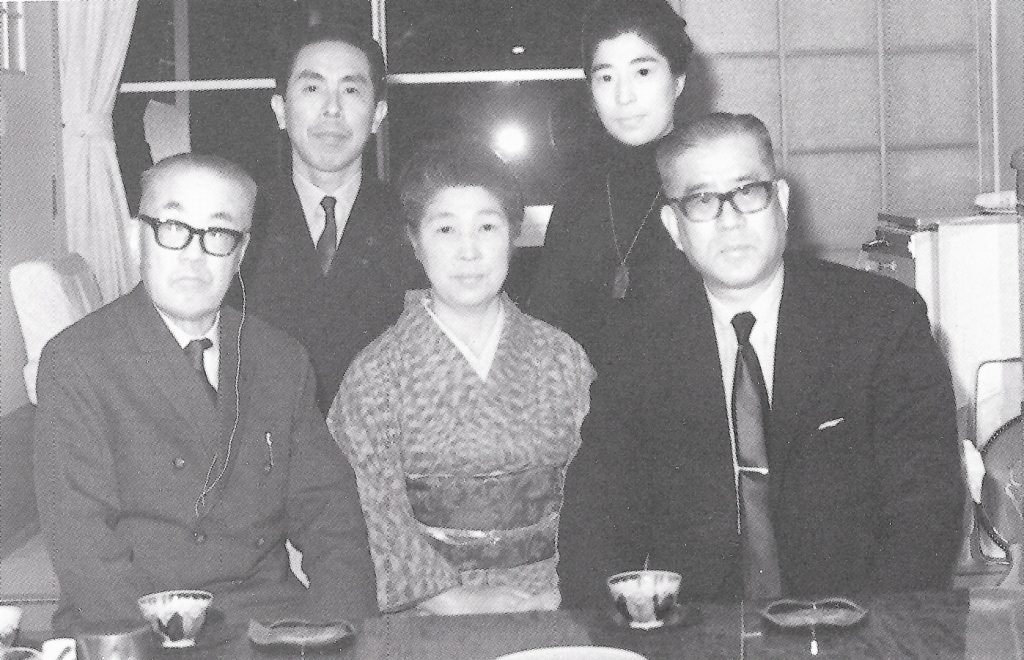
    Kodo Horikawa (front left) with Kazuto Ishida (right)
    Ishida was the 5th Chief Justice of Japan,
    the second chairman of the All Japan Kendo Federation
    and 5th Soke of Yamaoka Tesshu’s Itto Shoden Muto-ryu
    Ishida’s wife (front center) and daughter (back right)
    Seigo Okamoto, back left

    Born in 1894 in Kitami, Hokkaido, Kodo Horikawa began Daito Ryu Jujutsu training with Sokaku Takeda at around the same time as Aikido Founder Morihei Ueshiba. Sokaku focused on instructing Kodo in “Aiki” because of his size, and Kodo came to be known for techniques that were extremely subtle and soft. In 1930 Kodo received the certificate of “Acting Instructor” or Kyoju Dairi from Takeda (the same certification that Aikido Founder Morihei Ueshiba received from Takeda in 1922), and was later awarded a certificate of complete transmission in the art, the Menkyo Kaiden. In 1950 he established the Daito Ryu Aikijujutsu Kodo Kai in Hokkaido. 

    It seems that there are many differences among Daito-ryu techniques.

    I have not often viewed the techniques of other schools. I have seen them only at the demonstration held by the Headmaster [Tokimune Takeda]. When I entered Horikawa Sensei’s dojo, there were some people from other schools who criticized his techniques when they saw them saying that he could not really execute a technique with such a small movement and that his students were very meek. However, I believe that there were no such stupid, critical men among the students, seniors and juniors alike of Kodo Sensei. We followed him because his techniques were real. However, there were many who could not continue their practice for long because they found the techniques too difficult.

    I have learned a lot since I came to Tokyo. In the Roppokai there are some students who have practiced another school’s art for more than 20 years or who are instructors of another art, but they all recognize my art and are gradually making progress mastering techniques which I think is great. I really feel that I must continue to practice all my life.

    Interview with Seigo Okamoto Shihan (2) – Aikido Journal Editor Stanley Pranin

    Daito-ryu Aiki Jujutsu Roppokai Founder Seigo Okamoto entered the dojo of Daito-ryu Aiki Jujutsu Kodokai Founder Kodo Horikawa at the age of 38. In 1974 he received his 7th dan from Kodo Horikawa, and his Shihan license from Kodo Horikawa four years later in 1978.

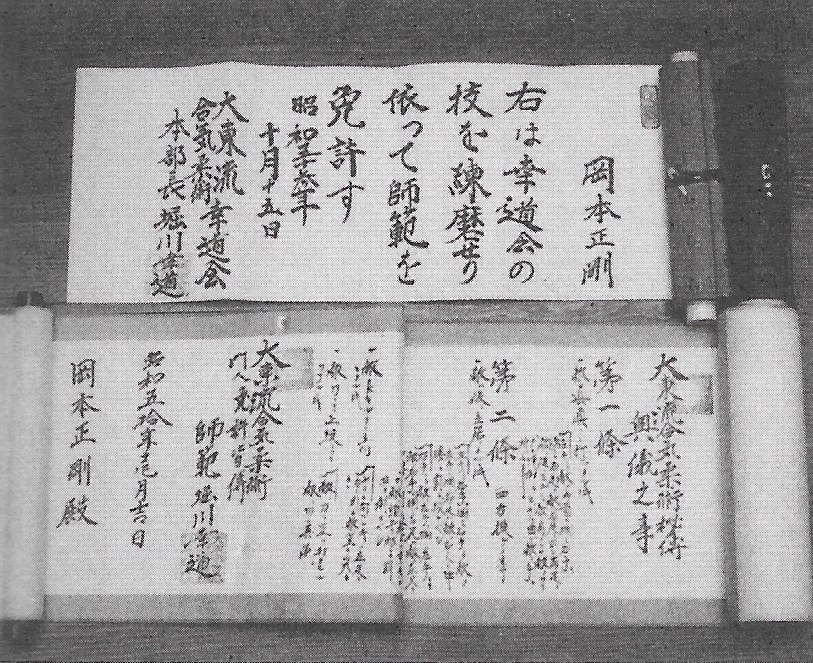
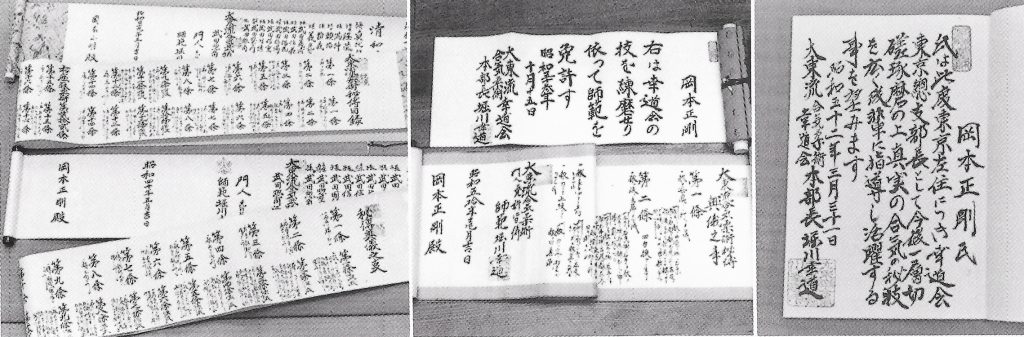
    Seigo Okamoto’s Shihan certification (top) and the Hiden Ogi no Koto,
    the third scroll in the Daito-ryu Aiki Jujutsu Kodokai
    awarded by Daito-ryu Aiki Jujutsu Kodokai Founder Kodo Horikawa

    Are there are some Aikidoka who try to learn Daito-ryu techniques in order to improve their own Aikido?

    Yes, that’s right. I do not refuse anyone who comes to me. We have an Aikido instructor at our Osaka branch dojo. I think that he is probably utilizing the techniques he learns from us in his Aikido techniques. As I mentioned, I refuse no one who comes to me, but I don’t stop anyone who leaves me either. This is my principle. However, those who come to me must conduct themselves in an appropriate manner. There are some people who come to me with an arrogant attitude as if to say I should be pleased because people like them have come to train while others come with an open attitude toward being taught. People come with many different attitudes. I accept anyone who comes in the latter manner.

    Interview with Seigo Okamoto Shihan (2) – Aikido Journal Editor Stanley Pranin

    This the second part of an English translation of an interview with Seigo Okamoto that appeared in Hiden Koryu Bujutsu vol 4, 1990, published by Gekkan Hiden (月刊秘伝 / “Secret Teachings Monthly”), a well known martial arts magazine in Japan. You may wish to read Part 1 before continuing with this section.

    The Essence of Aiki: an Interview with Seigo Okamoto Soshi – Part 2

    4 – The Roppokai Technical Method – Difficult to See

    Q: Is it difficult to apply technique after one has been grasped strongly?

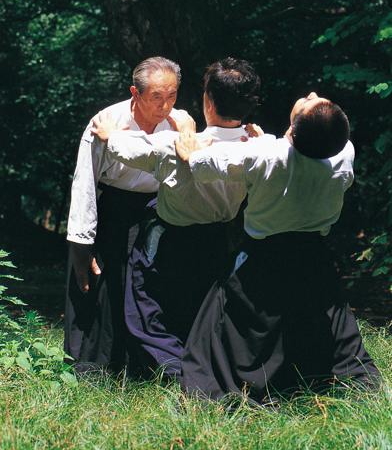
    Okamoto: No, if one becomes skilled then it’s possible. But it’s difficult for people in their first three or four years after starting. There are also times when they are grasped strongly by multiple opponents. That’s not strength, it’s technique. With strength they won’t move.

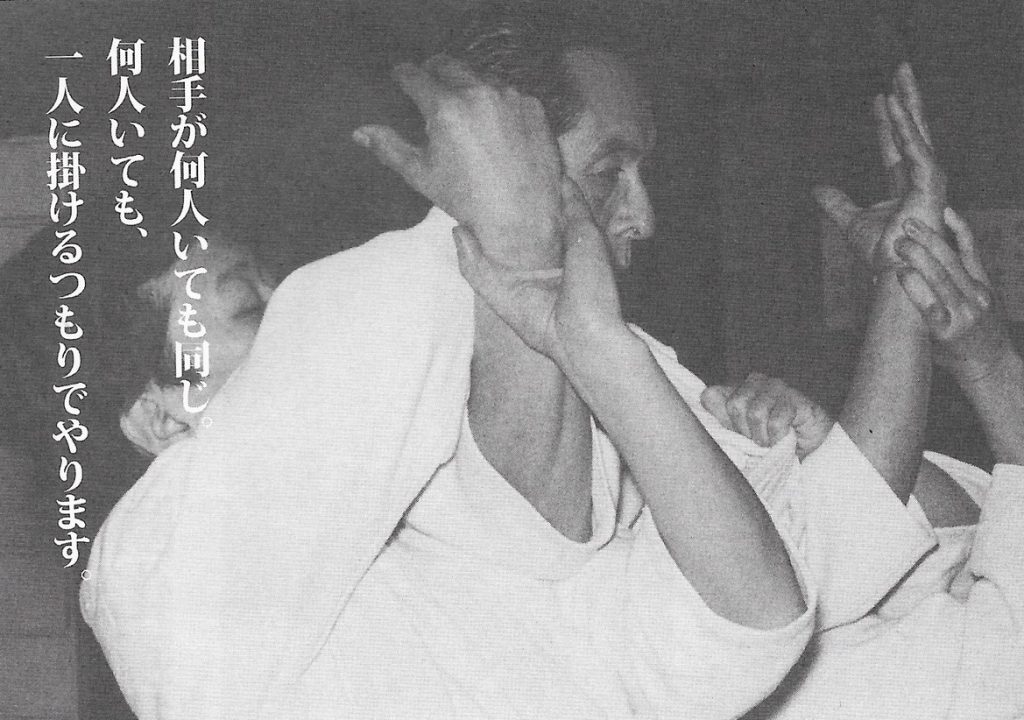
    “However many opponents there are
    we do it with the intention of applying it to a single person.”

    Q: When being grasped by multiple opponents how does it become possible to apply Aiki to the entire group at the same time?

    Okamoto: It’s the same. Even if there are five opponents one doesn’t think of them as five people, one does it as if intending to apply it to a single person. If Aiki enters momentarily at the moment at which one is grasped by all of them then they stiffen through their reflex action. When that happens one person is the same as five people – they come along here easily.

    For example, five people form a line and the person in front grabs me while each of the people behind pushes on the shoulders of the person in front of them. There is a way to throw these five people. This also is not something for which strength is relied upon. When it is applied to the first person it passes through that person and the same movement is transmitted to the next person and is applied to the next person in the same way and then progressively to each of the people in turn. It’s like toppling dominoes.

    Seigo Okamoto demonstrates on multiple opponents

    Q: So by doing this you can apply it to any number of people?

    Okamoto: In order to do that all of them must have their strength turned towards me. For that reason, before one applies it they push or pull a little bit. So I aim for the time at which all of the people have their strength turned towards me and then apply it with a bang! It’s for that same reason that Sokaku would make the opponent angry.

    Q: So you build a pile of people in that instant?

    Okamoto: Since Aiki has been applied to those that were thrown, while it is still being applied to the person on the bottom I drop the next person on top of them. If there were nothing being done to the person on the bottom then they would just run away before that. However, although they are frozen and in discomfort, it’s not a great amount of pain to be in that position. Once they are released they just laugh it off.

    Q: It appears that the Roppokai doesn’t have the same kind of pinning techniques that other branches of Daito-ryu have, is that right?

    Okamoto: That’s a common misunderstanding. Taking their arm and holding them down, pushing the opponent down and stepping on them, this is what most people think of as pinning, but here although we don’t hold them down very strongly the opponent is unable to move. Those are the kind of pinning techniques that we have.

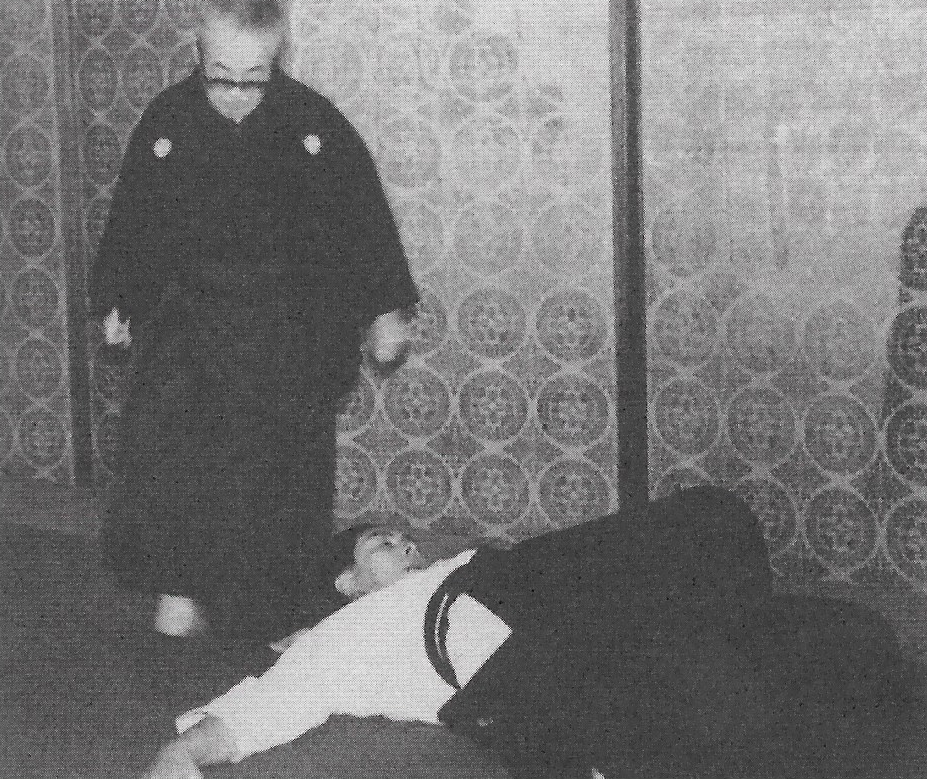
    Daito-ryu Aiki Jujutsu Kodokai Founder Kodo Horikawa
    pinning Seigo Okamoto

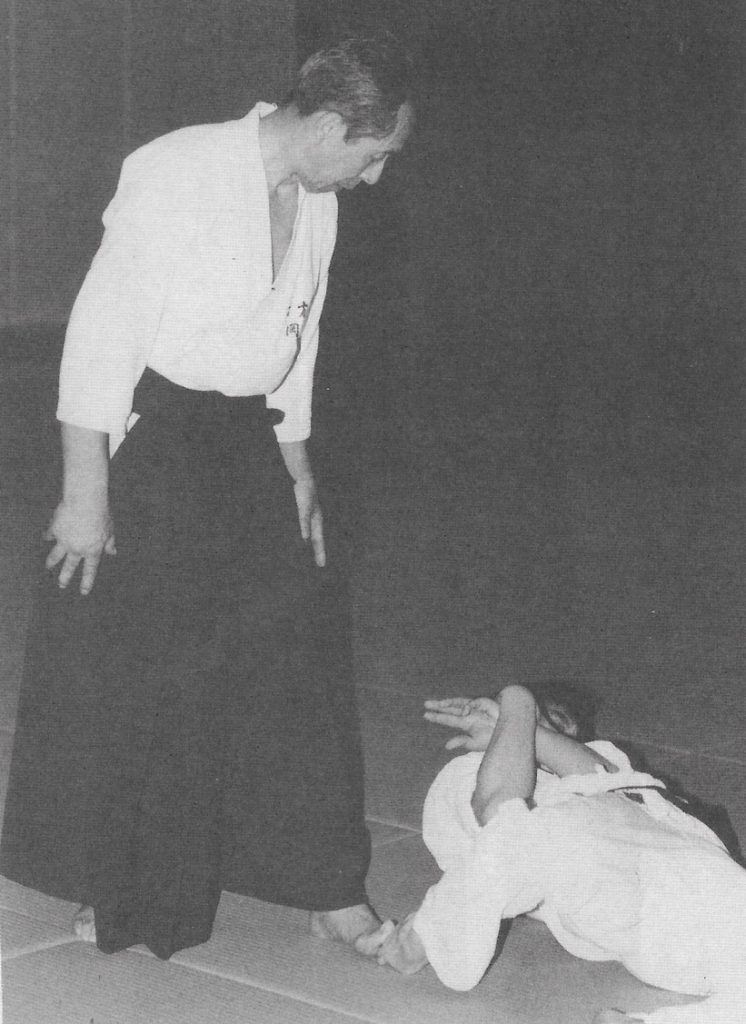
    We throw the opponent when we want to throw them, when we think to pin them then without throwing them we instantly drop them at our feet. Since Aiki has been applied to the opponent, even after they fall they remain stiff. Then if one just presses on them slightly with their foot they will already be unable to move. The technique is so small that you can’t understand it, can you?

    Seigo Okamoto demonstrates a pinning technique

    Of course, there is jujutsu without Aiki for those people who are just beginning, pinning techniques where one takes the hand of the opponent as they come to strike and hold them down, but we don’t do that very often. That’s because if it’s too much like jujutsu then it becomes different from Aiki.

    Q: Also, there are some who are of the opinion that there is no tai-sabaki in the Roppokai?

    Okamoto: That’s also incorrect. It would be impossible to throw an opponent by just standing there without doing tai-sabaki. Even when one moves their hand, it’s not that their hand alone is moving. It is because the hand and the body are moving as one that the opponent is thrown. It’s just because the movement is small that it can’t be seen like normal tai-sabaki. Here everything is irimi (“entering”)! In any case, it’s that we move into the bosom of the opponent without stepping back.

    Q: It must take quite a bit of training to master these techniques, doesn’t it?

    Okamoto: That’s right. It takes a number of years, they can’t be learned that easily. I think that you can understand this by watching the training, but although they can appear the same there is a difference whether the opponent is thrown through the application of Aiki or through the use of strength. Because if the technique is immature it cannot be applied against resistance. For that reason, the truth is that one doesn’t just fall when they are thrown, one helps the other person to develop their technique while they are being thrown.

    The more experienced the person is the more skillfully the technique can be applied. That is because they know the kokyu and the timing, and their responses to the techniques are more sensitive. And again, being sensitive to technique itself is a path to skill.

    Q: So, as one becomes accustomed to it does it become possible to steal the opponent’s Kokyu and timing and reverse the technique?

    Okamoto: Even in Sumo they say “shiju-hatte-ura-omote” (Note: 四十八手の裏表 – “the forty-eight techniques have a back and a front”, meaning that each of them can be countered), in the end techniques have an ura and an omote. During normal training we don’t do the ura. If we teach the ura from the beginning than everybody would just escape and there wouldn’t be any training. For that reason we only teach the omote in the beginning. There many ways to escape a grip, you see, so the number of techniques grows accordingly.

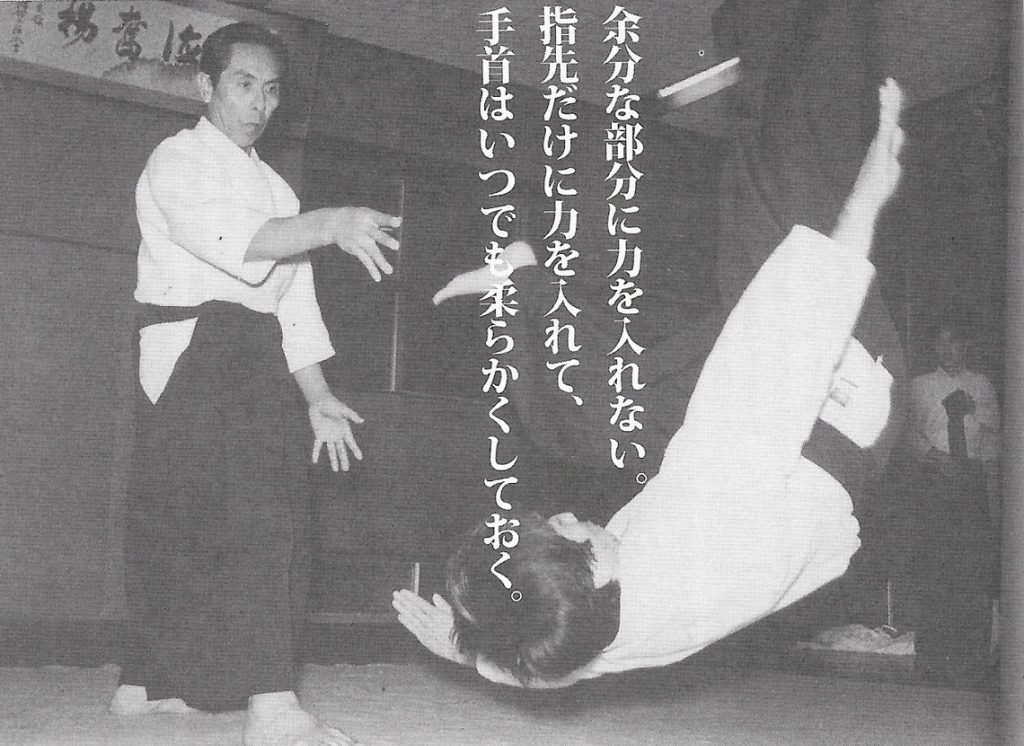
    “Strength is not put into unnecessary places.
    Putting strength only into the fingertips, one always keeps their wrist soft.”

    Q: What is the most difficult point in the mastery of Aiki?

    Okamoto: To release one’s strength, that is, to eliminate one’s own “tension” (力み) is difficult. Even those like me occasionally have tension! For that reason I always say that it’s okay to have any amount of strength, but it’s no good to be tense. That’s an enormously difficult task. When one feels some kind of momentary strain most people will become tense. Strength enters their shoulders… I think that it’s really a big deal if that can be eliminated. That really comes down to experience. When I say experience, that is to say, shugyo (Note: 修行 / “intensive training”, often with spiritual overtones).

    For example, when one spreads their fingers they put strength only in the area around the fingernails, and they always keep their wrist soft. At first I couldn’t understand that, and when Shisho (Note: 師匠 / “Teacher” – Kodo Horikawa) told me to put strength in my fingertips strength would always enter to my wrist even when I tried to put strength only in my fingertips. At some point during my Shugyo I understood that, that is, I became able to do that. Even when I grasp something hard strongly my wrist can move freely. That’s what it is to avoid putting strength where it is unnecessary. It can be said that is one kind of skill.

    Scrolls received from
    Daito-ryu Aiki Jujutsu Kodokai Founder Kodo Horikawa

    Q: Do you have a step by step teaching structure?

    Okamoto: Daito-ryu techniques are written on the scrolls, and it is said that there are more than 2,880 of them. But that doesn’t mean that I’ve learned all of them. The three scrolls that I received from Shisho in addition to the Shihan Menkyo were Sho-den 118 techniques, Chu-den 30 techniques, and the Oku-den 36 techniques.

    Q: What teaching doctrine do you follow during training at the Roppokai?

    Okamoto: In one training session here we teach a mix of techniques from Sho-den to Oku-den. Experienced people and inexperienced people all train together, we don’t divide them. Someone who has just started won’t understand if something is a Sho-den technique or an Oku-den technique, and conversely, I think that it is better not to separate them out when considering them. While not knowing one practices from Sho-den to Oku-den, and that way seems to develop the body more quickly. Just doing the basics is boring, and people tend to tense up.

    At the time that I started we would only train in the basics at first. But now people come from many different kinds of Budo. When this happens, even when the technique names or other small details are different and many of them have already mastered basic body movement. Making someone like that do only basics is just pathetic. Someone who has some high rank in another school. For that reason we normally do only one or two of the basics. When we do the basic techniques all together it takes two or three hours.

    Q: What are the basic techniques of Daito–ryu?

    Okamoto: These are basics that were created by Shisho in Hokkaido. In our case we have changed them a little, but basically speaking they are the same. If one looks at these basic techniques from the viewpoint of other Budo they appear to be high level techniques. That is to say, in the former Aizu Domain Daito-ryu was only taught to warriors of five hundred koku and up (Note: the stipend for a samurai, one koku was supposedly enough rice to feed one man for one year), and the people at that level were already training in other types of bujutsu. So they were a compilation of those things. For that reason, the basic techniques themselves are like hiden (“secret”) techniques, and by just practicing these enough one can become quite strong.

    These techniques can be taken as an introduction to Daito-ryu Jujutsu when practiced without Aiki in the beginning, but when one practices them faithfully they all become Aiki techniques. Originally, they had to contain Aiki. Because Jujutsu that does not employ Aiki becomes techniques powered by strength, and when that happens it can become difficult if one is physically inferior the opponent.

    Q: What happens when one moves beyond basic techniques?

    Okamoto: Applied techniques (応用技). They could be called variations of the techniques that were learned at the beginning. The basic techniques that I was speaking of before, from there they grow and branch. Daito-ryu techniques contain innumerable variations. In total there are two thousand and some hundreds of techniques, but all of those can’t be recorded on three or four scrolls. Further, it’s impossible to practice while consulting the scrolls. The scrolls are something that are given to show that one has learned techniques to a certain degree through actual training, something like a certificate of completion. It’s not that one has completely mastered a technique on the scroll, or that we always practice techniques just as they appear on the scrolls. There is a “feeling” each time – when we go to practice a technique it come to us in a flash.

    Further, when we say applied, there are those who assimilate the techniques they have learned well and those who assimilate them poorly. Because of that depending upon the person there are those for whom the techniques can grow and branch later than others. For those reasons, even if one talks about a secret transmission, from the very beginning we are teaching the secrets. Whether one can absorb those as Hiden (“secret transmission”) or they can absorb them as part of the Honden (“main transmission”), whether or not a person will grow will depend upon that.

    These days, and this was even so to some degree in the past, all schools practice group instruction. But if you said that because of that everybody progresses at the same pace, that wouldn’t be the case. Out of fifty people perhaps one or two will remain to the end of the transmission. These kind of things happen, don’t they?

    There isn’t anybody who teaches carelessly, you know! Everybody wants to transmit their techniques faithfully and repeats themselves until they sweat when they teach. For that reason, all schools teach secrets, but I think that it may be that the difference between Hiden and just ending up as recreation will depend upon how they are taken in by the student.

    Q: So how should one train in order to progress?

    Okamoto: Practicing humbly and seriously is the best. Going forward humbly as normal without resistance and learn from the feeling at the moment of being touched. In Sumo there is also the moment of the tachiai (Note: 立ち会い – the initial charge at the start of a bout). The opponent springs forward into the engagement. In technique one must also grasp the feeling at the moment that they engage.

    Daito-ryu Aiki Jujutsu Kodokai Founder Kodo Horikawa

    Talking about Horikawa Sensei

    Q: Next, I’d like to ask if you have any recollections of Kodo Horikawa Sensei?

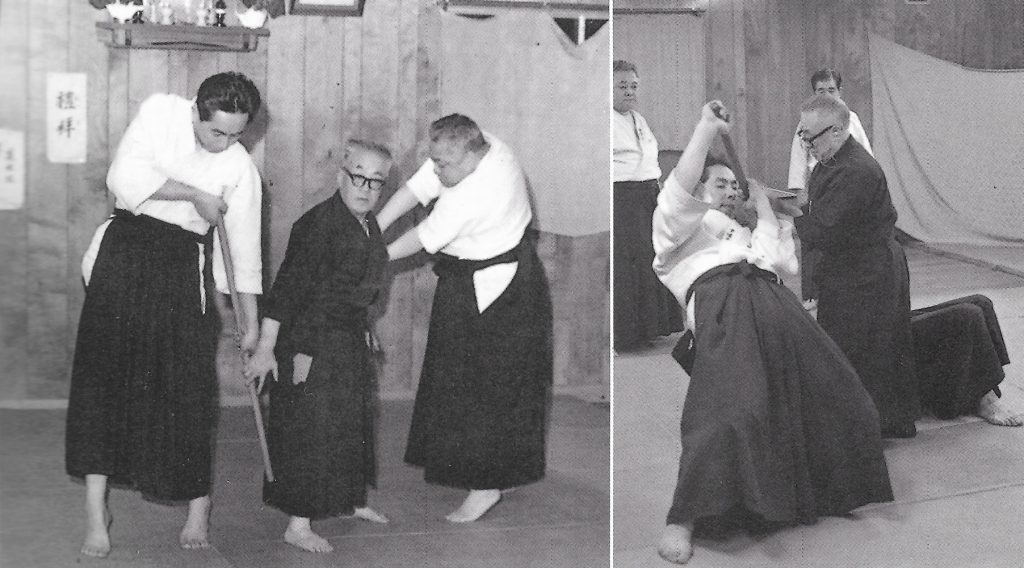
    Okamoto: Horikawa Sensei was an educator, so there aren’t any things like tales of fighting. He was a gentle person, and for his efforts in service towards education in remote areas he was awarded the Order of the Sacred Treasure 5th Class, Gold and Silver Rays (勲五瑞宝章) in Showa year 46 (1971).

    Order of the Sacred Treasure 5th Class, Gold and Silver Rays (勲五瑞宝章)

    Q: How were Horikawa Sensei’s techniques, did they feel sharp?

    Okamoto: In Shisho’s case, I don’t know about sharpness. It’s really that a level where one can can feel something such as sharpness is no good. It’s not like when one is thrown with strength, it’s like you touch something and then you’re thrown with a soft feeling. That’s what’s called “Yawara” (Note: 柔 – “ju”, one of the classical terms for jujutsu arts, meaning soft or flexible). It’s a feeling like one is being wrapped in silk wadding and one is carried away. His forearms were really thick! Down to his wrists they were the same thickness, but when we grabbed them they were very soft. They were like a woman’s forearms, they didn’t feel defined. And that’s what it was like when he did things to us. It almost felt as if we were being deceived.

    Q: If you were to sort the techniques that you learned from Horikawa Sensei simply, about how many would there be?

    Okamoto: About thirty or forty techniques. That’s because if one can can absorb and apply them then they multiply without limit. Well, Aiki itself is only one thing, so one changes that one thing in order to adapt to the requirements of the moment.

    Even if one says that there are some 2,880 techniques in Daito-ryu, one can’t really use all of them in reality. Because one must topple them with a single technique. It’s just that if one masters some number of techniques then however one is attacked they will be capable of responding – it must be that this grew to be those some thousands of techniques. It’s not that it’s a good thing the more techniques one has.

    It was just before I came to Tokyo, around Showa year 49 (1974), that Soshi told me this – “When one gets to your level, your training up until now gives birth to various techniques. So try and do your best!”. At that time it was already more than ten years after I started.

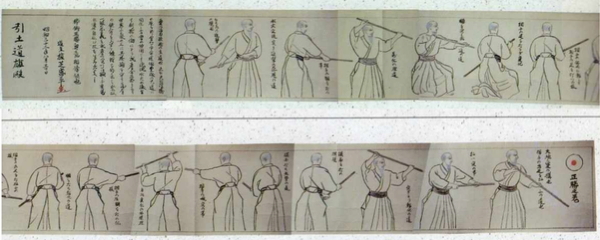
    “each of these pictures is the seed for a hundred techniques; study them well”
    Scroll entitled “Bojutsu Masakatsu Agatsu” given to Michio Hikitsuchi
    by Aikido Founder Morihei Ueshiba

    Q: So does that mean that understanding Aiki itself and becoming able to apply technique strongly takes ten years?

    Okamoto: That’s right. That’s not limited to Aiki, doesn’t understanding anything take ten years? But just because I have been doing this for twenty some years, don’t think that I can do things one-hundred percent! I still have to train hard (Shugyo) from now. There are many different kinds of people in the world, and there are always those that are better. It is when one is at the seventh or eighth station (Note: as in climbing Mt. Fuji) that the road above is most difficult, I think. Soshi said this also – “Training is for life. I may seem to be absent minded during the day, but I’m always thinking about techniques!” (Note: 一生修行, “isshou shugyo” “training is for life”).


    Published by: Christopher Li – Honolulu, Hawaii

  • The Essence of Aiki: an Interview with Seigo Okamoto Soshi – Part 1

    The Essence of Aiki: an Interview with Seigo Okamoto Soshi – Part 1

    Daito-ryu Aiki-jujutsu Roppokai (大東流合気柔術六方会)
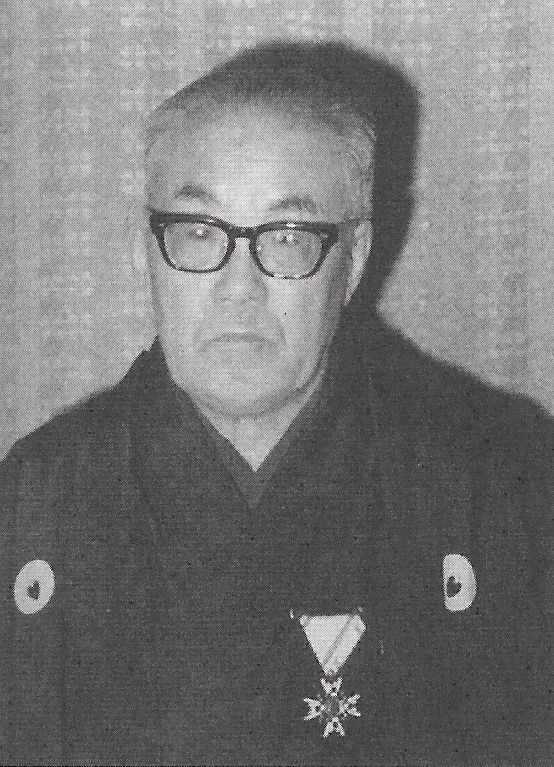
    Founder Seigo Okamoto Soshi (岡本正剛宗師)

    Daito-ryu Aiki-jujutsu Roppokai Founder Seigo Okamoto was born in 1925 in Yubari City, Hokkaido. In 1963, at the age of 38, he entered the dojo of Daito-ryu Aiki-jujutsu Kodokai Founder Kodo Horikawa, one of Sokaku Takeda’s closest students. In 1974 he received his 7th dan from Kodo Horikawa, and his Shihan license from Kodo Horikawa four years later in 1978.

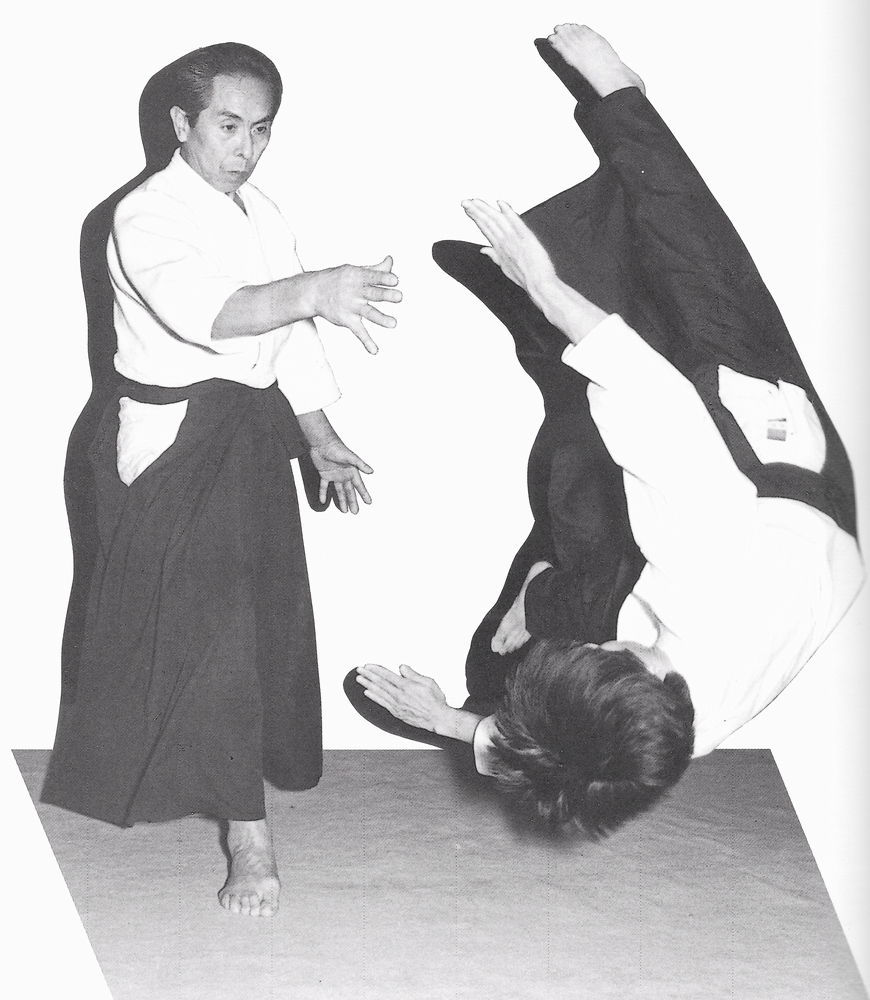
    Seigo Okamoto taking ukemi for Kodo Horikawa

    After Horikawa Sensei passed away, he established his own organization, the Daito-ryu Aiki-jujutsu Roppokai, where he became known for teaching advanced techniques to beginning students and for making public many aspects of Aiki that had previously been considered secret. Seigo Okamoto passed away on January 17, 2015, just a few weeks before his 90th birthday.

    In response to a question from Aikido Journal editor Stanley Pranin as to the origin of the name “Roppokai” he explained:

    Roppo can be understood in a variety of ways, such as the roppo of roppogumi [six groups of chivalrous young men who used to wander the city streets in the Edo period]. Or it can be equated with the roppo from the kabuki term roppo o fumu of Benkei [a priest of the early Kamakura period and a famous retainer of Yoshitsune Minamoto. Roppo o fumu means to make one’s exit with bold gestures along the runway]. However, I usually compare roppo to gaming dice to describe techniques which can deal with any situation from any direction, top or bottom, front or back, right or left, like the faces of dice. But these techniques do not have square angles like dice but are round, forming six (roku) infinite circles. I am eager to get as many meanings as I can out of the term.

    Seigo Okamoto also had an interesting story to relate concerning Morihei Ueshiba’s teacher Sokaku Takeda and “roppo” (for more about Morihei Ueshiba and roppo see “Morihei Ueshiba, Budo and Kamae“):

    Once, at the beginning of the Taisho era, Takeda Sokaku, while staying for a short while in Tokyo, had an opportunity to go out to the theatre. Sokaku, having set up camp near the hanamichi was observing Kikugoro’s movements. He was [playing] Benkei, at the Ataka Barrier. Making to chase after Yoshitsune’s party after they exited, Kikugoro was stepping along the hanamichi near where Sokaku had set himself.

    At that moment, Sokaku commented: “the performance is good, but the footwork is bad: the roppo is really bad,” in a voice loud enough that the actor could hear. Kikugoro, not having been able to see from the stage, afterwards sent an attendant out. “Just now, in this vicinity, someone was kind enough to comment?” he enquired. Sokaku having immediately informed him that he was the relevant gentleman, the attendant requested that he go with him, just as he was, to the dressing room. After which Sokaku, having met Kikugoro himself, precisely and infallibly indicated the shape and motivation of the movements. That is: in response to Kikugoro’s questioning, he immediately gave him guidance in the movements of the arms and hands, the movements of the feet.

    At that time, it is said, Kikugoro hadn’t before played Benkei. Nevertheless he was one of the leading actors of the time. After Sokaku’s guidance, overnight, [everyone] could see that his arm gestures and leg movements were being played in a manner that was completely unrecognizable. It is reported that – starting that very next day – Kikugoro used to receive lavish praise, from his patrons and customers, for the outstanding footwork of his wonderful roppo….

    This the first part of an English translation of an interview with Seigo Okamoto that appeared in Hiden Koryu Bujutsu vol 4, 1990, published by Gekkan Hiden (月刊秘伝 / “Secret Teachings Monthly”), a well known martial arts magazine in Japan.

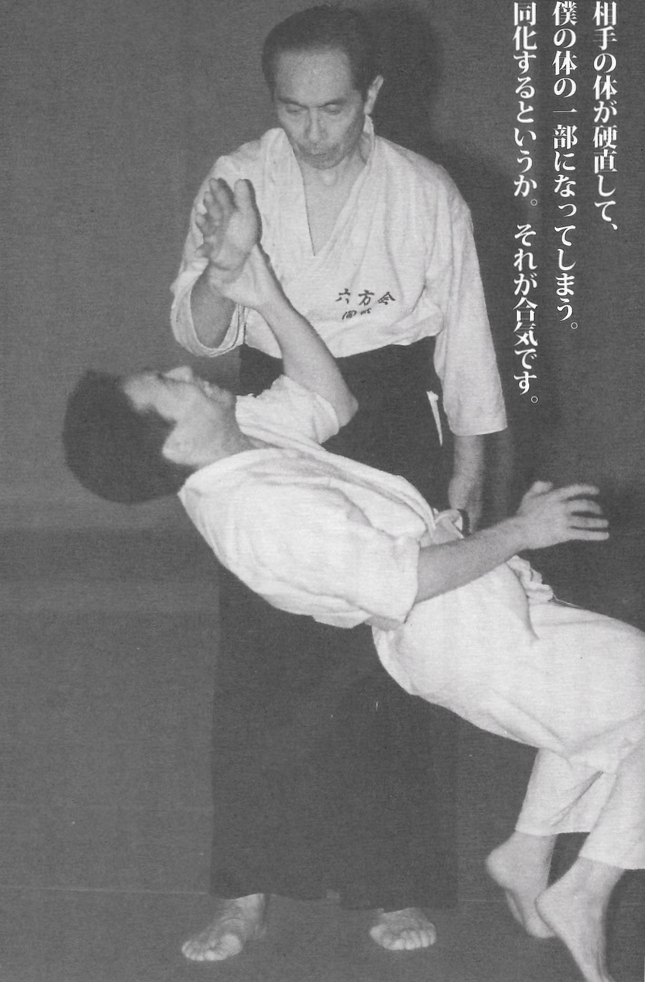
    “When the opponent stiffens one can connect to the point at which they are touching them and they become one part of my body. Perhaps it could be called a synchronization. This is Aiki.”

    The Essence of Aiki: an Interview with Seigo Okamoto Soshi – Part 1

    1 – Training at the Roppokai

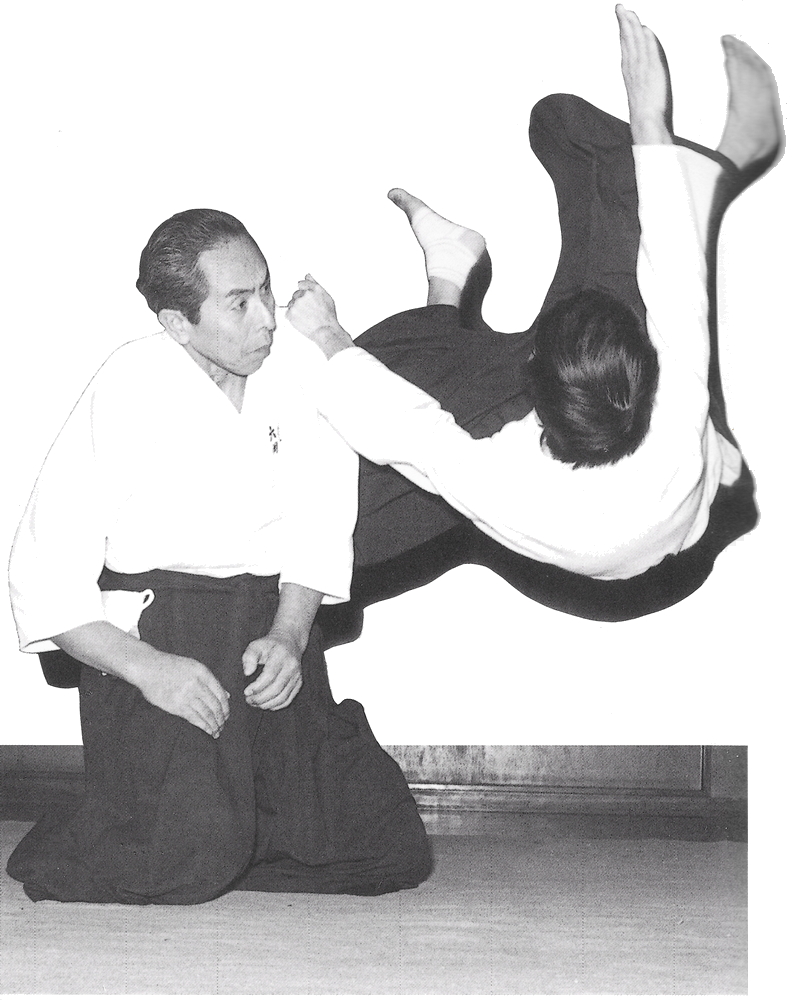
    Seigo Okamoto Sensei’s instruction currently takes place in Tokyo at the Bunkyo Sports Center. It was here that we first experienced his unique method of instruction. In Okamoto Sensei’s instruction, he uses a method in which when a technique is taught he always applies that technique to each of the students, so that they will be sure to naturally comprehend it through their bodies. Then through kakari-geiko (a line drill with continuous attacks) with each other the students gradually make it their own.

    The students are divided into three groups, in each group one person acts as the tori, and the rest become uke and take turns attacking the tori. After throwing four or five times the next person takes a turn as tori and the training continues. Okamoto Sensei occasionally gives general advice. That is, giving demonstrations of good and bad examples, showing the technique in slow motion while explaining the principles, things that are extremely concrete and easily understood. However, just because one understands how it is done does not mean that they are able to do it that way right away. Of course, one can see varying levels of ability among the students. Here beginners and those with experience are not divided, everybody learns the same techniques together.

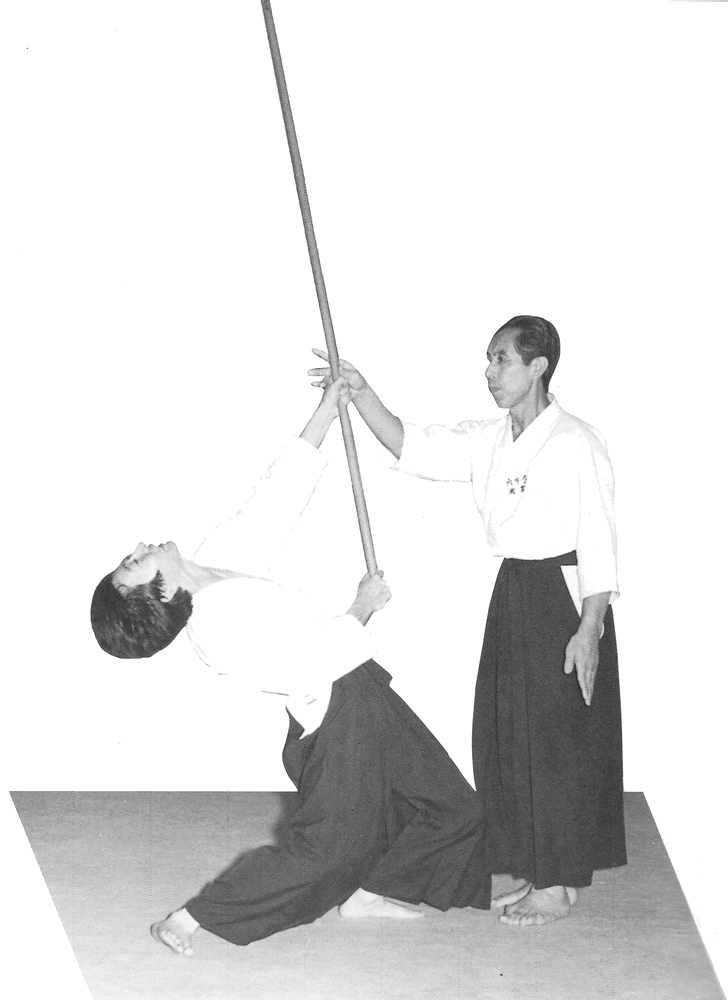
    We can certainly say that the technical method of Aiki that is unfolding before our eyes is mysterious. As the students grasp Okamoto Sensei with all of their strength they are blown away with a shake of his body. Even if they grasp Okamoto Sensei’s finger it is the same. Okamoto Sensei doesn’t grab the student’s bodies, he throws them with the touch of a single finger.

    Other high level technical methods are also revealed and climax with multiple attackers. Grabbed by five students, they are toppled in an instant. Although they don’t appear to be held down in any significant way the five people are unable to move their bodies. This can be thought of as the application of Aiki, but even so it is an incredible spectacle. Immediately following the training we asked about this mysterious Aiki that has been transmitted from the master Kodo Horikawa Sensei.

    2 – How is “Aiki” applied?

    Q: We’ll jump right in – Okamoto Sensei, just what kind of a thing is your Aiki?

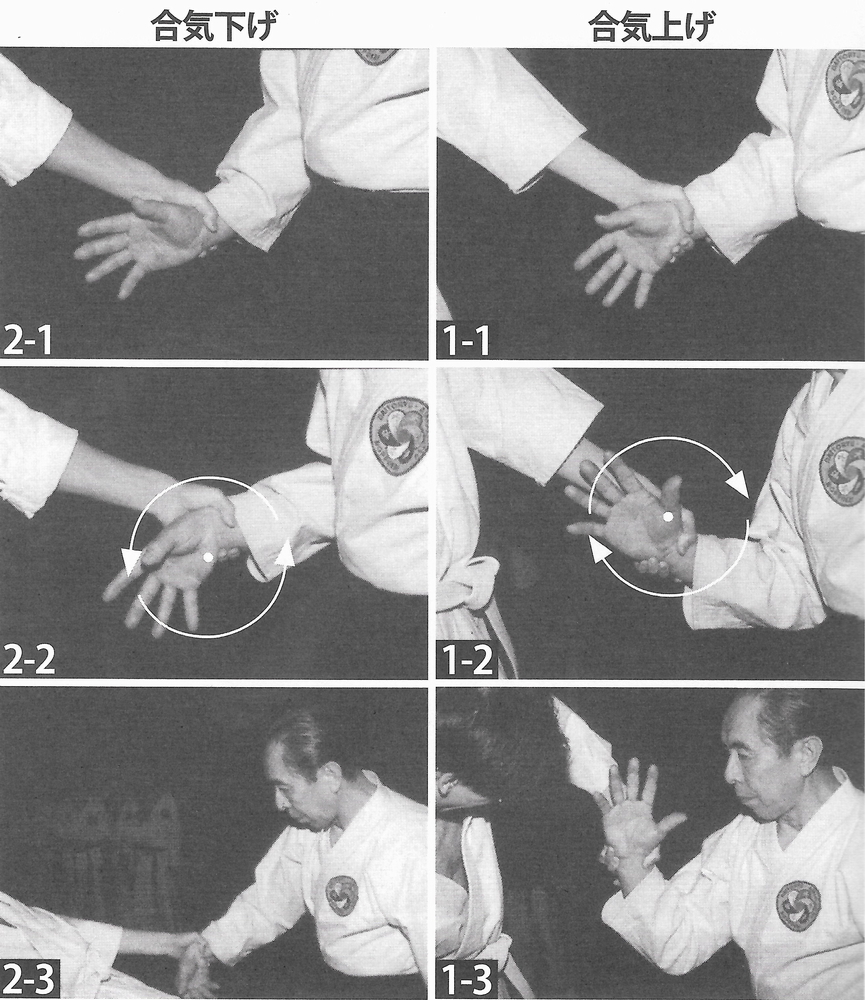
    Okamoto: The word Aiki itself is difficult, isn’t it? In Aikido or Daito-ryu it varies according to the expressions of the individual instructors, and each of them presents a different image. To me Aiki is conditioned reflex, circular movement and kokyu-ho (“breathing method”) – I express it as these three elements made as small as possible within the space of a moment.

    These three elements, applied as subtly and as small as possible in technique are Aiki. As to the techniques themselves, as I have shown you today they take many different forms, but one cannot understand them through the form alone! For example, if one grabs my chest or if one grabs my shoulder, I execute the same movement using those three elements. For that reason, however I am grabbed I throw them down with the same movement.

    Q: We observed techniques in which their hand was unable to let go as they were pulled along, is it because of Aiki that their hand became stuck to you?

    Okamoto: That was due to a reflex action by the opponent’s fingers, they become stuck to my hand and are unable to release. If I simply stroke the top of the opponent’s hand it won’t curl, but if I do this with my fingers on the opponent’s hand then the opponent’s fingers curl through a reflex action. If this is done quickly then without a doubt they will curl. For that reason, they become stuck. If one pulls them along this way then they will not separate, but if one becomes slack then they will quickly become separated. That state in which they are pulled along is the state in which one is applying Aiki.

    Q: What does it mean to apply Aiki?

    Okamoto: In a normal state, if one uses strength then the opponent will not move, but if one applies Aiki then they will move. That is a technique of the fingers and such. However, one does not pull them. When they use the thumb and the littlefinger to grasp a wrist the opponent stiffens for a moment, and we continue to hold onto and continue that stiffened condition.

    Q: Is it through that tiny movement that the opponent moves?

    Okamoto: Yes, that’s right. One doesn’t need strength. But just doing that won’t work well. In the end technique become necessary. Particularly circular movement, in that one doesn’t move the point that has been grasped and enters while naturally rotating that as the center point.

    In addition, there is a conditioned reflex when one is touched. When they are touched the opponent always exhibits a reflex. When the opponent stiffens one can connect to the point at which they are touching them and they become one part of my body. It is for that reason that I am able to move them as if I am moving my own body. It’s somewhat clumsy, but one doesn’t need any significant amount of strength. Perhaps it could be called a synchronization – this is what is called Aiki.

    Q: when Aiki is applied it feels as if electricity passes through your body, would you say that your neck receives a shock?

    Okamoto: That does happen. Depending upon the person there are those that feel it and those that don’t – if one has ten people then each of those ten people will feel it in a different way. The more sensitive that a person’s reflexes are the easier it is to apply techniques. 

    Q: So there are people on whom it is easier to apply Aiki to, are there also people on whom it is more difficult?

    Okamoto: Among those coming to train with us are many people with experiences in various Budo such as Judo, Karate, boxing, Ninjutsu, Chinese boxing, Aikido and so forth. I couldn’t say unconditionally, but it’s easy to apply technique to third or fourth dans in Karate. It’s just that their reflexes are conditioned more than a normal person’s and their reactions are quick. That makes it easier for them to react to our techniques.

    Q: What kind of action is it that causes a shock to be received?

    Okamoto: This is the so called whiplash. When a car crashes there is a snapping force, that’s what it is. We’re not just pushing on the opponent when they come to attack, we draw them towards ourselves while pushing. While the opponents legs move towards us their body goes towards the back. We initiate that kind of action with our hands.

    Just pushing on the opponent won’t make them fall down, will it? They’ll just bounce back away from us. But if you step on your opponent’s feet at that time the opponent will fall down without being able to move backwards. It’s the same as that. To do that we apply technique to the opponent in order to stop their feet without stepping on them.

    If you just push on the opponent then they will escape, but if you pull them for a moment at that time then their legs will come towards you. We halt their step there so that they will not come toward us. There we apply force in the opposite direction. For that reason, through the application of leverage we can move the opponent with a small movement.

    Seigo Okamoto demonstrates Aiki-age and Aiki-sage

    3 – Daito-ryu is “Iai”?

    Q: During that time you are applying a normal physical force?

    Okamoto: That’s so, of course. However, if we consider each other’s power as 100, then we’re only using about a power of 20. In most Budo, one powers up to a power of 120 or 130 in response to a power of 100. That is not the case here. There are times when we may momentarily go to a 120 or 130, but that feeling is not transmitted to the opponent. 

    Additionally, the three elements that I discussed earlier quickly and momentarily ramp up the voltage. If one does it slowly then the opponent will escape. 

    For that reason, if the person coming to attack wanders in slowly then technique is more difficult to apply. For people who float in to grab I tell them to come get me as if I am going to harm their parents! Then, when they come to grab vigorously, I apply it in that moment.

    For example, when Sokaku Takeda showed technique it seems that he purposely enraged the opponent. Since if people had heard of Sokaku’s strength they would likely be timid and wouldn’t really come to attack. If that happened it would be difficult to apply technique to them, so I have heard that he would say something strange to them then. When he did that the opponent would become agitated and attack with vigor, so that things would be really effective. That is because the stronger the opponent and the harder they come the more one can use their strength and the easier it is to apply technique. 

    For that reason, our motto is “Don’t repel those who come, don’t follow those who retreat”. When the opponent comes to attack then you do it. Technique can’t be applied to someone trying to run away, and it’s not necessary to apply technique in that situation. Especially because in our case our practice is completely for self-defense. One only uses it for the first time when living a normal life and some trouble occurs. It is with this intent that we are practicing.

    Q: So there is no first attack from this side?

    Okamoto: Almost none. We don’t take stances because someone is going to come and attack. If one takes a stance from the beginning then the opponent will be cautious and will not come to attack. So in our case we all take a natural stance and apply technique at the moment that the opponent comes. We don’t stretch out our hands and go to meet the opponent. In kenjutsu, such as Yagyu Shinkage-ryu, there is something called mugamae (“no stance” / 無構え), that just puts one in a neutral position. That is the feeling. Entering from there is a secret teaching (“gokui” / 極意).

    It is the same as Iai. In Iai when the opponent cuts one draws their sword instantly and cuts. If that isn’t so then it isn’t Iai. It is for that reason that there are things held in common with the principles of Iai. Also in Iai one is not touching the sword, but at the instant that the opponent thinks that they can cut one draws so that there is no way to move the body out of the way.

    Q: However, if one just thinks about it simply it seems that the one who draws first will be the fastest?

    Okamoto: That is really a matter of distancing (“maai” / 間合い). If one is daydreaming then of course they will be struck first. One applies technique just before they are struck. That is why it is extremely fast. I said this during training as well, if your opponent comes to attack at a speed of 50 km then in the space of that short distance we must oppose them with a speed of 80 km. If we both move at 50 km then since the other person also has inertia we will be pushed back. 

    Solo Training (defending hand / attacking hand)
    This is a training method in which defense and attack can be practiced simultaneously. One hand forms a fist lightly. The other hand moves to grab the wrist of the closed hand, but at the moment that it is touched the closed fist stretches open quickly and fills the grabbing hand. Further, the index finger of the grabbing hand remains straight and one grabs with the other four fingers. This is done quickly enough to make a sound when the hands touch each other (see figures 1-5).

    Q: What do you mean by momentarily moving with a speed of 80 km?

    Okamoto: That’s training, training. Conditioning for explosive power. If that is not so then one will be defeated. Sokaku Takeda was said to be a master with the short sword, and that was because of his speed. He’d strike quickly at the forearm, and though your eyes only saw a single strike, when one examined the forearm there would be two black marks there. 

    But even in that kind of contest although Sokaku Takeda would not wear armor, he would have his opponent put on protection. The one not wearing armor would have that much more freedom of movement, and the psychological state when facing a person not wearing armor is different. If you struck them perhaps you could give them a head injury, it tends to cause a kind of hesitation.

    Q: Even so, developing a speed of 80 km to resist an opponent moving at 50 km must be really difficult, isn’t it?

    Okamoto: And so, I always say this. Everyone should train on their own and practice grabbing their wrists (in solo training). The accumulation of that training is important, but also important is the timing of entering at the moment one is touched by the opponent.

    Continued in Part 2…


    Published by: Christopher Li – Honolulu, Hawaii