Category: Essay

  • War and Peace – Morihei Ueshiba, Lost in Translation

    War and Peace – Morihei Ueshiba, Lost in Translation

    “The Art of War” vs “The Art of Peace“

    Translation can be a tricky and often thankless task.

    That gets more problematic these days with the rise of AI translation methods.

    I’ll note here that AI translation is often very, very, good, but on niche topics, like Aikido, it’s often very, very bad, and that’s largely due to small mis-translations that are difficult to catch unless you have the ability to read and understand the original text. In other words, AI can accelerate translation, but not replace it (yet).

    For example, I’ve seen both Gemini Pro and ChatGpt mistranslate things as simple as Morihei Ueshiba’s name. Another AI translation text translated the phrase “The Art of Peace” in English as “The Technique of Peace” in Japanese – “technique” in the sense of something like “shiho-nage”. Obviously, this leads to the possibility of misunderstanding to a reader who does not (or can not) compare the translation to the original text.

    Still, critical evaluation of translated text, and alternative translations, are an important part of examining the historical record.

    I’ve discussed some of the issues surrounding translation in modern Aikido here:

    “Morihei Ueshiba, Budo and Kamae: Why we don’t know how to stand up and walk.“

    “Arms and Elbows: Morihei Ueshiba, Lost in Translation“

    “Morihei Ueshiba: Untranslatable Words“

    “Drinking wine with O-Sensei“

    I would also like to direct your attention to this essay from Aikido Journal founder and editor Stanley Pranin, “O-Sensei’s Spiritual Writings: Where did they really come from?“, which highlights some additional issues with source materials:

    “Recently, due to the publication of a series of books whose authorship has been attributed to Morihei Ueshiba, founder of aikido, I have felt compelled to weigh in on the subject of what O-Sensei actually did write during his career as a martial artist. The answer is in brief, “almost nothing.”

    The published books containing quotations attributed to Morihei Ueshiba available in various Western languages are based on “sanitized” Japanese versions of Morihei’s words.”

    Translations are also influenced by the style choices made by the translators themselves (this is discussed, a bit, in the linked essays above).

    Interpretive translations, often referred to as “poetic” translations, are usually more readable and attractive to the average reader, and can sometimes give greater insight into the nuance of the original text…and sometimes not, the drawback being that one is at the mercy of the translator’s interpretation and bias.

    Literal translation, on the other hand, can be much more accurate, depending upon the type of source material, the drawback being that it can miss some or all of the nuance of more abstract material.

    The best translations attempt to reach some balanced middle ground appropriate to the source material.

    However, whatever the style choices that are made by the translator, accuracy and faithful representation of the source material counts.

    This is one of those (to borrow a catchphrase).

    Here is a popular quotation from “The Art of Peace”, translated by John Stevens:

    “The Art of Peace begins with you. Work on yourself and your appointed task in the Art of Peace.”

    One of the difficulties with the texts translated by John Stevens is that he virtually never cited or included his original sources, making it extremely difficult (often impossible) to determine what was actually said by Morihei Ueshiba. Not to mention that the source materials themselves were sometimes comprised:

    “What is problematic for Prof. Stevens is that he has no way of verifying the authenticity of the Japanese text that he is using as a source.”

    “Beautiful! Inspiring!… But Did O-Sensei Really Say It?” – Aikido Journal

    In this case, the original text appears to have been drawn from “Aiki Shinzui” (合気神髄).

    “Aiki Shinzui” was largely assembled from lectures that Morihei Ueshiba gave after the war and then compiled by Sadateru Arikawa and Masatake Fujita for the Aikikai’s “Aikido Shimbun” (合気道新聞).

    This work was translated into English by John Stevens and published as “The Secret Teachings of Aikido“, but… please keep in mind the caveats given here.

    As a caution (and as Stanley Pranin noted above), those lectures were edited for content by the Aikikai, with much of the more problematic content eliminated. For example, the ultra-nationalist sentiments that Morihei Ueshiba continued to express after the war, and much of the more difficult esoteric language through which Morihei Ueshiba made his explanations:

    “Basically, my view is this. Almost without exception, quotes of O-Sensei published in Japanese were heavily edited by the staff of the Aikikai Hombu Dojo prior to publication. Although I would not go so far as to say that these edited writings violate the spirit of O-Sensei’s thinking, they alter considerably the vocabulary and forms of expression employed by Morihei, and strip out much of the Shinto-based religious context he would customarily use in his speech.”

    “Hey Stan! Did O-Sensei really say this?” by Stanley Pranin

    Additionally, there were numerous difficulties with the transcriptions themselves, leading to numerous errors – a Japanese researcher actually made a long (but still partial) list of some of those errors some years ago.

    Masatake Fujita and Morihei Ueshiba

    Masatake Fujita himself discussed the difficulties that he experienced in “Interview with Aikido Shihan Masatake Fujita, Part 2“:

    Q: I’ve heard that you were the one running the tape recorder at those sessions…

    A: That’s right. At that time the machine was still an open reel tape recorder about the size of a mikan (orange) crate. But when I held the microphone in front of his eyes he’d strike a pose and become formal. (laughing) So in order to record the natural voice of O-Sensei, as much as possible I tried to hold the microphone where he couldn’t see it and record him in secret. Then we would write it down and edit it for the Aikido Shimbun. Arikawa Shihan had a passion for that, and I would assist him, so I did the editing for both the Aikido Shimbun and “Aiki Shinzui” (合氣神髄 / published in Japanese in 2002).

    Q: The words of the Founder are really difficult to understand, were you able to understand them?

    A: No, no, I didn’t understand any of that stuff! (laughing) I really had to study hard. Also, when I was editing O-Sensei’s words it was especially difficult to determine which were the correct Kanji to use.

    Q: It must have been very difficult to just listen to the lectures and then put it all together afterwards!

    A: It was very difficult, so it took many years. It was especially difficult to transcribe the words from tape. It could lead you to a nervous breakdown! (laughing) I worked on it for a long time.

    So, moving on – finally…

    Here is the original Japanese quotation, from “Aiki Shinzui” (合気神髄):

    合気はまず己れから始まる。己れを磨き、己れに与えられた天命を果たせ。

    And here is a direct translation of the Japanese from “Aiki Shinzui” above:

    “Aiki begins with oneself. Polish yourself and fulfill the heavenly mission that has been given to you.”

    As you may have noticed – “The Art of Peace” does not exist in the original Japanese, as it does not appear in in any of the original Japanese quotations from which these quotations were drawn in the publication “The Art of Peace”, since… it’s not really a phrase that Morihei Ueshiba even used, and that’s something that’s commonly misunderstood.

    What John Stevens did was to replace the words “Aiki” and “Aikido” where they appeared in the original Japanese text with the phrase “The Art of Peace”, significantly altering the nuance and context of the quotations.

    Actually, this was done at the request of the publisher, for marketing purposes – hoping to profit off of the enormous commercial success of “The Art of War” by producing a “companion volume”.

    It worked fairly well commercially, but at the cost of altering and rearranging the original meanings and, particularly in the case of the “The Art of Peace” which consists entirely of out of context quotations, eliminating the context of the statements that would actually give them meaning.

    I’ll end this with another comment from Stanley Pranin:

    “A serious attempt to faithfully transcribe, edit and annotate the corpus of recordings of O-Sensei’s speeches and lectures has yet to be undertaken. Readers of the currently available materials should bear this in mind when researching the philosophy of the aikido founder.”

    “O-Sensei’s Spiritual Writings: Where did they really come from?” by Stanley Pranin

    Edgar Allan Poe famously stated “Believe none of what you hear and believe half of what you see.” – and that caution might well be applied to the translated word as well.

  • Arms and Elbows: Morihei Ueshiba, Lost in Translation

    Arms and Elbows: Morihei Ueshiba, Lost in Translation

    Morihei Ueshiba and Gozo Shioda, from Budo 1938

    Morihei Ueshiba and Gozo Shioda

    Budo – Moritaka Ueshiba’s 1938 Technical Manual

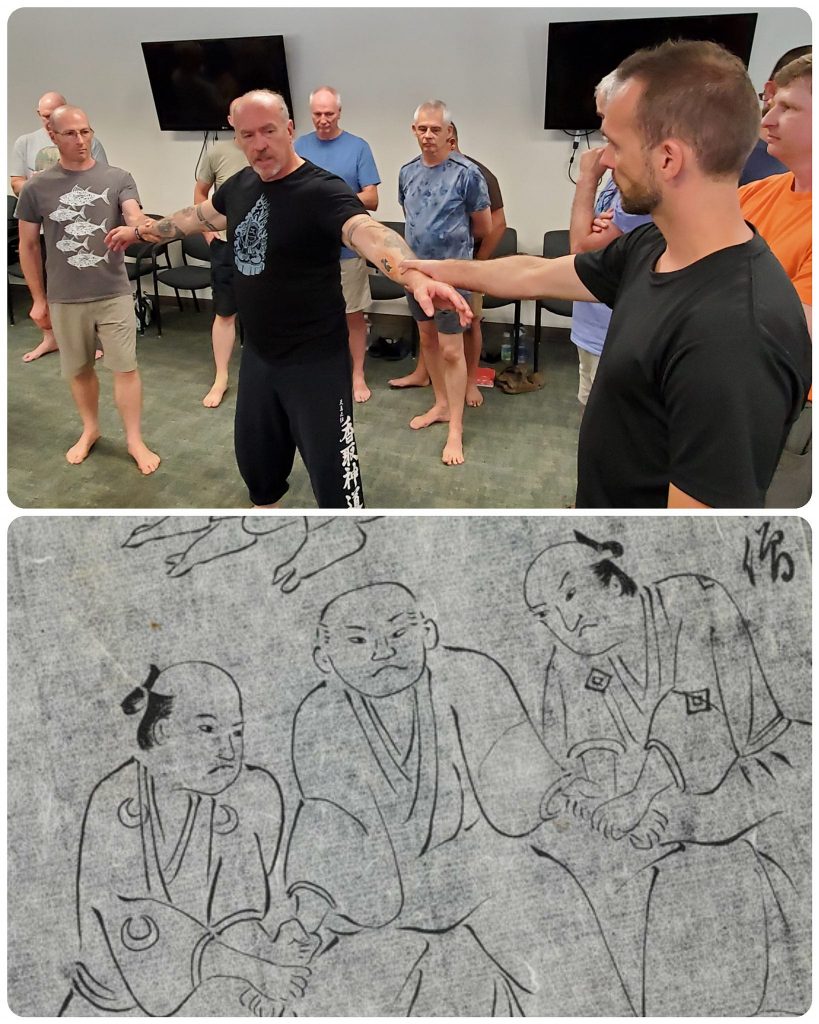
    In 1938, Morihei (Moritaka) Ueshiba published the technical manual “Budo” – Yoshinkan Aikido founder Gozo Shioda (above, from the manual itself) was one of the students featured as partners in the photographs.

    Prince Kaya Tsunenori

    Budo was originally published as a simplified military manual for Prince Kaya Tsunenori, the superintendent of the Toyama Military School where Morihei Ueshiba was an instructor (the original Japanese text is available here). In many ways it was a simplified version of the more complex Aiki-jujutsu Densho, published earlier and then republished after the war and used as an instructional manual as Aikido Maki-no-Ichi.

    Some of the translation issues with the “Budo” manual were discussed previously in Morihei Ueshiba, Budo and Kamae.

    Here is another example from the same manual – item number 49.

    In “Budo: Teachings of the Founder of Aikido“, translated by John Stevens, this item appears as:

    There is no photo (either in the original Japanese text or the English translation), and no explanation, but it was felt that “Developing Arm Power” was important enough to mention.

    This is not uncommon for “secret” items, whose content would be imparted through “Kuden” (口伝), oral transmission.

    In many traditions the oral transmission would be limited to a select few students, or possibly only a single student – the explanation that would “unlock” the physical training.

    This particular item is included in a section on “finishing exercises” (終末動作) that includes Tai-no-Henka (體の変化), and “Ki Power Development” (気力の養成), the exercise otherwise known today as seated Kokyu-ho (座技呼吸法), both foundational conditioning exercises that Morihei Ueshiba typically included in every training session.

    Coincidentally (or perhaps not), Morihei Ueshiba often stated, as repeated by Morihiro Saito, that a student could learn all the essential principles of Aikido through just these three core exercises, Tai-no-henka, Morotedori-kokyuho, and Suwariwaza-kokyuho.

    So let’s look at the original Japanese entry for this item:

    Budo Item 49 - Original Japanese

    Most of the text is the same.

    This entry is noted as item 49, to be “imparted orally” (口授ス).

    The title of the section is 臂力の養成 – “Hiriki no Yosei” – so it’s here that we run into some differences from the original English translation of “Arm Power Development” by John Stevens.

    The Kanji 臂, somewhat archaic, is sometimes translated as “arm”, but is most commonly noted as an obsolete form of 肘 – “hiji”, or “elbow”.

    Here it is in the digital edition of the Daijirin (大辞林) Japanese dictionary – “the outer side of the joint connecting the upper arm and the forearm”, with the Kanji from Budo (臂) noted as an obsolete form of the modern usage:

    So now – rather than “Arm Power Development”, we have “Elbow Power Development” – a term that most Yoshinkan Aikido practitioners will instantly recognize as one of the basic conditioning exercises emphasized by Gozo Shioda, and as previously noted – Gozo Shioda actually appears in Budo a number of times.

    Gozo Shioda and his son Yasuhisa actually note this usage, in both English and Japanese:

    Total Aikido: The Master Course

    Gozo Shioda and Yasuhisa Shioda

    “Total Aikido” notes above, that in Aikido “Hiriki” (臂力) means:

    “breath power (“Kokyu-ryoku”) as expressed through the elbow”

    Of course, this is a significantly different nuance from “arm power”.

    The text above also notes that this is “the basic form that we use to teach the body to develop breath power”, and as Gozo Shioda used to note – Morihei Ueshiba would constantly repeat “Kokyu-ryoku, Kokyu-ryoku, Kokyu-ryoku” when instructing.

    The importance of this conditioning exercise is also emphsized in another version of the Budo manual, “Takemusu Aikido Special Edition BUDO:Commentary on the 1938 Training Manual of Morihei Ueshiba“, translated by Sonoko Tanaka and Stanley Pranin:

    This time Hiriki no Yosei is demonstrated as the fundamental training and conditioning exercise Morotedori Kokyuho, as taught by Morihei Ueshiba after the war in Iwama and demonstrated here by Morihiro Saito and his son Hitohira.

    Another way to consider this is to reflect upon these statements by Morihei Ueshiba’s teacher Sokaku Takeda:

    「合気は常に前に出る…合気は肘から先に」

    “Aiki always moves forward…straight forward from the elbow.”

    Sokaku Takeda, prior to establishing Daito-ryu Aiki-jujutsu, was well known as a swordsman, a practitioner of Ono-ha Itto-ryu:

    “The sword style incorporated into Daito-ryu is Ono-ha Itto-ryu”

    Interview with Tokimune Takeda, Aikido Journal

    A core principle of Itto-ryu is sharin zenten, the “entering wheel” (車輪前転):

    Principles of Budo: Ono-ha Ittō-ryū

    Budo Japan

    “If you were to describe in words what happens when you do Kiriotoshi, it probably goes something like: “When the opponent cuts down, deflect his blade away with the side of yours and cut into him.” Because the direction your sword cuts is the same as your opponent’s, you would think this could not possibly happen in an actual situation, except by accident. This is because you think of the cut as a line or a point, or consider the probability of this happening. But the true nature of this phenomena of Kiriotoshi is found in the forward rotation of a wheel. You will be able to do uwadachi instantly by rotating everything forward like it was a tire moving forward around its axle and meeting your opponent’s sword as if you were enveloping his downward cut. This is not a mere contest of speed, nor an issue of the trajectory of his sword, nor is it a form of counterattack. This rotation is a principle related to all of the other techniques. For example, techniques one through five look completely different, but they are all Kiriotoshi because they put into practice the principle of sharin zenten that is common to all.”

    It may be worth considering the role of the elbow, when connected and empowered through Kokyu-ryoku, in creating the entering wheel discussed above, and its relationship to Aiki.

    In Kenji Tomiki’s “Introduction to Goshinjutsu” (護身術入門), published in 1974, Kenji Tomiki discusses the “Principle of the Lever”:

    In the diagram above Kenji Tomiki gives a mechanical description of Yin/Yang (In/Yo) opposing forces around a central non-moving neutral pivot.

    “Aiki is an absolute neutral, therefore the neutral possesses In and Yo”

    Tokimune Takeda – Aiki Kuden and Hiden

    Or, as is commonly stated in the Taiji Classics:

    “Taiji originates from Wuji; it is the pivot of motion and stillness, and the mother of Yin and Yang.”

    Kenji Tomiki approximates this classical body usage in modern mechanics as a force couple. According to Wikipedia this is defined:

    A couple is a pair of forces, equal in magnitude, oppositely directed, and displaced by perpendicular distance or moment.

    Further:

    Its effect is to create rotation without translation, or more generally without any acceleration of the centre of mass.

    I will leave the practical application of this in the body, a much longer discussion that benefits significantly from hands on instruction, as an exercise for the reader.

    Arms or elbows…your choice!

  • Happy New Year of the Ox 2021 from the Aikido Sangenkai

    Happy New Year of the Ox 2021 from the Aikido Sangenkai

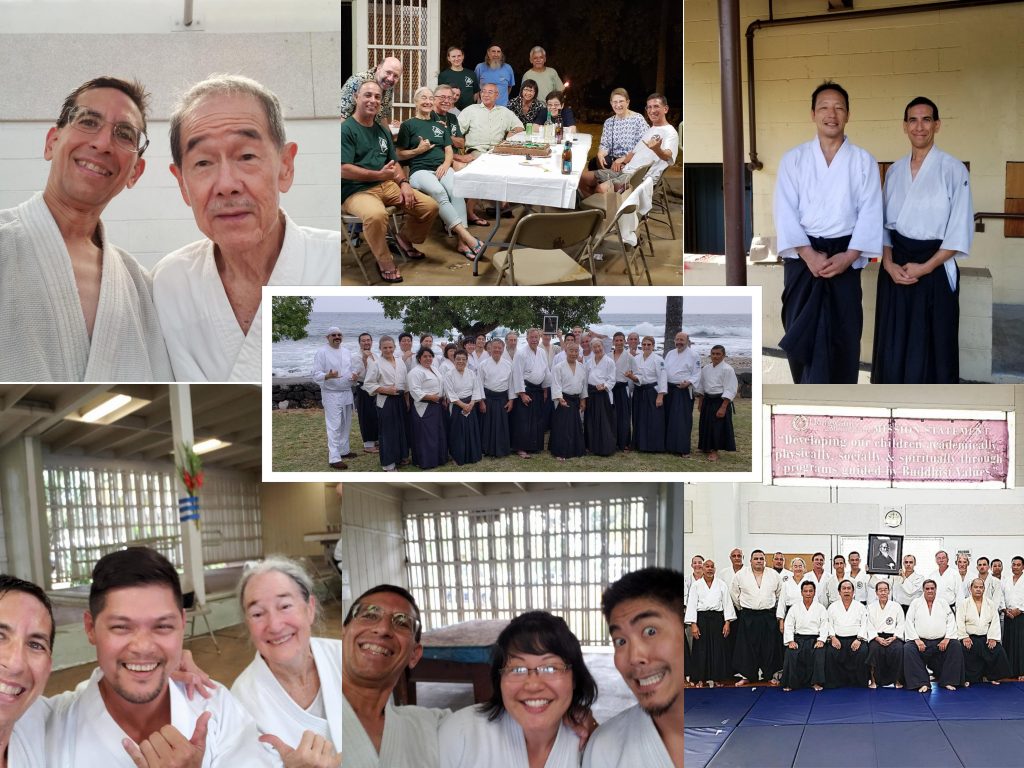
    Thank you all for your help and support over the last year. We enjoyed training with all of you in 2020 (what little training there was before the world locked down for Covid-19), and we’re looking forward to restarting training with you all in the coming year!

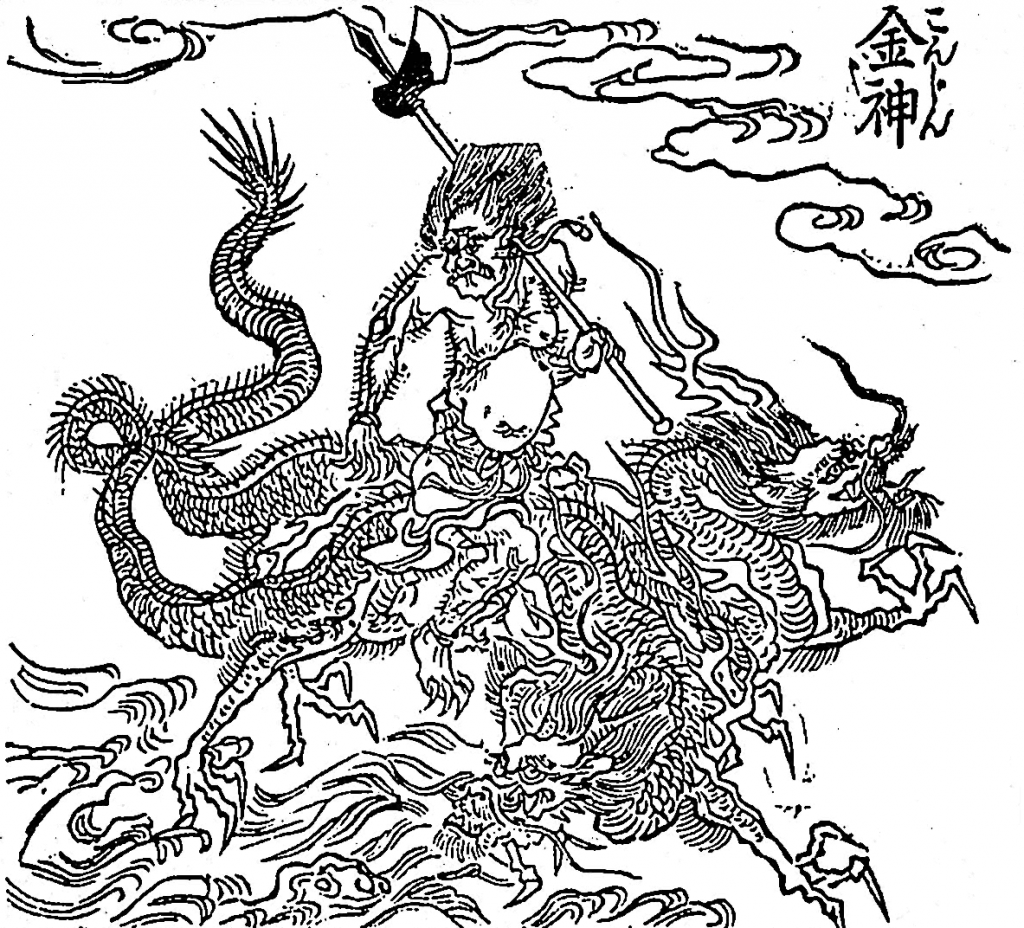
    Konjin – from Abe no Seimei’s Hoki Naiden (The Book of Yin and Yang)

    2021 is the Year of the Ox (actually, the Metal Ox), promising success through hard effort (we can all hope).

    The primary deity of Onisaburo Deguchi’s Omoto religion is also an “Ox” – “Ushitora no Konjin” (艮の金神), the “Ox-Tiger” kami who guards the North-East segment of the compass. Actually, Ushitora is a Daoist diety from Onmyodo – “The Way of Yin and Yang” – Sokaku Takeda’s grandfather Soemon was apparently a master of Onmyodo.

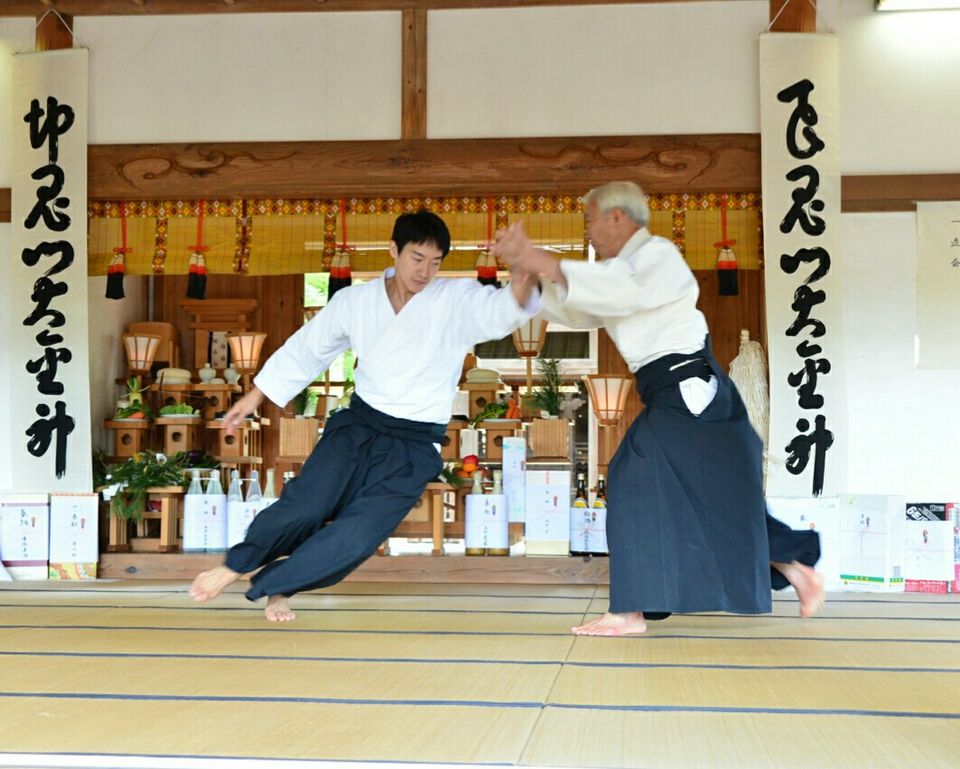
    San-dai Doshu Moriteru Ueshiba at the Aiki Shrine in Iwama

    Above you can see the twin banners that are displayed at the Aiki Shrine in Iwama during the Taisai (合気神社例大祭) each year in April, commemorating the passing of Morihei Ueshiba (at one time they also hung in the dojo itself).

    “Ushitora (Imi-tsutsuchi) no Konjin” (艮鬼門大金神) on the right (traditionally representing the North-East) and “Hitsuji-saru (Imi-tsutsuchi) no Konjin” (坤鬼門大金神) on the left (traditionally representing the South-West).

    Yin and Yang, representing stillness and motion:

    静中触动动犹静
    “Seek motion in stillness, seek stillness in motion.”
    The Taiji Classic – “Song of the 13 Postures”

    動中静、静中動
    “Stillness in motion, motion in stillness.”
    Seigo Yamaguchi Shihan, Aikido 9th Dan

    静中の動。合気道の基本は此処に存するといわれている。
    “Motion in stillness. It is said that here is the foundation of Aikido.”
    Ni-Dai Aikido Doshu Kisshomaru Ueshiba

    静動一致
    “The unity of calm and action.”
    (Official English translation – the Kanji read “stillness” and “motion”)
    Ki-Society Founder Koichi Tohei

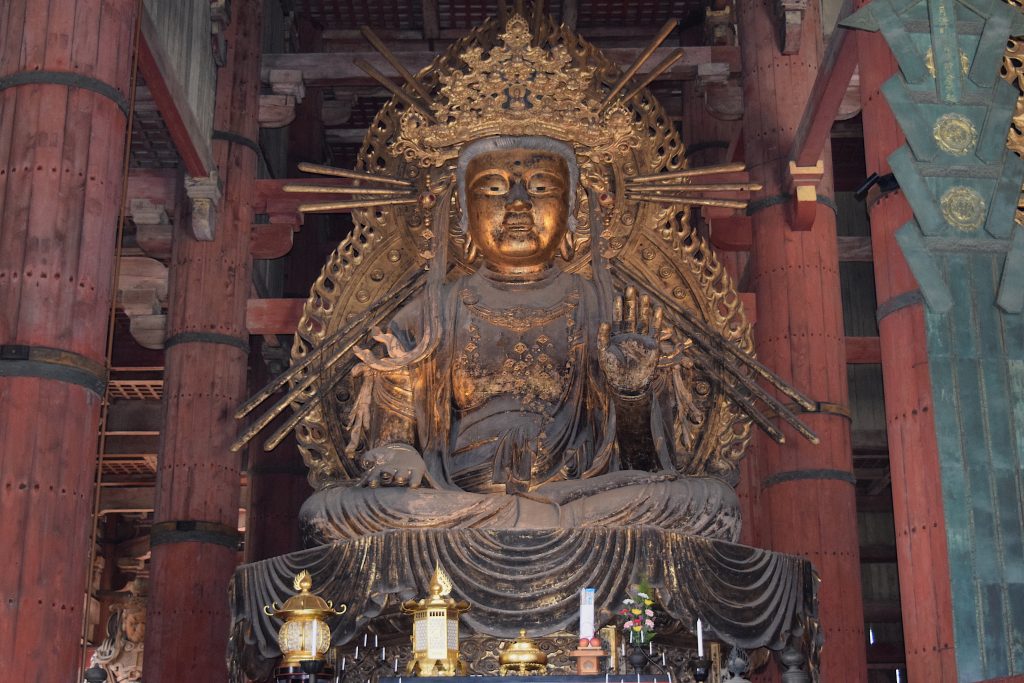
    Kokuzo Bosatsu, deity of wisdom and memory.
    Todaiji temple complex, Nara, Japan. 1709 CE.

    There are eight Buddhist deities assigned to protect the twelve animals of the Chinese zodiac, and who work to protect the people born in those years. The Buddhist protector of the North-East, Ushitora no Konjin’s segment of the compass is Kokuzo Bosatsu, who is often pictured holding a wish granting jewel (如意宝珠 / chintāmani / nyoi-hōju) – a jewel said to have the power to produce whatever one desires.

    The Treatise on the Great Perfection of Wisdom (大智度論 / Mahāprajñāpāramitā Upadeśa) states that this jewel can be obtained from the head of a Dragon King.

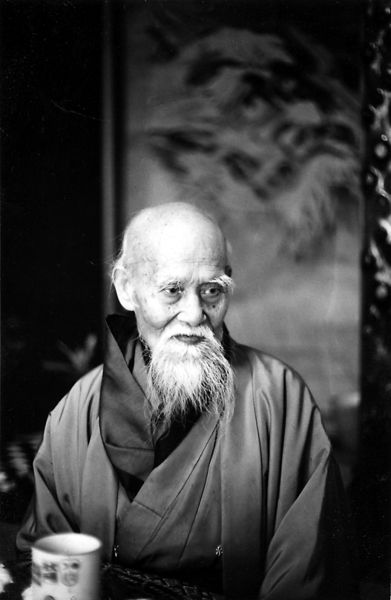
    Coincidentally, Morihei Ueshiba believed the Dragon King to be the patron god of Aikido. Here Morihei Ueshiba is portrayed as the “Dragon King” (天之叢雲九鬼さむはら竜王). This portrait is said to represent the unification of stillness and motion – bringing us full circle (and isn’t Aikido supposed to be circular?).

    Aikido Founder Morihei Ueshiba in front of
    a self portrait of himself as the Dragon King

    We hope that you can find the wish granting jewel and that all of your wishes will be granted in 2021!

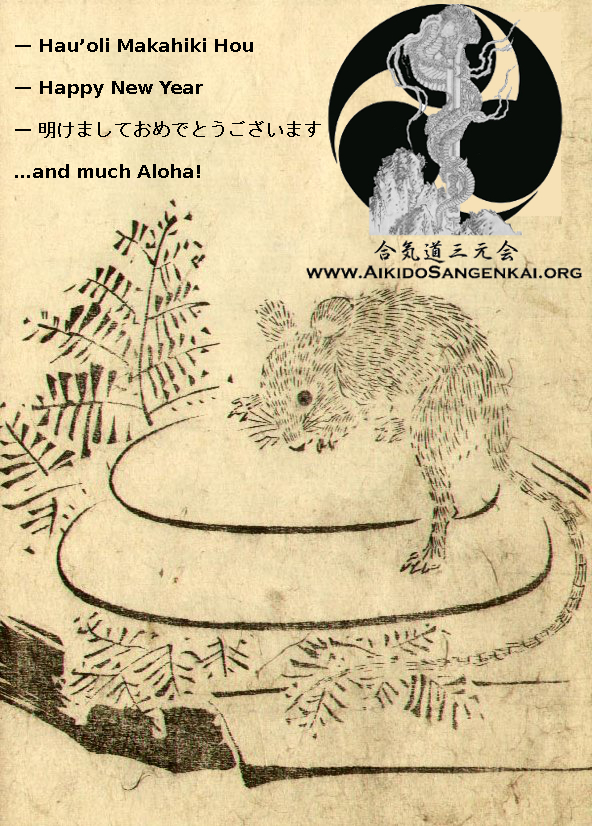
    Hau’oli Makahiki Hou
    Happy New Year
    明けましておめでとうございます!

  • Happy New Year of the Rat 2020 from the Aikido Sangenkai

    Happy New Year of the Rat 2020 from the Aikido Sangenkai

    Thank you all for your help and support over the last year. We enjoyed training with all of you in 2019, and we’re looking forward to even more great training with you all in the coming year!

    Sangenkai Hawaii

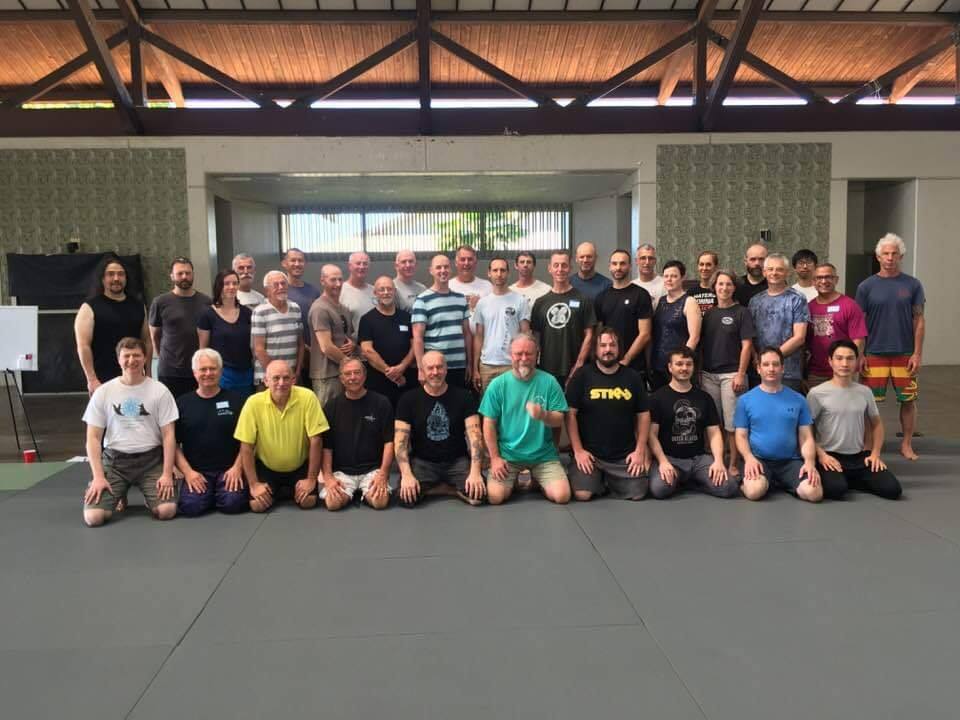
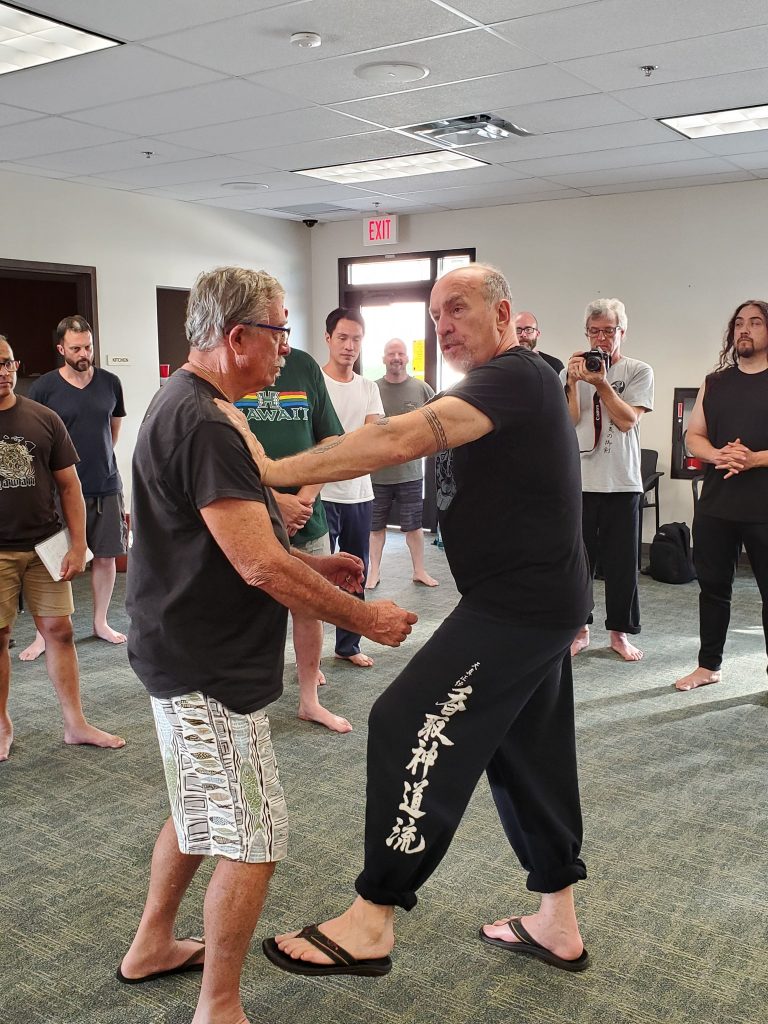
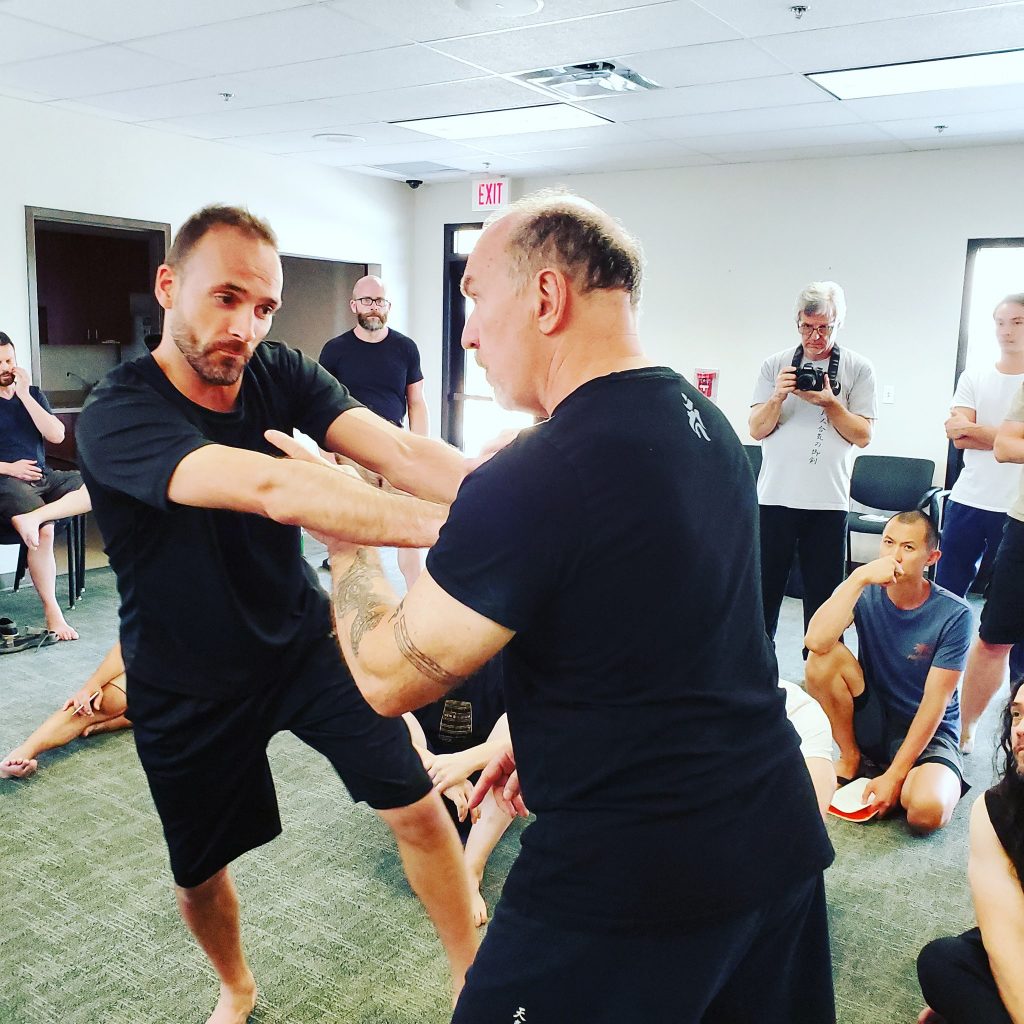
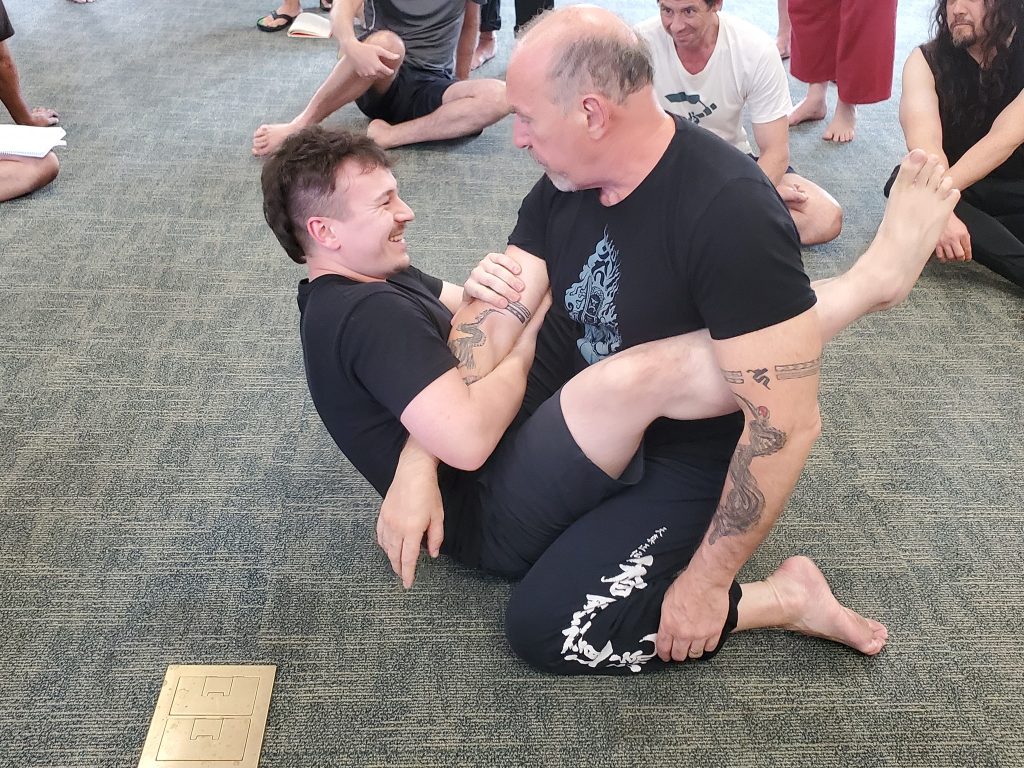
    December 2019 Sangenkai Hawaii Intensive Workshop
    hosted by Aiki Kai O Kona

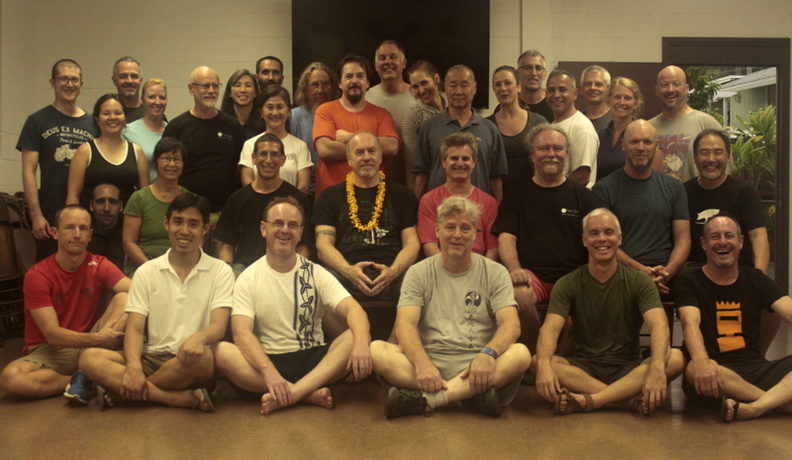
    The capstone to another year of training in Hawaii, in December 2019 the Sangenkai Hawaii intensive workshop once again attracted attendees from all over the world, with a large group Australia Sangenkai members as well as mainland, local and neighbor island Sangenkai members – continuing the tradition as the only workshops in Hawaii that command a regular international attendance.

    And now I’d like to finish with some thoughts for the coming year in this statement published at the end of 2018 by Dan Harden, discussing Aiki, Shugyo, and his continuing relationship with Roy Goldberg Sensei, one of the highest ranking Daito-ryu instructors in the world:

    Most people now know that Roy Goldberg and I resumed our training many years ago after a few years off.

    We were training at my house all day today and realized this was our 28th year anniversary of knowing each other and training together. While we each took a different turn in our training under Kiyama shihan; Roy remained, pursuing aiki in kata traveling with Kiyama to Japan, staying at Kiyama’s home. We also trained privately with Kiyama in Roy’s home, year after year, with Roy eventually becoming Kiyama’s highest ranked student—indeed becoming one of the highest ranked Western practitioners in the world: receiving Kyoju Dairi and being awarded 7th Dan and the third scroll.

    I remained, (perhaps true to my nature) in pursuit of the same aiki body, in MMA, Judo and grappling and tried to develop aiki-in freestyle and at speed. What a delight it was to come together again and discover where we each had gone and then continue blazing our trail together. Two friends in Shugyo.

    What a surprise when Roy showed up with a gift. He had commissioned two rings to be made by a world renowned jeweler. They are hand carved figures of Fudo Myo-o. The very definition of his name expressing our mutual pursuit: “Esoteric training to achieve immovability.”

    Without my knowledge Roy had offered—rooms full of people—his opinion of my direction, and a written a forward to my upcoming book. I had done the same about him both in public and on a private Daito Ryu website.

    So today we thought we would celebrate our venture with the rings and our sharing our opinions about our two paths.

    This was my opinion of Roy expressed to some rather frustrated students of Daito Ryu wondering why they never “got it.”:

    It’s my understanding that quite a bit isn’t shown to ni-dans and san-dans and such.

    There is quite a bit that comes later…if at all. I know you all practiced for years. Everyone practices, but not everyone is chosen. I don’t know why you weren’t shown, but stating what Aiki is or isn’t, by your personal experience as defining the entire art, is simply not a good plan.

    We have spent years reading on many forums and in countless interviews done with Stan Pranin where Japanese Daito Ryu shihan openly stated that they did not teach the majority of their own students. Instead, they picked one or two “so that the secrets wouldn’t flow out of the school.” (more on that later).

    For that reason any of you making statements that “I don’t think this or that is in the art, because I wasn’t shown it and haven’t seen it.” Is rather ridiculous at face value and can have serious logic flaws.

    For starters it can be seen and can be mimicked without actually getting it.

    Teaching?

    Remember Takeda and Tokimune saying repeatedly that “they showed different things to different people in different places?”

    What do you think you get when you ask those people what they think the art….is?

    Remember Tokimune and Sagawa admitting that they never taught their ENTIRE school the true art?

    Weird huh? Imagine being an insider, being the secretary or president of Tokimune’s organization and finding out thirty years later he was actually only teaching Kondo… Who many considered AN OUTSIDER??? That wasn’t even a regular member of the dojo. That really happened.

    I think you need to consider who else might have done that.

    Teaching inconsistencies:

    Sagawa taught a lot about solo training, and breath work, then claimed he didn’t!!

    Kodo practiced Aiki-in-yo-ho breath work and solo training.

    So did the Inoue
    So did Takuma Hisa
    So did Okabayashi. 
    So did Tokimune
    So does Goldberg
    So do I

    Much of which, Daito ryu People on forums have claimed didn’t even exist.

    We need to finally accept that there are levels of teaching in Daito Ryu not available to all.

    There was in the end, a benefit to becoming Kyoju Dairi,

    In Goldberg’s case, we sat at countless dinner tables, and on mats all over New England hearing Kiyama state over and over that Goldberg is his number one student. Indeed when Goldberg received the third scroll, Kiyama openly stated that “Roy had single handedly changed his mind. That now he could see westerners were capable of true shugyo.” This, while expressing dismay, that most of his students never really pursued the same path. Roy, and Danny Kiyama discussed much of this recently.

    I was proud of seeing what my friend had accomplished after all these years. I was also surprised to hear of Kiyama’s decision to put in the paperwork for Roy’s Shihan, and Roy, summarily leaving Japan.

    When I asked him why one night at one of our favorite watering holes. He told me: “Our philosophies were different. I felt it was necessary to spread this art to *real* Shugyo people. I have seen, first hand on many trips to Japan, the Kodokai shrinking, both in Japan and the United States and this once magnificent art could die. And all my teachers efforts could be in vain. As so many teachers have said “only teach one or two….so that the secrets wouldn’t flow out of the school.” I think times have changed and we need to teach, or this art will continue to fade.
    Interestingly, Roy had recently received a letter from one of the leading Kodokai Shihans in Japan, supporting his efforts and decision. Stating: “I watched you and found your skills quite impressive. I support and am anticipating your future activities.”

    Roy’s forward:

    Dan is one of the best Martial Artists I have ever encountered. And I know that not just from a couple of seminars but some 28 years of training together in Daito Ryu. With his obsession to Shugyo, he has brought the combat part of Daito Ryu alive again. His internal power and aiki is pulled from another era. His approach reflects people like Sagawa and Takeda who took on any challenger

    I have been fortunate enough to work with some of the leading martial artists in Aikido, Tai Chi Karate, Judo and classical jujutsu and Daito Ryu, none was able to create such soft power. Call it internal power or aiki or however you want to analyze it, he’s got it.

    Being a Physical Therapist for 45 years, I have tried to understand many of the aspects of Daito Ryu and realized it never helped me on the mat. Kiyama Shihan would always say “Goldberg! It’s in the Shugyo! Computer never understand! Do Shugyo. You decide.”

    Many people may say “Well Dan is a just a big guy, that’s why he hits with such power.” But, these are only people who have never touched him. What he does is both powerful and soft and a true expression of Aiki, at speed, force on force, in a way I’ve never seen. I have also had the privilege of watching Dan tossing Shihan across the room with little effort. Many of these Shihan, are presently training with Dan. We must applaud Dan Harden Sensei for the depths he went to, to find this.”

    On this anniversary we wanted to recognize the different paths we took, and help those who were unaware we were training together privately. And now for the first time to openly share our research in Aiki-in-yo-ho, the creation of the aiki body, the one true power in Daito Ryu. And also acknowledge each others work, the future of the art and share our plans to work together in the future.

    So many talk…..

    We are continuing to spread the essence of this magnificent art in both the United States and internationally, to those like us… In pursuit of true shugyo.

  • Happy New Year of the Boar 2019 from the Aikido Sangenkai

    Happy New Year of the Boar 2019 from the Aikido Sangenkai

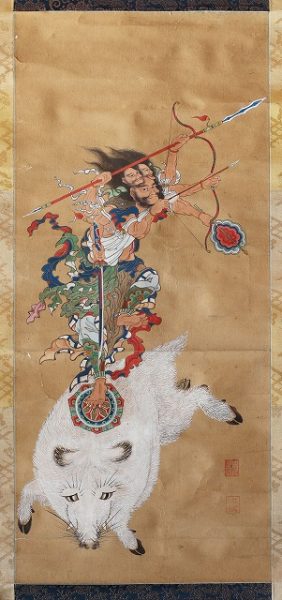
    Marishiten riding a boar
    Katsushika Hokusai
    the goddess Marishiten riding a boar

    — Hau’oli Makahiki Hou
     — Happy New Year
     — 明けましておめでとうございます
    …and much Aloha!

    Thank you all for your help and support over the last year. We enjoyed training with all of you in 2018, and we’re looking forward to even more great training with you all in the coming year!

    February 2018 Sangenkai Intensive Workshop in Hawaii

    In 2018 our Sangenkai intensive workshop attracted attendees from Japan, Korea, Malaysia, Singapore, Sweden, the mainland USA, Sweden and our local and neighbor island Sangenkai members as well as a large group of New Zealand and Australia Sangenkai members, continuing our tradition as the only Aikido group in Hawaii to hold workshops that command a regular international attendance.

    At the top of this page is the goddess Marishiten (摩利支天) pictured as a wrathful demon riding a boar (for 2019 🙂 ) . Marishiten is an esoteric Buddhist deity closely associated with the warrior tradition in Japan. Esoteric Buddhist practices were very popular in many Japanese warrior traditions – and for Sokaku Takeda and Morihei Ueshiba as well.
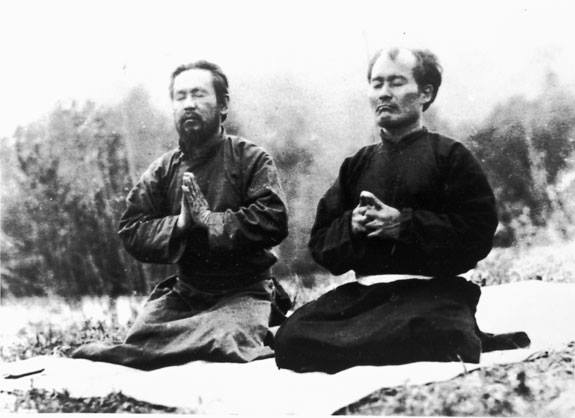
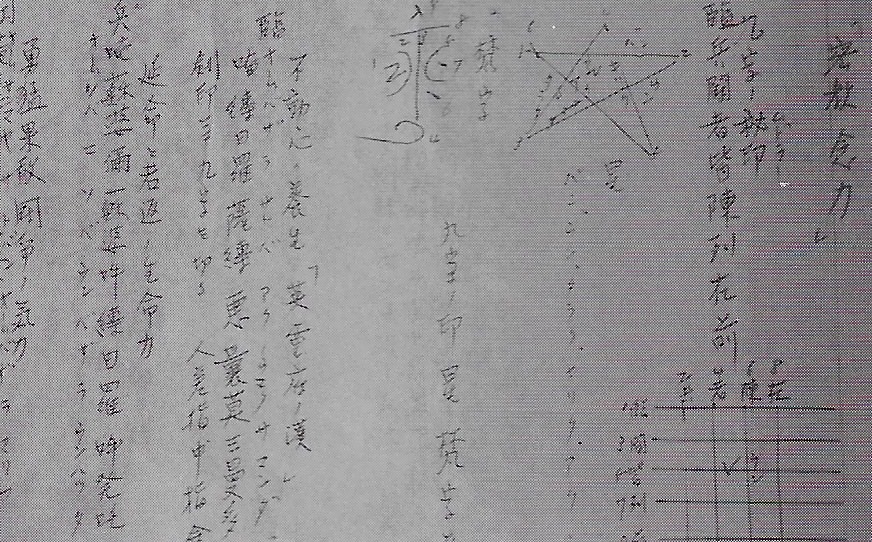
    Tokimune Takeda's private notes
    A section of Tokimune Takeda’s private notes
    on his father Sokaku’s teachings on the Kuji-kiri and
    esoteric Buddhist disciplines

    “If you don’t research the Kuji Kiri you won’t understand Aikido.”
    – Aikido Shihan Sadateru Arikawa

    Esoteric Buddhist references abound in Tokimune Takeda’s notes of his father Sokaku’s instruction – and no less in Morihei Ueshiba’s lectures, but before we go too far, I should mention that this is not about religion, strictly speaking, but about martial training – about a system of visualization and imagery that goes back through China to India and has deep roots in Asian martial systems because…it works, and works rather well. It works so well that modern athletes and Olympic champions now use imagery and visualization in their day-to-day training.

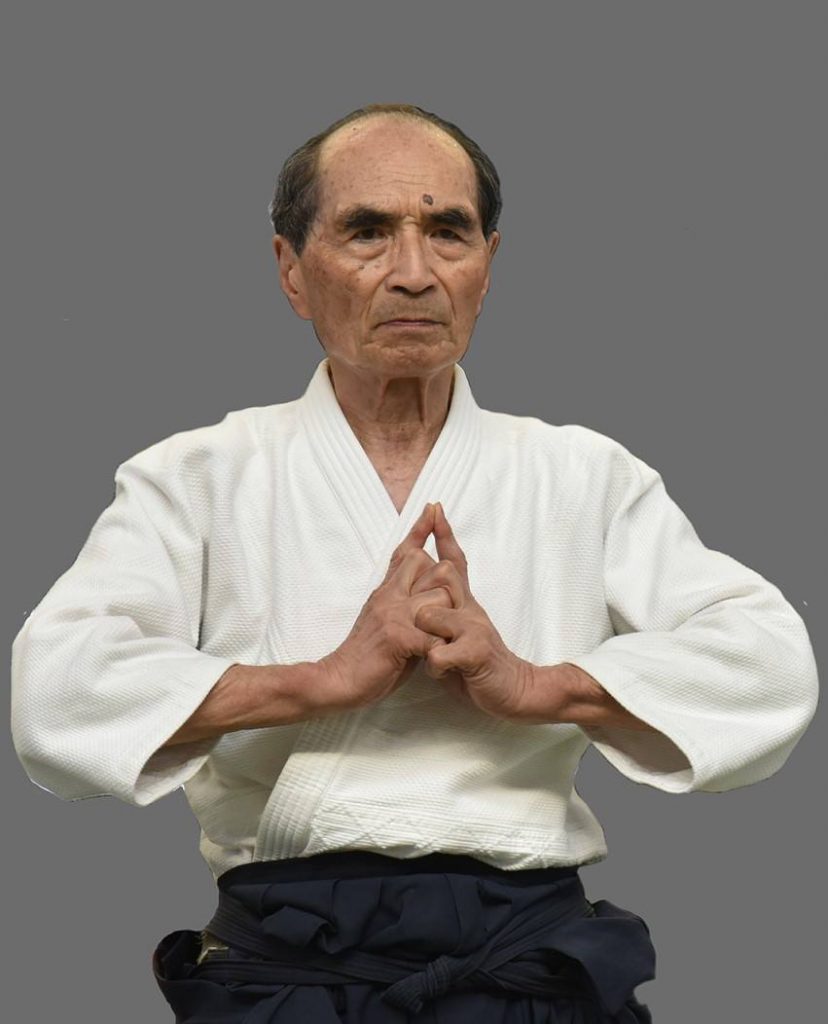
    Hiroshi Tada demonstrates the Kuij mudra Rin

    “When one looks at O-Sensei’s Doka and other writings they might think that they are related to Shinto, but they actually contain the teachings of Shingon esoteric Buddhism.”
    – Aikido Shihan Hiroshi Tada

    Morihei Ueshiba using the Kuji mudra

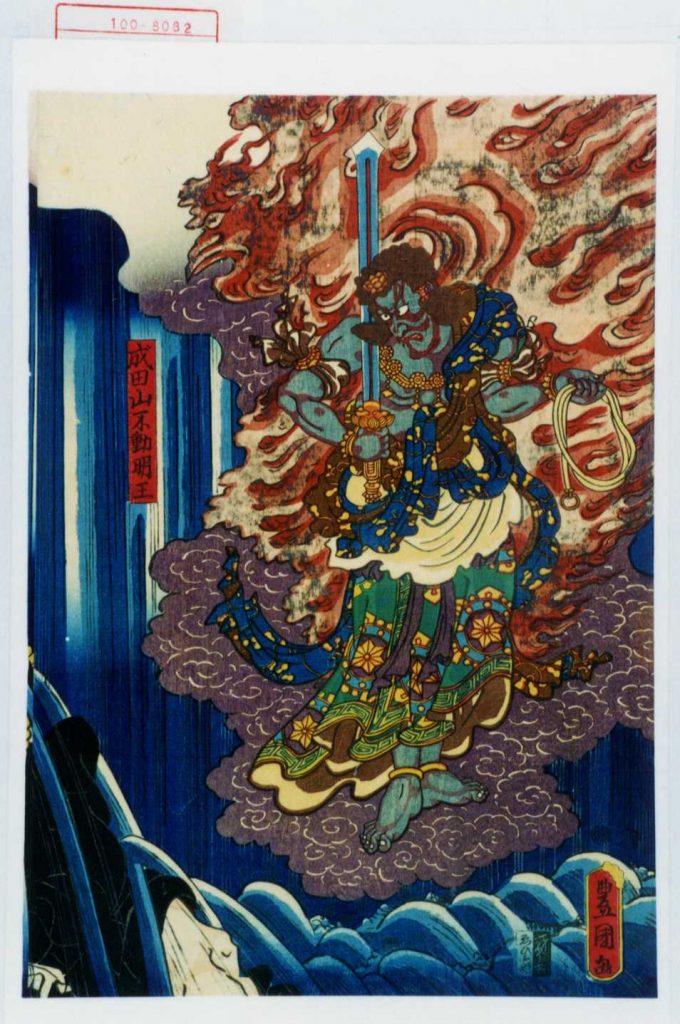
    Another esoteric Buddhist deity that figures prominently in the warrior tradition is Fudo Myo-o, the “Immovable Wisdom” that represents an important principle of training in the Asian martial traditions, but is often badly misunderstood. Attached below is an essay by Dan Harden on the subject of Fudo Myo-o (originally posted on e-Budo, but edited for clarity as a stand-alone essay) – I hope that it will prove thought provoking and useful to your training in 2019. Happy New Year!

    The Narita-san Fudo, associated with
    Morihei Ueshiba’s teacher Sokaku Takeda
    by Utagawa Kunisada

    Fudo myo-o (Acala vidya) is a training paradigm that has lasted for millennia to create truly powerful skills. That it is being reduced to the lowest common denominator by modern martial artists, sport science, military personnel and cops is really no surprise. While we all agree on the mental aspect of training – more so in force-on-force or life threatening situations circumventing or at least dealing with an adrenaline dump aspect of training, to remain both calm and focused – the concept is far deeper than any of that.

    It was the connection of the mind to control the body that led to a higher level learning that has existed for millennia. Trying to equate and more so -reduce it to just being a lower level training of mental focus in combatives is just simply wrong.

    Okay, then…. mental focus under duress. Got it. Got anything else? Anything at all?
    No?
    Why?
    Most people simply haven’t a clue about anything else. No harm, no foul, But it is what it is. Some have some initial understanding of this type of training, but little actual skill in using it. Which bears out in their inability to demonstrate an enhanced mind/ body cultivation either in their arts or bodies. It’s either very, very hard or rather easy, to defend in person. It is interesting that the training models to produce immovability are still extant though not widely known, none of which I have seen incorporate the unshakable combative mindset idea. That..is different, rather they focus on the mind/body. One example is the hara or dantian: As one internal Chinese martial arts powerhouse who taught in Japan said. “Aiki? Where is yin? Where is Yang? How can there BE…aiki? You cannot pretend daintian, you will be found out!”

    While I have seen better movement from a few Japanese teachers, as of yet I have never met a single person in Aikido, Daito ryu or Koryu who HAS a center, much less sophisticated use of one. Thus discussion of moving “from one” becomes a total waste of time. It would take years from initial meetings to have them start to actually create and move FROM one, forget a meaningful dialogue.

    What remains is that there still exists people who know it and train this material. They are just exceedingly difficult to find and come in various knowledge and skill levels.

    What are they training?

    The immovable body as a concept.

    All of the trade names and acumen for this work have existed for generations and have managed to survive direct translations from culture to culture, with the same terminology and practices used from Tibet to India to China and Japan as well as to specific family Indonesian arts. One would first have to know the terminology, and the practices to understand why the common phrasing is a base line. Once that is done, we can see the uses of common terminology and models from Tibet to internal Chinese martial arts, to Japan; the founder of Shinto ryu and other Koryu to Daito ryu on to Ueshiba’s aikido. Himself using trademark terminology of six directions, the working of attraction point between yin and yang, Aiki being the working of the two ki’s as heaven/earth/man. Ages old material. From B.C.E. to 2019.

    Immovability… as a name?

    Here we have just another example with Acala Vidya to Fudo Myo-o.

    Acala vidya or Fudo Myo-o makes perfect sense – as it is written. “Esoteric training to achieve immovability.”

    It makes no sense what-so-ever to call a person, deity or statue….an “esoteric practice!”

    Why bring in vidya, as in prana vidya (esoteric training to work ki or chi), or Myo or Mikkyo?

    Why?

    Why mention a training when you were talking about a deity or person?

    Because you were not! You were talking about a training concept and methodology.

    The mention of a training, an esoteric one at that, is not an imagined state. Which in itself is nice little escape. What a convenient way to equalize all efforts.

    ”This is my fudo shin.”

    “MY…imagined state.”

    “You can’t challenge my imagined state….”

    Yet we can challenge an understanding of the real concepts. And why can we? For the simple reason that the thrust of this in the ancient world had teeth. It had a profound physical training model behind it that produced physical, real world results for what feels like immovability and power. Not just being strong willed against adversity.

    Another example for imagined versus real results are in simple but well known models;

    I do this with yogi’s in mountain pose. They can get knocked over with a finger rather easily. Then, I show them an example of “the esoteric training to achieve immovability” behind it and surprise of surprises in about 5 minutes flat…they feel? Well…sort of like a mountain.

    I wonder why they called it…. mountain pose?

    I leave them to choose. You can teach:

    Lift your heart chakra to the sun yoginis

    or

    Use it to be stable and feel strong….like a mountain.

    It is the same with downward dog and other postures.

    I dunno…maybe words have meaning. Maybe some ancient practices actually are defensible and others are just what they are…simply imagined states.

    Why Acala vidya? Why esoteric training that produces immovability? Uhm…because it did, and does and was tracked and trained and discussed and actually useful for real people not living in an imagined state. As stated, it simply makes a direct causal link that it was the training to achieve something profound in many warrior cultures that also had health benefits as well as power that gave name to the concept.

    Why was it not the norm?

    The oft told tale of training in the mountains, training in temples, warrior monks being unusually powerful, has existed for thousands of years. Mind/ body training has been consistently trained solo, many times in isolation and tested and practiced in small groups.

    • First and foremost it was for a mental control of the body to do unusual things that were powerful and out of the norm. That training created different outcomes in combatives that in and of themselves, were forces not normal for an opponent to face, or normal to react to.
    • As well, the adepts at it generated unusual effects to forces on them. So… OODA loops for the opponent? They went out the window.

    This was but a couple of examples of many reasons why the training has lasted for millennia. For those who can actually do it instead of just talk, it truly made a palpable difference on contact. The mind body training has created giants in budo and we in turn, look at the giants and follow them, instead of the training. Hence….the majority continue to suck and the giants remain, well, the giants.

    In the dawning of our present age which I call “the age of distraction” higher level, mind/body physical training has proven to just be too much for the instant gratification crowd. Why spend countless hours perfecting a tank like body that is all but impossible to throw and with the ability to hit like truck? Go do techniques. Most modern budo people have dismissed or rewritten history to discount this profound training and reflect their stupefyingly ignorant penchant for banging into each other with fists, legs, bodies, and more so sticks, swords and any things else they can get their hands on.

    It hasn’t gone away. It is just starting to come out to the public. Those so inclined are discovering the arts did have secrets all along. It wasn’t B.S. and they do have worth. It is why they have lasted for eons. Hard physical work is required.

    NOT flinching from a battlefield environment or being focused in a fight…was not it. Not that there is anything wrong with that. As I asked before:

    Okay. On that we agree.
    Got anything else?
    Anything at all that it could mean?
    No?
    They did!


    – Dan Harden, March 2015

    Izumo Taishakyo Mission of Hawaii

    New Year’s Day at the Izumo Taishakyo Mission of Hawaii