Search results for: “tomiki”

  • Ueshiba-ha Daito-ryu Aiki-jujutsu [Spanish Version]
    Ueshiba-ha Daito-ryu Aiki-jujutsu [Spanish Version]
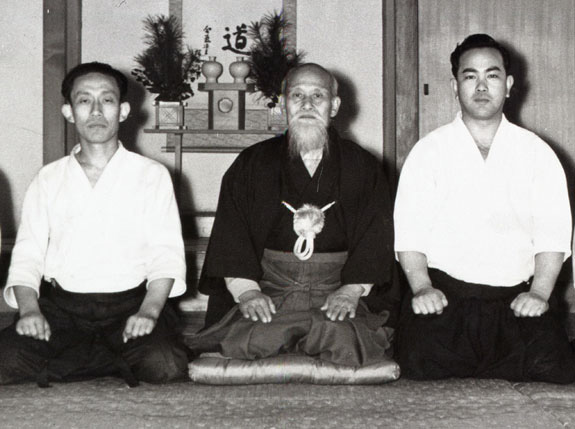
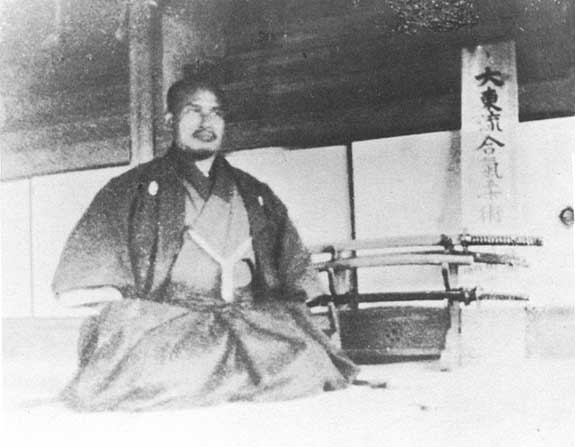
    Morihei Ueshiba in Ayabe, 1922Morihei Ueshiba en Ayabe, 1922
    frente a un cartel que indica “Daito-ryu Aiki-jujutsu”

    This is the Spanish translation of the article in English “Ueshiba-ha Daito-ryu Aiki-jujutsu” , provided courtesy of Héctor Muñoz Garcia.

    En 1922 Sokaku Takeda se trasladó a las instalaciones de Omoto en Ayabe a vivir con Morihei Ueshiba y proporcionarle entrenamiento y formación intensiva durante cinco meses. Ueshiba conoció a Takeda por primera vez en 1915 en el Hisada Inn (una posada) en Engaru, Hokkaido, y entrenó de forma intensiva con él durante unos años antes de trasladarse a Ayabe. Tokimune, el hijo de Sokaku Takeda, comentó una vez:

    Entrenó de forma extensa y entusiasta. Era el alumno favorito de Sokaku.

    En 1922, al finalizar su estancia en Ayabe, Sokaku Takeda le concedió a Morihei Ueshiba la certificación Kyoju Dairi (instructor asistente) en Daito-ryu Aiki-jujutsu, pasando a ser instructor certificado en este arte marcial.

    Morihei Ueshiba - Kyoju DairiCertificado Kyoju Dairi Daito-ryu Aiki-jujutsu expedido a Morihei Ueshiba

    Esta relación entre maestro y discípulo entre Sokaku Takeda y Morihei Ueshiba se prolongaría durante veinte años:

    Permíteme comenzar afirmando categóricamente que la mayor influencia técnica en el desarrollo del aikido es el Daito-Ryu jujutsu. Este arte marcial, que se dice es la continuación de la tradición marcial del Clan Aizu, y que se remonta varios siglos en el pasado, se propagó por Japón durante la era Meiji, Taisho, y el principio del periodo Showa por el célebre artista marcial Sokaku Takeda. Conocido a partes iguales por su proezas y su carácter severo, Takeda había utilizado sus habilidades en situaciones de vida o muerte en más de una ocasión. Takeda tenía cincuenta y cuatro años cuando conoció a Morihei Ueshiba por primera vez en el Hisada Inn en Engaru, Hokkaido, a finales de febrero de 1915. Este encuentro marcó el comienzo de una tormentosa y duradera, a la par que productiva asociación entre los dos, que duró durante más de veinte años.

    Aikido Journal Editor Stan Pranin – “Morihei Ueshiba and Sokaku Takeda

    Pero, ¿qué pasó después?

    Kisshomaru Ueshiba y el Aikido de la postguerra

    El 27 de octubre de 1985 en Sendai, asistí a una ponencia sobre la historia del aikido impartida por el Segundo Doshu Kisshomaru Ueshiba. Durante esta charla Kisshomaru Sensei hizo la siguiente aseveración: “El Fundador sólo estudió Daito-ryu durante tres semanas, más o menos.” ¡Me quedé con la boca abierta de incredulidad cuando escuché decir, a la persona más versada en la historia del aikido, hacer una afirmación que era evidentemente falsa!
    Aikido Journal Editor Stan Pranin – “Beware the big lie!

    La foto de Morihei Ueshiba al comienzo de este artículo fue tomada en 1922 después de recibir su certificación Kyoju Dairi de Sokaku Takeda, momento que da comienzo a su carrera como instructor de artes marciales, y como instructor en Daito-ryu Aiki-jujutsu bajo la autoridad de Sokaku Takeda.

    Sin embargo, hay una versión distinta en el mundo del Aikido moderno, una que es apoyada por la Aikikai, en donde el Aikido es la creación única y original de Morihei Ueshiba. Esta narrativa estipula que el Aikido es algo que él creó después de estudiar numerosas artes marciales, y que representó un cambio radical con respecto a sus prácticas pre-guerra, representando un dimensión espiritual nueva y original.
    Pero, ¿estamos seguros de que fue así?

    Pero, ¿estamos seguros de que fue así?

    Para empezar, esta versión no se sostiene con las afirmaciones de Kisshomaru Ueshiba, que aseguró que la revelación clave, la de “el gran espíritu de la mutua protección” (万有愛護の大精神) — sucedió 1925. En lugar de ocurrir después de la guerra, esto sucedió hacia el comienzo de su carrera como instructor de Daito-ryu.

    Morihei Ueshiba 1925Kisshomaru Ueshiba con su padre Ueshiba Juku en Ayabe, 1925

    Volviendo al Daito-ryu en sí mismo, vemos que las raíces filosóficas de Morihei Ueshiba…ya existían.

    Masao Hayashima

    Masao Hayashima — alumno directo de Sokaku Takeda
    “Aiki-jutsu es llamado el Budo de la Armonía”.

    Además de Masao Hayashima (arriba), también tenemos a un contemporáneo de Ueshiba y compañero de Sokaku Takeda, Yukiyoshi Sagawa afirmar que “El Aiki Budo es el Camino del Desarrollo Humano”.

    También tenemos a Tokimune Takeda, hijo de Sokaku Takeda, hablar sobre las enseñanzas de su padre:

    “Los principios fundamentales de Daito-ryu son Amor y Armonía”

    “El objetivo de enseñar Daito-ruy es “Armonía y Amor”, manteniendo este espíritu nos permite preservar y realizar justicia social. Este fue el último deseo de Sokaku Sensei.”

    Pero estos conceptos tienen su origen en las tradiciones marciales japonesas, lejos de ser únicas de Morihei Ueshiba o del Daito-ryu.

    • 「武ハ弋止ノ義何ゾ好テ以テ殺戮センヤ」 “Bu es el abandono de la violencia. Uno no debe encontrar placer en la batalla.”, Katayama-ryu Densho – 1647
    • 「我モ勝ズ人モ勝ズ相得テ共ニ治ル」 “No somos capaces de alcanzar la victoria ambos, uno mismo y el otro. Entonces los dos deberán alcanzar mutuamente un estado de paz.”, Katayama-ryu Densho – 1647
    • 「兵法は平法なり」  “Los métodos de la guerra son los métodos de la paz.”, Iizasa Ienao of Tenshin Shoden Katori Shinto-ryu  –  1387–1488

    Estos argumentos fueron expresados por el Profesor Karl Friday, historiador japonés y estudiante de las tradiciones marciales de Japón (recibió formación completa en Kashima Shin-ryu) en este extracto de una entrevista en 2009:

    La evolución de la sabiduría en las artes marciales japonesas (ryūha bugei) está íntimamente ligada a la historia de la guerra. Los sistemas y colegios de artes marciales fueron desarrollados con el objetivo de servir como herramientas para transmitir las habilidades necesarias en el campo de batalla, como respuesta a la intensa demanda de hombres hábiles en la lucha generada a comienzos de la Era Sengoku. Los guerreros que deseaban sobrevivir y prosperar en los campos de batalla durante el medievo comenzaron a buscar conocimientos y entrenamiento en soldados veteranos, que empezaron a codificar su conocimiento y a sistematizar sus enseñanzas. Así el bugei ryūha surgió de forma más o menos directa debido a las exigencias de las guerras medievales. Durante la Pax Tokugawa que empezó en 1600 y trajo más de 200 años de paz, se produjeron cambios fundamentales en la práctica de artes marciales. La instrucción se profesionalizó y, en algunos casos, se comercializó; los periodos de entrenamiento se prolongaron, el currículo se formalizó; y se elaboró el sistema de niveles para los estudiantes. Sin embargo, los motivos y los objetivos fundamentales de la práctica bugei fueron remodelados de forma significativa. Los samurai, que ya no van a pasar tiempo en el campo de batalla, buscaron y encontraron una forma más racional y relevante de estudiar artes marciales, enfocándose no sólo en las capacidades en combate, como tenían sus ancestros, sino también en el cultivo del ser.

    Esta es básicamente la historia que he resumido en mi libro “Legacies of the Sword Book” (legado del libro de la espada). Comienza por la asunción lógica de que ryūha bugei (sabiduría de las artes marciales) se origina como un instrumento para el entrenamiento militar, y evoluciona desde ahí hacia el budō, un medio para el auto-desarrollo y la auto-realización. Pero hay algunos problemas en esta imagen que se manifiestan si lo comparas con investigaciones recientes sobre las guerras medievales.

    En primer lugar, queda claro que ryūha bugei sólo puede ser considerado una pequeña parte del entrenamiento militar del siglo XVI. Había como máximo unos pocos ryūha durante el siglo XVI, pero los ejércitos de aquella época movilizaban decenas de miles de hombres. Para que incluso una pequeña fracción de guerreros Sengoku pudiesen haber aprendido artes marciales a través de una o varias ryūha, cada una de las mismas debía haber entrenado al menos varios cientos de alumnos por año. Por tanto, Ryūha bugei debían haber sido entonces una actividad especializada, realizada por solo un porcentaje diminuto de guerreros Sengoku.

    Un problema aún mayor, sin embargo, es la aplicación de esas habilidades que los bugeisha se concentraron en desarrollar durante las guerras medievales del siglo XVI. Las estrategias y tácticas estaban evolucionando. Donde en el siglo XV se dependía de guerreros individuales y pequeños grupos tácticos, en el XVI se concentra en maniobras militares de grandes grupos. Esto significa que los ryūha bugei se estaban enfocando en el desarrollo de habilidades individuales de combate, floreciendo en proporción inversa al valor de dichas habilidades de los guerreros en el campo de batalla.

    Recientes estudios sobre las últimas guerras medievales, demuestran que la espada nunca se convirtió en un armamento clave en el campo de batalla en Japón, sino que era considerada un arma suplementaria, análoga a las armas de mano que llevan soldados modernos. Mientras que las espadas se llevaban en el campo de batalla, se usaban con más frecuencia en peleas callejeras, robos, asesinatos y otros disturbios callejeros no relacionados con la guerra. Herramientas de proyectil — flechas, piedras y más adelante balas — dominaron las batallas durante el periodo medieval.

    Por otra parte, casi todas las ryūha que datan del periodo Sengoku o antes, aseguran que el uso de la espada juega un rol principal en el entrenamiento desde el comienzo. Tsukahara Bokuden, Kamiizumi Ise-no-kami, Iizasa Chōisai, Itō Ittōsai, Yagyū Muneyoshi, Miyamoto Musashi y otros fundadores de escuelas de artes marciales son conocidos por sus proezas en el manejo de la espada.

    Al principio, me pregunté si el lugar que tiene el estudio de la espada en las artes marciales medievales representaba una prueba contradictoria frente al nuevo consenso sobre el las últimas guerras medievales. Después de todo, si los bugei ryūha empezaron como sistemas para entrenar guerreros para el campo de batalla, e hicieron del arte de la espada el eje central de su estudio, ¿no sugeriría esto que la espada era más importante en las guerras medievales que lo que estos nuevos estudios nos quieren hacer creer?

    Después de batallar sobre esta cuestión por un tiempo, surgió la idea de que el problema puede residir en la primera premisa del argumento. Todas estas cuestiones que me inquietaban (¿por qué los bugei ryūha surgen en un momento en que la estrategia militar estaba eclipsando rápidamente a las habilidades marciales individuales como elemento decisivo en el campo de batalla, y clave para una carrera militar exitosa? ¿Por qué había tan pocos ryūha durante la era Sengoku, y por qué proliferaron tan rápido durante el comienzo del periodo Tokugawa, después de que los años de guerra hubiesen acabado? ¿Y por qué el manejo de la espada era tan prominente incluso en los primeros bugei ryūha?) eran más fáciles de responder si dejabas a un lado la premisa de que los bugei ryūha se originaron como instrumentos para formar en las técnicas necesarias en el campo de batalla. Y la verdad sobre este asunto es que hay muy poca base para esa vieja premisa, más allá del hecho de que la guerra era endémica en Japón cuando las primeras escuelas de artes marciales surgieron. La sabiduría recibida se basa, en otras palabras, en un error hoc ergo (porque un evento suceda después de otro no significa que el primero cause el segundo).

    Parece entonces que esos ryūha bugei y sus enseñanzas tenían un objetivo más abstracto desde el comienzo, comunicando ideales más profundos de desarrollo personal y cultural. Esto significa que los ryūha bugei fueron una abstracción de la ciencia militar, no una mera aplicación de la misma. Fomentaron rasgos de la personalidad y agudeza táctica que hacía que aquellos que la practicaban fuesen mejores guerreros, pero sus objetivos e ideales eran más parecidos a los de la educación liberal que a la formación profesional. En otras palabras, el bugeisha, incluso durante la era de Sengoku, tenía más en común con los competidores de puntería de los Juegos Olímpicos, entrenando con armas especializadas para desarrollar niveles esotéricos de habilidad bajo condiciones particulares, que con los fusileros. También tenían tanto — quizás más — en común con la era Tokugawa y los artistas marciales modernos que con los guerreros ordinarios de su propia época.

    Básicamente, estoy argumentando que no hubo un cambio fundamental de propósito en la educación de las artes marciales entre finales del siglo XVI y mediados del siglo XVII. El budō de la era de Tokugawa representó no una metamorfosis del arte marcial tardío medieval, sino la maduración del mismo. Ryūha bugei en sí constituía un nuevo fenómeno -uno derivado, no una mejora lineal, de un entrenamiento militar anterior y más prosaico.

    (Para el argumento completo, vea mi obra “Off the Warpath”, en Alex Bennett’s Budo Perspectives [Auckland, Nueva Zelanda: Kendo World Publications, 2005], 249-68).

    Lejos de ser nuevo y original, o único de Morihei Ueshiba y el Aikido moderno, vemos que el concepto de una tradición marcial para el desarrollo espiritual y personal es algo muy antiguo y endémico para muchas artes marciales.

    ¿Eso importa?

    Ciertamente, Morihei Ueshiba era una persona espiritual, y creía que practicaba y enseñaba un arte que permitía el desarrollo personal y espiritual.

    Que los conceptos que él expresó no eran ni únicos ni originales no quita importancia a ese mensaje.

    En mi opinión, es hora de abandonar la presunción de excepcionalismo espiritual y la singularidad que a menudo existe en el Aikido moderno, ya que a largo plazo es destructivo para el arte en su conjunto.

    Morihei Ueshiba y Daito-ryu

    Entonces, ¿qué hay de la implicación de Morihei Ueshiba en Daito-ryu y Sokaku Takead?

    La descripción que se hace en la web de Aikikai dice:

    Aikido es un Arte Marcial moderno creado por el fundador, Morihei Ueshiba.

    Un descripción más detallada contiene la misma narrativa:

    Aikido es un Arte Marcial japonés creado durante los años 20 por Morihei Ueshiba (1883~1969), un experto que alcanzó el más alto nivel de maestría en las Artes Marciales clásicas japonesas.

    Ninguna de las dos hace mención a Sokaku Takeda o Daito-ryu, aunque Takeda es mencionado una vez (sólo una) en el cronograma de la vida de Morihei Ueshiba:

    El Fundador conoce a Sr. Sokaku Takeda, el creador de Daito-ryu Jujutsu, en el Hisada Ryokan en Engaru, y solicita ser instruido.

    Y eso es todo…

    De forma similar, en los libros de Kisshomaru Ueshiba “The Spirit of Aikido” y “The Art of Aikido” no hay ni una sola mención al Daito-ryu. Ninguno de los libros es un trabajo histórico, pero tampoco mencionan que el Daito-ryu fue el único arte marcial en el que Morihei Ueshiba tenía certificación como instructor (además del suyo propio).

    En el trabajo más reciente, “Best Aikido“, escrito por Kisshomaru Ueshiba y Moriteru Ueshiba, hay una breve mención a Daito-ryu como uno de los muchos artes marciales que Morihei Ueshiba estudió, pero ninguna mención relativa a la profundidad del estudio de dichas artes — dicho capítulo no reconoce el hecho de que, con excepción del Daito-ryu, todas esas artes marciales fueron estudiadas en periodos muy breves de tiempo.

    AikiWeb: O-sensei también habría estudiado un montón de otras artes koryu aparte de Daito-ryu
    Stan Pranin: Yo diría que eso no es cierto.

    Si lo miras históricamente, fue a Tokio en 1901 y pasó allí un año. Durante esta estancia en Tokio, cuando estaba entrenando para convertirse en un comerciante, hizo un poco de jujutsu Tenjin Shinyo-ryu. Probablemente era un dojo “machi”, es decir un pequeño dojo en el área de Asakusa de Tokio. Él iría allí por la noche, fueron cerca de tres o cuatro meses en total antes de enfermar de beriberi, dejar Tokio y volver a Tanabe. Lo estaba haciendo mientras trabajaba muy duro durante el día y fue un período muy breve de sólo unos pocos meses. Sería difícil imaginar que eso tuviera una fuerte influencia técnica.

    Por la misma razón cuando estaba en el ejército, también comenzó a estudiar Yagyu-ryu jujutsu. Hay algunas preguntas sobre cuál era el nombre real del arte marcial. O-sensei se refirió a él como Yagyu-ryu jujutsu, mientras que [Kisshomaru Ueshiba] Doshu hizo algunas averiguaciones y dijo que era Goto-ha Yagyu Shingan-ryu o similar.

    Él estaba en el ejército en ese momento y también fue enviado a Manchuria durante un tiempo. Era difícil para mí imaginar que iba regularmente mientras estaba en el ejército, así que no sé si su entrenamiento fue en los fines de semana o qué. Al parecer, estaba entusiasmado con su formación, pero no se daban las circunstancias para permitir un estudio en profundida.

    Sin embargo, siguió estudiando un poco de Yagyu-ryu después de salir del ejército, pero estaba en Tanabe, ¡estaba a un par de cientos de millas de distancia y tenía que ir en ferry! Tal vez subió tres, cuatro o media docena de veces, pero no era el tipo de un estudio intensivo con alguien durante años.

    Sin embargo, él tenía un makimono (rollo de papel oficial donde se firma el certificado oficial) también — sin embargo, no lleva ningún sello. Uno sólo puede especular lo que eso significa. A veces lo que sucede es que a una persona se le dice que prepare un makimono o que alguien lo prepare y, por cualquier circunstancia o razón, el maestro nunca está disponible para firmarlo. Por lo tanto, el rollo no puede considerarse oficial.

    Por lo tanto, parece que estudió esta forma de Yagyu-ryu más que el jujutsu de Tenjin Shinyo-ryu, pero probablemente hizo un año o dos como mucho.

    El otro arte que él estudió, pero otra vez no en mucha profundidad, habría sido judo. La primera descripción del maestro que fue enviado del Kodokan a Tanabe por el padre de O-sensei para enseñar a Morihei y varios parientes y amigos dio la impresión de que este maestro de judo era un experto. Resulta que tenía 17 años. Conocí a su esposa en la década de 1980 y me lo dijo directamente. Podría haber sido un shodan, máximo. Además, O-sensei estaba involucrado con otras cosas en esta fase de transición de su vida tratando de averiguar lo que iba a hacer con su carrera. Una de las razones, según Doshu, de que esta persona del judo fuese traída era ayudarlo a centrarse y canalizar sus energías. Pero O-sensei terminó yendo a Hokkaido.

    Por lo tanto, tienes este período muy breve en Tenjin Shinyo Ryu, un poco de entrenamiento en Yagyu Ryu jujutsu mientras que está en el ejército, un poco de judo, y luego Daito-ryu. Eso es todo. La impresión de que estudió muchas artes distintas de Daito-ryu y las dominó es completamente falsa.

    Aikiweb Interview with Stan Pranin – Agosto, 2000

    Ahora, volvamos a la foto de 1922 en la parte superior de este artículo. En esa foto Morihei Ueshiba está sentado delante de un cartel que lee “Daito-ryu Aiki-jujutsu”.

    Por desgracia, el Aikikai retocó la foto un poco en varias ocasiones y en varias publicaciones — muy probablemente con el fin de apoyar la narración pública que se promueve después de la guerra.

    Aikido Shimbun, Number 2 - 1959Aikido Shimbun, número 2 – mayo de 1959
    scan original de Stan Pranin

    El segundo número del boletín de la Fundación Aikikai, el “Aikido Shimbun” (foto superior) mostraba una copia de la foto de Ayabe, de 1922, con el letrero “Daito-ryu Aiki-jujutsu” cuidadosamente editado. Además, no hay ninguna mención, en absoluto, de Daito-ryu, o el contexto de la foto, en el texto del artículo.

    Aikido Nyumon - 1975“Aikido Nymon”, de Kisshomaru Ueshiba – 1975
    scan original de Stan Pranin

    En esta imagen, a partir de un libro publicado por Ni-Dai Doshu Kisshomaru Ueshiba en 1975, los caracteres de “Daito-ryu” han sido editados, dejando sólo las palabras “Aiki-jujutsu”.

    Aikido Shintei“Aikido Shintei” de Kisshomaru Ueshiba – 1986

    En esta foto, de una publicación de 1986 llamada “Aikido Shintei”, los caracteres de “Daito-ryu” también son editados, de forma chapuzera, dejando intacta parte del carácter “ryu”.

    Daito-ryu Summer Training 1931Invitación para clases de verano con Morihei Ueshiba
    en Daito-ryu Aiki-jujutsu y Aiki-budo, 1931

    Morihei Ueshiba y Daito-ryu – Continuidad

    En 1933 Morihei Ueshiba publicó un manual de instrucciones técnicas de Daito-ryu, Aikijujutsu Densho. Que fue titulado “Aikijujutsu”, y fue distribuido a los estudiantes que reciben certificados en Daito-ryu como una especie de documento de transmisión. Más adelante — volvió a publicar el mismo manual, con las mismas técnicas y explicaciones (pero sin usar el lenguaje imperial de antes de la guerra) en 1954 como Aikido Maki-no-ichi. Morihei Ueshiba usó este manual como libro de texto cuando enseñó en los años 50.

    En 1938, Morihei Ueshiba publicó el manual técnico “Budo”. Este libro, re-descubierto por el editor del diario Aikido Stan Pranin, contiene técnicas que Morihiro Saito afirmó eran idénticas a las técnicas enseñadas por Morihei Ueshiba en la casa de Morihei Ueshiba en Iwama, donde vivió desde 1942 hasta cerca del momento de su muerte.

    Un día, en julio de 1981, estaba llevando a cabo una entrevista con Zenzaburo Akazawa, un uchi deshi de pre-guerra de Morihei Ueshiba del periodo Dojo Kobukan. El Sr. Akazawa procedió a mostrarme un manual técnico publicado en 1938 titulado Budo que nunca había visto antes. Contenía fotos de unas cincuenta técnicas demostradas por el propio fundador. Mientras volvía lentamente las páginas del manual, me sorprendió ver en las fotos que la ejecución de varias técnicas básicas como ikkyo, iriminage y shihonage eran virtualmente idénticas a lo que había aprendido en Iwama bajo Saito Sensei. Aquí estaba el propio fundador demostrando lo que yo había considerado hasta entonces como técnicas “estilo Iwama”. El señor Akazawa, que vive a pocas manzanas del Dojo de Iwama, me prestó amablemente el libro y me apresuré a mostrarlo a Saito Sensei.

    Siempre recordaré la escena cuando llamé a la puerta de Sensei para compartir con él mi nuevo descubrimiento. Para mi sorpresa, nunca había visto ni oído mencionar el libro antes. Se puso las gafas de lectura y hojeó el manual con los ojos examinando las secuencias técnicas con atención. Entonces me sentí obligado a disculparme por haber dudado de su afirmación de que estaba haciendo todo lo posible para preservar fielmente las técnicas del fundador. Saito Sensei se echó a reír y, obviamente con un gran placer, gritó: “¡Ves, Pranin, te lo dije!” Desde ese momento hasta el final de su vida, Saito Sensei siempre tenía a su lado su copia de Budo en el Dojo de Iwama y en sus viajes lo utilizaba como prueba para demostrar que una técnica particular se originó en las enseñanzas del fundador.

    Aikido Journal editor Stan Pranin – “Remembering Morihiro Saito Sensei

    En 1940, Takuma Hisa — una de las únicas personas que han recibido Menkyo Kaiden (“certificado de transmisión completa”, mostrando que uno ha dominado la totalidad de un sistema marcial) en Daito-ryu Aiki-jujutsu directamente de Sokaku Takeda, publicó “Kannagara no Budo, Daito-ryu Aiki Budo Hiden”. Este manual sobre Daito-ryu Aiki-jujutsu es casi una copia exacta, tanto en explicación técnica como en las técnicas ilustradas, del manual “Aikijujutsu Densho” publicado por Morihei Ueshiba en 1933 … el manual que se utilizó como libro de texto para loa estudiantes post-guerra en la década de 1950 como “Aikido Maki-no-Ichi”.

    Sokaku Takeda in Osaka 1936Sokaku Takeda en el Asahi Shimbun Dojo en Osaka  – 1936

    Takuma Hisa también es importante ya que fue una de las pocas personas que tuvo la oportunidad de comparar directamente a Sokaku Takeda y Morihei Ueshiba en profundidad durante un período prolongado de tiempo:

    La formación que Hisa recibió de Takeda le dio la oportunidad de comparar las técnicas que había enseñado durante los tres años anteriores (1933–1936) Ueshiba con las enseñadas por Takeda. Su conclusión fue que eran lo mismo, lo que significa que Ueshiba no había modificado significativamente ni evolucionado lo que Takeda había enseñado. En años posteriores, Hisa era inflexible acerca de las técnicas de Ueshiba y Takeda siendo idénticas. Lo expresó claramente en una mesa redonda: “Cuando Tomiki llegó a Osaka para enseñar aiki-bujutsu al pueblo Asahi, las técnicas que tanto Ueshiba y Takeda enseñaban eran las mismas. Definitivamente lo mismo. El Maestro Ueshiba debería decir que le fue enseñado por el maestro Takeda. Debería decir que era Daitoryu. Pero nunca dijo eso. El Sr. Tomiki (quien también viajó desde Tokio a Osaka para enseñar el sistema de Ueshiba en el dojo Asahi) sabe esto, ¿no? Pero Ueshiba nunca lo dijo. Y Tomiki respondió: “Definitivamente no. ‘Yo [Ueshiba] lo establecí todo … [sonriendo misteriosamente]’. Sin embargo, los viejos artistas marciales a menudo lo hacen de esa manera. “[Shishida (Ed.), 1982, p.1]

    “The Process of Forming Aikido and Japanese Imperial Navy Admiral Isamu Takeshita: Through the analysis of Takeshita’s diary from 1925 to 1931”
     – Fumiaki Shishida (Waseda University, Tokyo, Japan)

    Tanto Sokaku Takeda como Morihei Ueshiba mantuvieron un registro de sus estudiantes. Cuando alguien se convierte en un estudiante su nombre sería ingresado en el libro y el estudiante adjunta su sello. El Sr. Kimura habla un poco sobre el registro, que firmó en 1942 en “Mr. Kimura’s Aikido Memories, Part 1”.

    Mamoru Okada también recuerda la firma de este registro — en este caso firmó el registro en 1949, después de la guerra.

    Hiroshi Isoyama también declara que firmó este registro — de nuevo en 1949, después de la guerra. Además, su testimonio confirma que el registro estaba titulado “Daito-ryu Aiki-jujutsu”:

    Y el título en mi papel de registro es “Registro Daito-ryu Aiki-jujutsu”. Esto es lo que firmé. En la parte superior del registro de estudiantes, también hay los nombres de personas como el Almirante Takeshita Isamu.

    Interview with Isoyama Hiroshi Shihan, the master of the Iwama Dojo

    Es decir — Morihei Ueshiba estaba inscribiendo a gente como estudiantes de Daito-ryu Aiki-jujutsu en una fecha tan tardía como 1949.

    Aquí hay algunas fotos de un rollo de Hiden Mokuroku (gracias a Scott Burke por las fotos) — el “catálogo de enseñanzas secretas” que compone el primer rollo en el currículo de Daito-ryu. Este rollo fue publicado por Morihei (entonces usando el nombre de Moritaka) Ueshiba en 1925:

    Aiki-jujutsu Hiden Mokuroku, 1925“Aiki-jujutsu Hiden Mokuroku”, 1925

    El sello de Aiki-jujutsu en la esquina superior derecha es similar (pero ligeramente diferente en forma) al sello que aparece en el manual técnico 1919 de Morihei Ueshiba Aikijujutsu Densho — AKA Budo Renshu.

    Aquí otra sección del mismo rollo de 1925:

    Aiki-jujutsu umbrella techniques 1925

    Aiki-jujutsu técnicas con paraguas 1925

    Esta sección del rollo habla sobre técnicas con un paraguas y está sellado como “Aiki-jujutsu”.

    Hiden Mokuroku 118 Techniques

    Hiden Mokuroku 118 Techniques

    Una continuación del rollo — a la izquierda indica que este rollo contiene 118 técnicas. Las 118 técnicas básicas del primer rollo de Daito-ryu Aiki-jujutsu.

    Hiden Mokuroku signature page

    Página de firma – Hiden Mokuroku 

    Esta es la página de la firma del rollo de 1925. Firmado por el estudiante de Sokaku Takeda Masayoshi Minamoto (武田惣角源正義), Moritaka Ueshiba Seigan Minamoto (源晴眼).

    Claramente un rollo Daito-ryu, y claramente emitido bajo la autoridad de su maestro, Sokaku Takeda. Lo mismo ocurre en este rollo, también publicado bajo la autoridad de Sokaku Takeda:

    Minoru Mochizuki - Hiden MokurokuHiden Mokuroku expide a Minoru Mochizuki en 1932
    “Ueshiba Moritaka, estudiante de Takeda Sokaku”

    Y aquí otro rollo más:

    Aikido Hiden Mokuroku 1960Aikido Hiden Mokuroku

    La calidad de la imagen no es tan buena, pero hay algunas cosas interesantes que podemos observar:

    1. El pergamino ahora lee “Aikido” en lugar de “Aiki-jujutsu”.
    2. La estructura del pergamino es idéntica a la del Daito-ryu.
    3. El título del pergamino es “Hiden Mokuroku”, el mismo que el rollo Daito-ryu.

    Aikido Hiden Mokuroku 1960 detailAikido Hiden Mokuroku – detalle

    Aquí hay una sección del rollo en mayor detalle. Al igual que el rollo Daito-ryu, este pergamino contiene una sección sobre técnicas de paraguas. Este también contiene una sección sobre las técnicas de Bo (palo).

    En el lado izquierdo se especifica que este rollo contiene 118 técnicas, igual que el rollo Daito-ryu de 1925.

    Aikido Hiden Mokuroku 1960 signature page

    Página de firma – Aikido Hiden Mokuroku

    Aquí está la sección de la firma del pergamino. El nombre de Sokaku Takeda ya no aparece en el rollo, sino que está firmado por Aikido Doshu Tsunemori Ueshiba (un nombre que Morihei Ueshiba usó con frecuencia después de la guerra).

    La fecha que aparece en el rollo dice March Showa year 35 – 1960.

    Entonces, en resumen:

    • 1922 – Morihei Ueshiba es certificado como instructor en Daito-ryu, tiene poca experiencia en otras artes marciales en ese entonces.
    • 1922-1936 – Morihei Ueshiba es documentado como enseñando Daito-ryu bajo la autoridad de Sokaku Takeda.
    • 1933 – Morihei escribe Aikijujutsu Densho, un manual de instrucciones de Daito-ryu.
    • 1936 –  Takuma Hisa compara lo que estaba haciendo con Sokaku Takeda y encuentra que ambos están haciendo Daito-ryu. Sokaku Takeda se hace cargo del Asahi Shimbun dojo y Morihei Ueshiba se va por su cuenta.
    • 1940 – Takuma Hisa publica el Aikijujutsu Densho de Morihei Ueshiba como un manual de Daito-ryu.
    • 1949 –  Morihei sigue inscribiendo estudiantes como estudiantes de Daito-ryu Aiki-jujutsu después de la guerra.
    • 1954 – Morihei Ueshiba publica Aikido Maki-no-Ichi, que duplica las explicaciones técnicas y las ilustraciones técnicas de Aikijujutsu Densho. Enseña a los estudiantes de posguerra de este manual.
    • 1957 – Lee Price dice que hay 2.664 técnicas en Aikido de Morihei Ueshiba para el programa de televisión estadounidense “Rendezvous with Adventure” (esto puede haber sido un error de traducción del habitual número de 2.884 técnicas citadas por los Takumakai) en lugar del reducido número de técnicas en el Aikikai de posguerra. Morihei Ueshiba afirma que el arte fue fundado por Minamoto Yoshimitsu en 1120, que fue transmitido a través de la familia Takeda, y que se representa a su legítimo heredero — no al fundador. Cuando se le preguntó cuándo comenzó el Aikido, Morihei Ueshiba dice “hace unos 50 años”. Recordemos que esto es 1957, por lo que haría hace 50 años sobre el tiempo que conoció a Sokaku Takeda, mucho antes de la guerra.
    • Morihei Ueshiba enseña las mismas técnicas en Iwama después de la guerra en los años 50 y los años 60 como fueron documentados en el manual técnico 1938 Budo.
    • Morihei Ueshiba emite certificados Daito-ryu, con el nombre cambiado a Aikido pero con todos los otros detalles conservados, tan tarde como 1960 — y mucho más tarde, en rollos que son privados.

    Estoy seguro que ves por donde voy:

    1. Antes de la guerra Morihei Ueshiba era instructor de Daito-ryu bajo Sokaku Takeda, enseñó Daito-ryu durante muchos años y emitió licencias en Daito-ryu.
    2. Lo que Morihei Ueshiba enseñaba y distribuía después de la guerra en las décadas de 1950 y 1960 era esencialmente el mismo material que estaba enseñando y distribuyendo antes de la guerra: Daito-ryu, hasta los certificados y el nombre en el libro de inscripción.
    3. No hubo cambio de fase en la técnica básica, o invención radical de la nueva técnica marcial.
    4. Que había una continuidad básica en la línea de su formación y enseñanza como estudiante y maestro de Daito-ryu desde 1922 hasta su muerte en 1969.

    Comparando la continuidad del legado técnico de Morihei Ueshiba visualmente

    Como dijo Masatake Fujita, que pasó casi todos los días con Morihei Ueshiba durante los últimos dos años de su vida:

    P: ¿En cuanto a la técnica, notó un cambio en el Fundador mientras lo observaba?

    R: No, no hubo ningún cambio. Eso es probablemente cierto incluso antes de la guerra, porque incluso cuando ves la cinta de vídeo de Showa año 12 (1937), el año en que nací, eso es verdad (* Nota del traductor: en realidad es la demostración Asahi News de 1935). Sin embargo, hubo algunas técnicas de ese período que se han olvidado hoy. Estoy enseñando ese tipo de técnicas ahora, pero por supuesto es difícil.

    Interview with Aikido Shihan Masatake Fujita, Part 2

    “No, realmente no hubo ningún cambio”.

    En otras palabras, el legado de Morihei Ueshiba era, en realidad, lo que algunas personas podrían llamar “Ueshiba-ha Daito-ryu Aiki-jujutsu”, propia rama de Morihei Ueshiba del árbol del arte marcial de Sokaku Takeda.

    Para más información sobre lo que pasó con los legados divergentes de Morihei Ueshiba y su hijo Kisshomaru, revise el ensayo de Mark Murray “The Ueshiba Legacy” — Parte 1 y Parte 2. También podría estar interesado en Aikido Journal Editor El ensayo de Stanley Pranin “Es O -Sensei realmente el padre del Aikido moderno?” (Inglés: “Is O-Sensei Really the Father of Modern Aikido?“).


    Published by: Christopher Li – Honolulu, HI

  • El Legado de Ueshiba – Parte 1,  por Mark Murray [Spanish Version]

    El Legado de Ueshiba – Parte 1, por Mark Murray [Spanish Version]

    Kisshomaru and Morihei Ueshiba with Koichi ToheiKisshomaru Ueshiba – Morihei Ueshiba – Koichi Tohei

    This is the Spanish translation of the article “The Ueshiba Legacy – Part 1, by Mark Murray“, provided courtesy of Juantxo Ruiz .

    Qúe significa todo esto? Significa que la visión común a propósito de que la propagación del aikido después de la guerra se llevo a cabo bajo la tutela directa del Fundador, es fundamentalmente un error. Tohei y el actual Doshu (* Kisshomaru Ueshiba) merecen la parte del león del crédito, no el Fundador. Significa además que O-Sensei Morihei Ueshiba no estuvo seriamente involucrado en la instrucción o administración del aikido en los años de la posguerra. Ya estaba jubilado y muy centrado en su entrenamiento personal, desarrollo espiritual, viajes y actividades sociales.

    —“¿Es O-Sensei Realmente el Padre del Aikido Moderno?“, De Stanley Pranin.

    La cita anterior proviene de un artículo escrito por Stanley Pranin que fue publicado originalmente en Aikido Journal # 109 en 1996. Los lectores asiduos de Stanley Pranin probablemente están familiarizados con esta línea de pensamiento, que ha sido apoyada por una cornucopia de material publicado en Aikido Journal y en el antiguo Aikinews.

    Lo que sigue es la parte 1ª de un ensayo de Mark Murray. Es una resumen de algunas de las cuestiones importantes que rodean la ahora clara divergencia entre el Aikido de Morihei Ueshiba O-Sensei y el Aikido de su hijo, Ni-Dai Doshu Kisshomaru Ueshiba.

    Mark Murray

    Mark es un “especialista en informática para el comercio y un escritor por elección” (echa un vistazo a la página web de Mark Murray Books, y la página de autor de Mark Murray en Amazon), pero cuando no está haciendo ninguna de esas cosas suele entrenar en las artes marciales , Y ese es el contexto en el que la mayoría de nosotros probablemente estamos familiarizados con él.

    En 2006 fue uno de los primeros aikidokas en publicar una detallada revisión pública (que originalmente apareció en AikiWeb) de su reunión con Dan Harden, y esto fue un paso importante en el proceso que eventualmente llevó a Dan a enseñar públicamente:

    El trabajo me llevo a Boston para unos días. Antes de irme a Boston, me puse en contacto con Dan Harden y le pregunté si se encontraría conmigo. Dije que me gustaría empezar a aprender cosas internas. Una vez en Boston, conocí a Dan en mi hotel un día después del trabajo, y paseamos juntos hacia el Commons (un parque en el centro de Boston).

    Terminé aprendiendo un montón de cosas. Una es que Dan es un gran tipo. Trabajar con él durante el corto espacio de tiempo que tuve fue un placer. Un continuo ir de una cosa a otra: “Ok, ¿cómo hiciste eso?” sin parar de reir. La mayor parte del tiempo me olvidé que estaba de pie en el Boston Commons.

    Lo segundo es que no pude empujarlo. Y dejadme deciros que fue una sensación muy desconcertante. Traté de empujar con ambas manos sobre su pecho, traté de tirar de él lateralmente de uno de sus brazos, y luego colocando una mano en el lado de su cabeza y empujando. Sólo se quedó allí, relajado. No sé cómo explicar lo que sentí allí. Parte de ello era como empujar y notar que nada se movía. Casi como poner un mano en una pared, inclinándose en ella, empujando, y lo único que pasaba era que no se movía, aunque no era tan duro o inflexible como la superficie de una pared. Y parte de ella podía sentir que había perdido mi propio equilibrio cuando empecé a empujar. De ese modo, yo estaba empujando y Dan estaba moviendo su centro de tal manera que él sabía dónde estaba perdiendo mi equilibrio o en qué pie tenía la mayor parte de mi peso.

    Fue una muestra asombrosa de una parte de lo que puede hacer. Digo una parte porque también conseguí sentir una pequeña porción de la energía que puede generar. Otro ejemplo de este poder relajado fue que extendió las dos manos y me pidió que lo lanzara en un lanzamiento de tipo judo. Agarré ambos brazos y eso fue lo más que pude hacer. No había aperturas. Nunca llegué a tsukuri, o en forma, porque ni siquiera podía obtener kuzushi. De hecho, había un kuzushi pero estaba en mí. Si alguna vez has oído algunos de estos refranes, “mantener la parte inferior del peso”, “extender ki”, “mantener un punto”, bueno, tengo que decir que pude experimentarlo de primera mano. Dan también me mostró el ejercicio de “empujar hacia fuera” donde lo tenía agarrado pero no podía dar un paso adelante. Aunque no me sentía como si estuviera demasiado cansado, todavía no podía dar un paso. Mis pies se sentían arraigados en el suelo.

    El golpe sin distancia (¿?)fue increíble. Y sí, no había distancia, pero la fuerza estaba definitivamente allí. No diría que se sentía exactamente como un puñetazo, sino que era más una sensación de percusión. No, era más como una bola de energía/poder golpeándome y unas ondas de choque vibrando entrando en mi cuerpo. Lo siguiente que sé es que me encontré levantándome del suelo a pocos metros de distancia.

    Mientras tanto, Dan me estaba explicando cómo se hacia todo. Estaba abierto y dispuesto a compartir información sobre lo que estaba haciendo y cómo lo hacia. Me mostró algunos ejercicios para practicar y probé algunos de ellos. Probar es una buena palabra. Tomará algún tiempo practicarlos, especialmente el hanmi. LOL. Pero en el corto tiempo que estuve allí, voy a decir que definitivamente me ayudó.

    Lo que Dan está haciendo es algo bueno. Ojala hubiera podido visitar su dojo y conocer a todos los demás, pero espero que en mi próxima visita pueda hacerlo.

    ———————————–

    Actualización (1 de diciembre de 2015): Me gustaría comentar sobre la relevancia de incluir el repaso de Mark sobre su reunión con Dan Harden, ya que el contexto puede parecer confuso para algunas personas.

    Para aquellos que han seguido el proceso, gran parte del material de este artículo se desarrolló a lo largo de discusiones (y argumentaciones) en AikiWeb y otros foros de discusión en Internet. Muchas de esas discusiones (y argumentos) se centraron alrededor de las teorías de Dan Harden, y su participación contribuyó grandemente a la evolución de la conversación.

    Como Mark afirma en su experiencia, “Si alguna vez has oído algunos de estos dichos, ‘mantener el peso debajo’, ‘extender ki’, ‘mantener un punto’, pues bien, pude experimentarlo de primera mano”. Para mí, esta es una declaración reveladora, y sintomática de los dos legados que Marck pasa a describir en el cuerpo principal de este artículo – un estudiante de Aikido moderno que se asombra al encontrar una manifestación real de habilidades tan a menudo discutidas, pero tan rara vez desplegadas.

    ¿Es relevante para el Aikido lo que hace Dan Harden? Bueno, en parte dependerá de cómo entienda uno mismo el Aikido, pero esto es lo que un estudiante directo de Morihei Ueshiba dijo después de conocer a Dan, y un debate sobre lo que podía significar..

    Ahora bien, alguien puede pensar que el foco de este artículo y la referencia anterior quiere decir que ninguno de los estudiantes de Morihei Ueshiba entendió nada o fue capaz de captar ningún aspecto de su transmisión, pero no se trata de eso en ningún caso. He discutido este tema en artículos anteriores, pero voy a decir aquí de nuevo que cada estudiante directo del Fundador que he conocido (y he conocido a bastantes) parece haber recibido algo del Fundador; algunos un poco, y otros mucho. La advertencia es que también tuvieron problemas para explicar y transmitir lo que sea que obtuvieron de su tiempo con él: hay una discusión más detallada de este problema en el artículo “Morihei Ueshiba – Perfiles del Fundador“.

    — Chris Li

    ———————————–

    Y ahora … vamos al ensayo de Mark Murray – “El Legado de Ueshiba”.

    (more…)

  • Ueshiba-ha Daito-ryu Aiki-jujutsu

    Ueshiba-ha Daito-ryu Aiki-jujutsu

    Morihei Ueshiba in Ayabe, 1922Morihei Ueshiba in Ayabe, 1922
    in front of a placard reading “Daito-ryu Aiki-jujutsu”

    In 1922 Sokaku Takeda moved to the Omoto compound in Ayabe to live with Morihei Ueshiba and give him intensive instruction for five months. Ueshiba first met Takeda in 1915 at the Hisada Inn in Engaru, Hokkaido, and trained intensively with him for a number of years before moving to Ayabe. Sokaku Takeda’s son Tokimune once commented:

    He trained extensively and was enthusiastic. He was Sokaku’s favorite student.

    In 1922, at the conclusion of his stay in Ayabe, Sokaku Takeda awarded a Kyoju Dairi (assistant instructor) certificate in Daito-ryu Aiki-jujutsu to Morihei Ueshiba, making him a certified instructor in the art.

    Morihei Ueshiba - Kyoju DairiMorihei Ueshiba’s Kyoju Dairi in Daito-ryu Aiki-jujutsu

    This relationship between teacher and student, Sokaku Takeda and Morihei Ueshiba, would last for more then twenty years:

    Let me begin by stating categorically that the major technical influence on the development of aikido is Daito-ryu jujutsu. This art, which is said to be the continuation of a martial tradition of the Aizu Clan dating back several hundred years, was propagated in many areas of Japan during the Meiji, Taisho, and early Showa periods by the famous martial artist, Sokaku Takeda. Known equally for his martial prowess and severity of character, Takeda had used his skills in life-and-death encounters on more than one occasion. Takeda was fifty-four years old when Morihei Ueshiba first met him at the Hisada Inn in Engaru, Hokkaido in late February 1915. This encounter marked the beginning of a long, stormy yet ultimately productive association between the two, which lasted for more than twenty years.

    Aikido Journal Editor Stan Pranin – “Morihei Ueshiba and Sokaku Takeda

    But what happened next?

    Kisshomaru Ueshiba and Post-war Aikido

    On October 27, 1985 in Sendai, I attended a lecture on the history of aikido given by Second Doshu Kisshomaru Ueshiba. During his talk Kisshomaru Sensei made the following remark: “The Founder only studied Daito-ryu for three weeks or so.” My jaw dropped in disbelief when perhaps the most knowledgeable person in the world on the subject of aikido history made such a patently false statement!
    Aikido Journal Editor Stan Pranin – “Beware the big lie!

    The picture of Morihei Ueshiba at the beginning of this article was taken in 1922 after receiving his Kyoju Dairi certification from Sokaku Takeda, which marks the beginning of his teaching career in the martial arts, and as an instructor in Daito-ryu Aiki-jujutsu under the authority of Sokaku Takeda.

    However, there is a narrative in the modern Aikido world, one that is encouraged by the Aikikai, in which Aikido is the original and unique creation of Morihei Ueshiba. This narrative stipulates that Aikido is something that he created after studying a number of martial arts, and that it represented a radical phase change from his pre-war practices, and that it represented a new and original spiritual dimension.

    But is that really the case?

    To begin with, this narrative is complicated by Kisshomaru Ueshiba’s representation that the key spiritual revelation, that of “the great spirit of mutual loving protection” (万有愛護の大精神) – occurred in 1925. Rather than after occurring after the war, this was towards the very start of his career as an instructor of Daito-ryu.

    Morihei Ueshiba 1925Kisshomaru Ueshiba with his father at Ueshiba Juku, Ayabe in 1925

    Going back from there to Daito-ryu itself we see the roots of Morihei Ueshiba’s philosophy…already in existence.

    Masao Hayashima

    Masao Hayashima – a direct student of Sokaku Takeda
    “Aiki-jutsu is said to be the Budo of Harmony”.

    In addition to Masao Hayashima (above) we also have Morihei Ueshiba’s contemporary, and a fellow student of Sokaku Takeda, Yukiyoshi Sagawa and “Aiki Budo is the Way of Human Development“.

    Then, we have Sokaku Takeda’s son Tokimune Takeda discussing his father’s instruction:

    “The essential principles of Daito-ryu are Love and Harmony”

    “The goal of spreading Daito-ryu is ‘Harmony and Love’, keeping this spirit is what preserves and realizes social justice. This was Sokaku Sensei’s dying wish”

    But these concepts can be tracked all through the Japanese martial traditions, they are far from unique to either Morihei Ueshiba or Daito-ryu.

    • 「武ハ弋止ノ義何ゾ好テ以テ殺戮センヤ」 “Bu is the abandoning of violence. One must not find pleasure in slaughter.”, Katayama-ryu Densho – 1647
    • 「我モ勝ズ人モ勝ズ相得テ共ニ治ル」 “Oneself and another who cannot win are both unable to attain victory, so both mutually return to a state of peace.”, Katayama-ryu Densho – 1647
    • 「兵法は平法なり」 “The methods of war are the methods of peace”,  Iizasa Ienao of Tenshin Shoden Katori Shinto-ryu – 1387-1488

    This argument was expressed by Professor Karl Friday, a Japanese historian and a student of the Japanese martial traditions (having received full transmission in Kashima Shin-ryu) in this excerpt from an interview in 2009:

    The conventional wisdom on Japanese martial art (ryūha bugei) ties its evolution closely to the history of warfare. It starts from the premise that systems and schools of martial art originally developed as tools for passing on workaday battlefield skills, in response to intensified demand for skilled fighting men spawned by the onset of the Sengoku age. Warriors hoping to survive and prosper on late medieval battlefields began to seek instruction from talented veterans, who in turn began to codify their knowledge and methodize its study. Thus bugei ryūha emerged more-or-less directly from the exigencies of medieval warfare. But-so goes the tale-the two-and-a-half-century Pax Tokugawa that began in 1600 brought fundamental changes to the practice of martial art. Instruction became professionalized, and in some cases, commercialized; training periods became longer, curricula were formalized; and elaborate systems of student ranks developed. Most significantly, however, the motives and goals underlying bugei practice were recast. Samurai, who no longer expected to spend time on the battlefield, sought and found a more relevant rationale for studying martial art, approaching it not simply as a means to proficiency in combat, as their ancestors had, but as a means to spiritual cultivation of the self.

    This is basically the story I summarized in my Legacies of the Sword book. It begins from the logical assumption that ryūha bugei originated as an instrument for ordinary military training, and evolved from there into budō, a means to broader self-development and self-realization. But there are some problems with this picture that become clear if you juxtapose it against recent research on medieval warfare.

    It‘s clear, first of all, that ryūha bugei couldn’t have accounted for more than a tiny portion of sixteenth-century military training. There were at most a few dozen ryūha around during the 16th century, but armies of that era regularly mobilized tens of thousands of men. In order for even a fraction of sengoku warriors to have learned their craft through one or more ryūha, each and every ryūha of the period would need to have trained at least several hundred students a year. Ryūha bugei must, therefore, have been a specialized activity, pursued by only a minute percentage of Sengoku warriors.

    An even bigger issue, however, is the applicability of the skills that late medieval bugeisha concentrated on developing to sixteenth-century warfare. For one thing, strategy and tactics were shifting, from the 15th century onward-precisely the period in which bugei ryūha began to appear-from reliance on individual warriors and small group tactics to disciplined group tactical maneuver. Which means that ryūha bugei, focusing on developing prowess in personal combat, emerged and flourished in almost inverse proportion to the value of skilled individual fighters on the battlefield.

    All of the recent scholarship on late medieval warfare, moreover, argues that swords never became a key battlefield armament in Japan-that they were, rather, supplementary weapons, analogous to the sidearms worn by modern soldiers. While swords were carried in combat, they were used far more often in street fights, robberies, assassinations and other (off-battlefield) civil disturbances. Missile weapons-arrows, rocks, and later bullets-dominated battles, throughout the medieval period.

    On the other hand, almost all of the ryūha that date back to the sengoku period or earlier claim that swordsmanship played a central role in their training, right from the start. Tsukahara Bokuden, Kamiizumi Ise-no-kami, Iizasa Chōisai, Itō Ittōsai, Yagyū Muneyoshi, Miyamoto Musashi and other founders of martial art schools were (are) all best known for their prowess as swordsmen.

    Initially, I wondered if the place of swordsmanship in medieval martial art represented a major piece of counter-evidence to the new consensus on late medieval warfare. After all, if bugei ryūha started out as systems to train warriors for the battlefield, and made swordsmanship central to their arts, wouldn’t that suggest that swords were more important to medieval warfare than the new scholarship would have us believe?

    After wrestling with that question for quite a while, it finally struck me that the problem might lie in the first premise of this argument. All of the questions that were bothering me (why did bugei ryūha emerge at a time when generalship was rapidly coming to overshadow personal martial skills as the decisive element in battle, and the key to a successful military career? Why were there so few ryūha around during the Sengoku era, and why did they proliferate so rapidly during the early Tokugawa period, after the age of wars had passed? And why was swordsmanship so prominent in even the earliest bugei ryūha?) become much easier to answer if you just set aside the premise that bugei ryūha originated as instruments for teaching the workaday techniques of the battlefield. And the truth of the matter is that there’s little basis for that hoary assumption, beyond the fact that war was endemic in Japan when the first martial art schools appeared. The received wisdom rests, in other words, on what amounts to a post hoc ergo propter hoc fallacy.

    It seems likely, then, that ryūha bugei and the pedagogical devices associated with it aimed from the start at conveying more abstract ideals of self-development and enlightenment. That is, that ryūha bugei was an abstraction of military science, not merely an application of it. It fostered character traits and tactical acumen that made those who practiced it better warriors, but its goals and ideals were more akin to those of liberal education than vocational training. In other words, bugeisha, even during the Sengoku era, had more in common with Olympic marksmanship competitors-training with specialized weapons to develop esoteric levels of skill under particularized conditions-than with Marine riflemen. They also had as much-perhaps more-in common with Tokugawa era and modern martial artists than with the ordinary warriors of their own day.

    Basically, I’m arguing that there was no fundamental shift of purpose in martial art education between the late sixteenth and mid-seventeenth centuries. Tokugawa era budō represented not a metamorphosis of late medieval martial art, but the maturation of it. Ryūha bugei itself constituted a new phenomenon-a derivative, not a linear improvement, of earlier, more prosaic military training.

    (For the full argument, see my “Off the Warpath” piece, in Alex Bennett’s Budo Perspectives [Auckland, New Zealand: Kendo World Publications, 2005], 249-68.)

    Far from being new and original, or unique to Morihei Ueshiba and modern Aikido, we see that the concept of a martial tradition for spiritual and personal development is something that is very old, and endemic to many arts.

    Does that matter?

    Certainly, Morihei Ueshiba was a spiritual person, and believed that he practiced and taught an art that enabled personal and spiritual development.

    That the concepts he expressed were neither unique nor original doesn’t take away from that message.

    In my opinion it is time to abandon the conceit of spiritual exceptionalism and uniqueness that often exists in modern Aikido, in the long run it is only destructive to the art as a whole.

    Morihei Ueshiba and Daito-ryu

    Now, what about Morihei Ueshiba’s involvement with Daito-ryu and Sokaku Takeda?

    The base description on the Aikikai website reads:

    Aikido is a modern Martial Art created by the Founder, Morihei Ueshiba.

    A more detailed description contains the same narrative:

    Aikido is a Japanese Martial Art created during the 1920s by Morihei Ueshiba (1883~1969), an expert who reached the highest level of mastery in the classical Japanese Martial Arts.

    Neither contains any mention of Sokaku Takeda or Daito-ryu, but Takeda is mentioned once (and only once) on the biographical timeline of Morihei Ueshiba’s life:

    The Founder meets Mr. Sokaku Takeda, the originator of Daito-ryu Jujutsu, at the Hisada Ryokan (inn) in Engaru, and asks for instruction.

    And that’s it…

    Similarly, in Kisshomaru Ueshiba’s books “The Spirit of Aikido” and “The Art of Aikido” there is virtually no mention of Daito-ryu in either one. Neither of them are historical works, but neither of them make any real mention of the only art that Morihei Ueshiba was ever licensed to teach, the only art (outside of his own) in which he ever issued certificates or licences.

    In the more recent work, “Best Aikido“, written by Kisshomaru Ueshiba and Moriteru Ueshiba, there is a short mention of Daito-ryu as one of the many arts that Morihei Ueshiba studied, but no mention is made of the relative depth of study of those arts – the section entirely fails to note the fact that, with the exception of Daito-ryu, all of those arts were studied for very brief periods of time.

    AW: O-sensei also reportedly studied a lot of other koryu arts outside of Daito-ryu.

    SP: I would say that that’s not true.

    If you look at it historically, he went up to Tokyo in 1901 and spent about a year there. During this stay in Tokyo when he was training to become a merchant, he did a little bit of Tenjin Shinyo-ryu jujutsu. It was probably a “machi” dojo, in other words a small dojo in the Asakusa area of Tokyo. He would go there at night, but it was probably about three or four months total since he got very ill with beriberi and had to leave Tokyo and return to Tanabe. He was doing it while working very hard during the day and it was a very brief period of only a few months. It would be difficult to imagine that that had a strong, technical influence.

    By the same token when he was in the army, he also began studying Yagyu-ryu jujutsu. There are some questions about what the actual name of the art was. O-sensei referred to it as Yagyu-ryu jujutsu, while [Kisshomaru Ueshiba] Doshu did some research and said it was Goto-ha Yagyu Shingan-ryu or similar name.

    He was in the army at the time and also was sent to Manchuria for a part of the time. It was hard for me to imagine him going regularly while being in the army, so I don’t know if his training was on the weekends or what. He apparently was enthusiastic about his training but there just weren’t the circumstances to allow a detailed study.

    He did, however, continue to study a little bit of Yagyu-ryu after he got out of the army, but he was in Tanabe which was a couple of hundred miles away and he had to go up by ferry! Again, maybe he went up three, four, or a half a dozen times, but it wasn’t the sort of thing of an intensive study with someone year after year.

    Now, he did have a makimono (scroll) as well — however, it bears no seal. One can only speculate what that meant. Sometimes what happens is that a person would be told to prepare a makimono or have someone prepare it and, for whatever circumstance or reason, the teacher never gets around to signing it. Therefore, the scroll cannot be considered official.

    So, it would appear that he did study this Yagyu-ryu form more than the Tenjin Shinyo-ryu jujutsu, but probably at the most he did a year or two.

    The other art that he studied, but again not in very much depth, would have been judo. The first description of the teacher who was sent down from the Kodokan to Tanabe by O-sensei’s father to teach Morihei and various relatives and friends gave the impression that this judo teacher was somewhat of an expert. It turns out he was 17 years old. I met his wife back in the 1980s and she told me this directly. He could have been a shodan, maximum. Also, O-sensei was involved with other things in this transition phase of his life trying to figure out what he was going to be doing as a career. One of the reasons, according to Doshu, that this judo person was brought in was to help him focus and channel his energies. But O-sensei ended up going to Hokkaido.

    So, you have this very brief stint in Tenjin Shinyo Ryu, some training in Yagyu Ryu jujutsu while in the army, a smattering of judo, and then Daito-ryu. That’s it. The impression that he studied many different arts other than Daito-ryu and mastered them is completely false.

    Aikiweb Interview with Stan Pranin – August, 2000

    Now, let’s go back to the 1922 photo at the top of this article. In that photo Morihei Ueshiba is clearly sitting in front of a placard reading “Daito-ryu Aiki-jujutsu”.

    Unfortunately, the Aikikai tinkered with the photo a bit at various times and in various publications – most likely in order to support the public narrative being promoted after the war.

    Aikido Shimbun, Number 2 - 1959Aikido Shimbun, issue 2 – May 1959
    original scan by Stan Pranin

    The second issue of the Aikikai Foundation’s newsletter the “Aikido Shimbun” (pictured above) featured a copy of the 1922 photo from Ayabe – with the placard reading “Daito-ryu Aiki-jujutsu” carefully edited out. Additionally, there is no mention, at all, of Daito-ryu, or the context of the photo, in the text of the article.

    Aikido Nyumon - 1975“Aikido Nymon,” by Kisshomaru Ueshiba – 1975
    original scan by Stan Pranin

    In this iteration, from a book published by Ni-Dai Doshu Kisshomaru Ueshiba in 1975, the characters for “Daito-ryu” have been edited out, leaving only the words “Aiki-jujutsu”.

    Aikido Shintei“Aikido Shintei” by Kisshomaru Ueshiba – 1986

    In this photo, from a 1986 publication called “Aikido Shintei”, the characters for “Daito-ryu” are also edited out – but very poorly, leaving part of the “ryu” character intact.

    Daito-ryu Summer Training 1931Invitation to summer training with Morihei Ueshiba
    in Daito-ryu Aiki-jujutsu and Aiki-budo, 1931

    Morihei Ueshiba and Daito-ryu – Continuity

    in 1933 Morihei Ueshiba published a Daito-ryu technical instruction manual, Aikijujutsu Densho. which was stamped “Aikijujutsu”, and was distributed to students receiving certificates in Daito-ryu as a kind of transmission document. Jump ahead – he re-published the same manual, with the same techniques and explanations (minus the pre-war imperial language) in 1954 as Aikido Maki-no-ichi. Morihei Ueshiba used this manual as a textbook when teaching in the 1950’s.

    Then in 1938 Morihei Ueshiba published the technical manual “Budo“. This book, re-discovered by Aikido Journal editor Stan Pranin, contais techniques that Morihiro Saito claimed were identical to the techniques taught by Morihei Ueshiba’s at Morihei Ueshiba’s home in Iwama, where he lived from 1942 until near the time of his death.

    One day in July 1981, I was conducting an interview with Zenzaburo Akazawa, a prewar uchi deshi of Morihei Ueshiba from the Kobukan Dojo period. Mr. Akazawa proceeded to show me a technical manual published in 1938 titled Budo which I had never seen before. It contained photos of some fifty techniques demonstrated by the founder himself. As I slowly turned the pages of the manual, I was amazed to see in the photos that the execution of several basics techniques such as ikkyo, iriminage and shihonage were virtually identical to what I had learned in Iwama under Saito Sensei. Here was the founder himself demonstrating what I had up until then regarded as “Iwama-style” techniques. Mr. Akazawa, who lives only a few blocks away from the Iwama Dojo, kindly lent me the book and I hurried to show it to Saito Sensei.

    I’ll always remember the scene as I called at Sensei’s door to share with him my new discovery. To my surprise, he had never seen or heard mention of the book before. He put on his reading glasses and leafed through the manual, his eyes scanning the technical sequences intently. I felt compelled then and there to apologize to him for having ever doubted his assertion that he was making every effort to faithfully preserve the founder’s techniques. Saito Sensei laughed and, obviously with great pleasure, bellowed, “See, Pranin, I told you so!” From that time on up through the end of his life, Saito Sensei always had along his copy of Budo in the Iwama Dojo and on his travels to use as proof to show that a particular technique originated in the founder’s teachings.

    Aikido Journal editor Stan Pranin – “Remembering Morihiro Saito Sensei

    Moving on to 1940, Takuma Hisa – one of the only people to have received Menkyo Kaiden (“certificate of complete transmission”, showing that one has mastered the totality of a martial system) in Daito-ryu Aiki-jujutsu directly from Sokaku Takeda, published “Kannagara no Budo, Daito-ryu Aiki Budo Hiden“. This manual on Daito-ryu Aiki-jujutsu is almost an exact copy, in both technical explanation and the illustrated techniques, of the “Aikijujutsu Densho” manual published by Morihei Ueshiba in 1933…the manual that was used as a textbook for post-war students in the 1950’s as “Aikido Maki-no-Ichi”.

    Sokaku Takeda in Osaka 1936Sokaku Takeda at the Asahi Shimbun Dojo in Osaka – 1936

    Takuma Hisa is also significant in that he was one of the few people who had a chance to directly compare Sokaku Takeda and Morihei Ueshiba in depth over an extended period of time:

    Takeda’s instruction gave Hisa the chance to compare the techniques that he had been taught for the previous three years (1933-1936) by Ueshiba with those taught by Takeda. His conclusion was that they were the same—meaning that Ueshiba had not by that time significantly modified or evolved what he had been taught by Takeda. In later years, Hisa was adamant about Ueshiba’s and Takeda’s techniques being identical. He stated this clearly at a round table talk, “When Tomiki came to Osaka to teach aiki-bujutsu to the Asahi people, the techniques that both master Ueshiba and Takeda taught were the same. Definitely the same. Master Ueshiba should say that he was taught them by master Takeda. He should say that it was Daitoryu. But he never said that. Mr. Tomiki (who also traveled from Tokyo to Osaka to teach Ueshiba’s system at the Asahi dojo) knows this, doesn’t he. But Ueshiba never said it.” And Tomiki answered, “Definitely not. ‘I [Ueshiba] established everything…[smiling mysteriously]’. However old martial artists would often do that way.” [Shishida (Ed.), 1982, p.1]

    “The Process of Forming Aikido and Japanese Imperial Navy Admiral Isamu Takeshita: Through the analysis of Takeshita’s diary from 1925 to 1931”
     – Fumiaki Shishida (Waseda University, Tokyo, Japan)

    Both Sokaku Takeda and Morihei Ueshiba kept a registry of their students. When one became a student their name would be entered into the book and the student would attach their seal. Mr. Kimura speaks a little about the registry, which he signed in 1942 in “Mr. Kimura’s Aikido Memories, Part 1“.

    Mamoru Okada also remembers signing this registry –  in this instance he signed the registry in 1949, after the war.

    Hiroshi Isoyama also testifies that he signed this registry – again in 1949, after the war. Further, his testimony confirms that the registry was titled “Daito-ryu Aiki-jujutsu”:

    And the title on my registration paper is “Daito-ryu Aiki-jujutsu registry”. This is what I signed. At the top of the students’ registry, there are also the names of people such as the Admiral Takeshita Isamu.

    Interview with Isoyama Hiroshi Shihan, the master of the Iwama Dojo

    That is to say – Morihei Ueshiba was enrolling people as students of Daito-ryu Aiki-jujutsu as late as 1949.

    Here are some photos of a Hiden Mokuroku scroll (thanks to Scott Burke for the photos) – the “catalog of secret teachings” that composes the first scroll in the Daito-ryu curriculum. This scroll was issued by Morihei (then using the name Moritaka) Ueshiba in 1925:

    Aiki-jujutsu Hiden Mokuroku, 1925“Aiki-jujutsu Hiden Mokuroku”, 1925

    The Aiki-jujutsu seal in the upper right hand corner is similar (but slightly different in shape) to the seal that appears in Morihei Ueshiba’s 1933 technical manual Aikijujutsu Densho – AKA Budo Renshu.

    Here’s is another section of the same 1925 scroll:

    Aiki-jujutsu umbrella techniques 1925

    Aiki-jujutsu umbrella techniques 1925

    This section of the scroll covers techniques with an umbrella and is also stamped “Aiki-jujutsu”.

    Hiden Mokuroku 118 Techniques

    Hiden Mokuroku 118 Techniques

    A continuation of the scroll – on the left is states that this scroll contains 118 techniques. The basic 118 techniques of the first scroll of Daito-ryu Aiki-jujutsu.

    Hiden Mokuroku signature page

    Hiden Mokuroku signature page

    Here is the signature page of the 1925 scroll. signed by the student of Sokaku Takeda Masayoshi Minamoto (武田惣角源正義), Moritaka Ueshiba Seigan Minamoto (源晴眼).

    Clearly a Daito-ryu scroll, and clearly issued under the authority of his teacher, Sokaku Takeda. The same is the case in this scroll, also issued under the authority of Sokaku Takeda:

    Minoru Mochizuki - Hiden MokurokuHiden Mokuroku issued to Minoru Mochizuki in 1932
    “Ueshiba Moritaka, student of Takeda Sokaku”

    And here’s yet another scroll:

    Aikido Hiden Mokuroku 1960Aikido Hiden Mokuroku

    The picture quality is not quite as good, but there are some interesting things that we can pick out here.

    1. The scroll now reads “Aikido” rather than “Aiki-jujutsu”.
    2. The structure of the scroll is identical to the Daito-ryu scroll.
    3. The title of the scroll is “Hiden Mokuroku”, the same as the Daito-ryu scroll.

    Aikido Hiden Mokuroku 1960 detailAikido Hiden Mokuroku detail

    Here is a portion of the scroll in greater detail. Like the Daito-ryu scroll, this scroll contains a section on umbrella techniques. This one also contains a section on Bo (staff) techniques.

    On the left hand side it specifies that this scroll contains 118 techniques, the same as the 1925 Daito-ryu scroll.

    Aikido Hiden Mokuroku 1960 signature page

    Aikido Hiden Mokuroku signature page

    Here is the signature section of the scroll. Sokaku Takeda’s name no longer appears on the scroll, instead it is signed by Aikido Doshu Tsunemori Ueshiba (a name that Morihei Ueshiba often used after the war).

    The date that the scroll was issued reads March Showa year 35 – 1960.

    So…here is some of what we have:

    • 1922 – Morihei Ueshiba is certified as an instructor in Daito-ryu, he has little experience in other martial arts at the time.
    • 1922-1936 – Morihei Ueshiba is documented as teaching Daito-ryu under the authority of Sokaku Takeda.
    • 1933 – Morihei writes Aikijujutsu Densho, a Daito-ryu instructional manual.
    • 1936 – Takuma Hisa compares what he was doing to Sokaku Takeda and finds that they are both doing Daito-ryu. Sokaku Takeda takes over the Asahi Shimbun dojo and Morihei Ueshiba goes off on his own.
    • 1940 – Takuma Hisa publishes Morihei Ueshiba’s Aikijujutsu Densho as a Daito-ryu manual.
    • 1949 – Morihei continues to enroll students as students of Daito-ryu Aiki-jujutsu after the war.
    • 1954 – Morihei Ueshiba publishes Aikido Maki-no-Ichi, which duplicates the technical explanations and technique illustrations of Aikijujutsu Densho. He teaches post-war students from this manual.
    • 1957 – Lee Price is told that there are 2,664 techniques in Aikido by Morihei Ueshiba for the American TV show “Rendezvous with Adventure” (this may have been a translation error from the usual number of 2,884 techniques cited by the Takumakai) rather than the greatly reduced number of techniques in the post-war Aikikai. Morihei Ueshiba states that the art was founded by Minamoto Yoshimitsu in 1120, that it was handed down through the Takeda family, and and is represented its legitimate heir – not the founder. When asked when Aikido began, Morihei Ueshiba says “about 50 years ago”. Remember that this is 1957, so that would make 50 years ago about the time that he met Sokaku Takeda, well before the war.
    • Morihei Ueshiba teaches the same techniques in Iwama after the war in the 1950’s and 1960’s as were documented in the 1938 technical manual Budo.
    • Morihei Ueshiba issues Daito-ryu certificates, with the name changed to Aikido but with all of the other particulars preserved, as late as 1960 – and actually much later, in scrolls that are privately held.

    I’m sure you see where I’m going here:

    1. Before the war Morihei Ueshiba was a Daito-ryu instructor under Sokaku Takeda, taught Daito-ryu for many years and issued licenses in Daito-ryu.
    2. What Morihei Ueshiba was teaching and distributing after the war in the 1950’s and 1960’s was essentially the same material that he was teaching and distributing before the war – Daito-ryu, right down to the certificates and the name in the enrollment book.
    3. There was no phase shift in core technology, or radical invention of new martial technology.
    4. That there was a basic continuity in the thread of his training and teaching as a student and teacher of Daito-ryu from 1922 through to his death in 1969.

    Comparing the continuity of Morihei Ueshiba’s technical legacy visually

    As Masatake Fujita, who spent most of every day with Morihei Ueshiba during the last two years of his life, put it:

    Q: In terms of technique, did you notice a change in the Founder while you were watching him?

    A: No, there wasn’t really any change. That’s probably true even from before the war, because even when you watch the video tape from Showa year 12 (1937), the year I was born, that’s true (*Translator’s note: this is actually the Asahi News demonstration from 1935). However, there were some techniques from that period that are gone today. I am teaching those kinds of techniques now, but of course it’s difficult.

    Interview with Aikido Shihan Masatake Fujita, Part 2

    “No, there really wasn’t any change.”

    In other words, Morihei Ueshiba’s legacy was, in actuality, what some people might call “Ueshiba-ha Daito-ryu Aiki-jujutsu”, Morihei Ueshiba’s own branch off the tree of Sokaku Takeda’s art.

    For more on the what happened to the diverging legacies of Morihei Ueshiba and his son Kisshomaru, check out Mark Murray’s essay “The Ueshiba Legacy” – Part 1 and Part 2. You might also be interested in Aikido Journal Editor Stanley Pranin’s essay “Is O-Sensei Really the Father of Modern Aikido?“.


    Published by: Christopher Li – Honolulu, HI

  • The Ueshiba Legacy – Part 2, by Mark Murray

    The Ueshiba Legacy – Part 2, by Mark Murray

    Ueshiba Father and Son under the waterfall

    I think you can see Doshu’s dilemma. He has to continue to teach the ‘essence’ of the art, but without knowing very much about what his grandfather actually did. He is a few years younger than I am and all he knows has been filtered via Kisshomaru and those deshi of Kisshomaru’s generation. Doshu’s son Mitsuteru will have an even bigger problem. Apart from a few exceptions like Tomiki and Tohei, Kisshomaru allowed the old deshi like Tada, Yamaguchi, Arikawa to get on and teach what they had learned from Morihei Ueshiba directly, in so far as they understood this. The variety was allowed to flourish, but with the passage of time there has been an inevitable dumbing down and an increasingly frantic insistence that what the Hombu is doing is the only means of aikido salvation. I think if the Aikikai could make the eight basic waza into sacraments, they would leap at the chance.

    Former International Aikido Federation Chairman Peter Goldsbury
    on “The Future of Aikido

    Some time ago, in 2015, Mark Murray allowed us to post the first part of his essay on the evolution and transmission of Aikido, “The Ueshiba Legacy“. In this essay he discussed the two legacies of Aikido – the legacy of the father, Morihei Ueshiba, and the legacy of the son, Kisshomaru Ueshiba. In Part 2 he now follows up that essay with a further discussion of these issues and how they have affected the art of Aikido as it exists today.

    Mark is an “IT Specialist by trade and a writer by choice” (check out the Mark Murray Books website, and the Mark Murray author page on Amazon), but when he’s not doing either of those things he is usually training in the martial arts, and that is the context in which most of us are probably familiar with him.

    Mark Murray

    The Ueshiba Legacy – Part 2

    by Mark Murray

    The Diverging Legacies of Ueshiba

    Introduction: As I noted in a previous article, there are two Ueshiba legacies: Morihei Ueshiba and his son Kisshomaru Ueshiba. That article introduced some research into the fact that there are two different legacies. It did not go into any kind of detail on what those actual legacies were, nor did it go into any kind of peer-reviewed academic detail. I am not an academic. It is up to the reader to decide whether or not he/she finds the articles useful.

    A: The Words

    In the previous article, references were given from both pre-war and post war that what Ueshiba talked about was both mostly unintelligible and also not what was passed on via Kisshomaru Ueshiba. Father and son lived in two different worlds. Morihei Ueshiba lived the highlight of his life prior to World War II. Kisshomaru was greatly influenced by World War II.

    1. Kisshomaru Ueshiba

    Imagine living during World War II. The people of two islands, half a world apart, experienced the same nightmare. In the United Kingdom between 1940 and 1941, Germany raided 16 British cities. London was bombed every night for 57 nights. Picture yourself in your home as night falls and the air raid sirens go off. The ground shakes, fire lights the sky. You run for an underground shelter, heart pounding. Screams echo in your ears from somewhere to your right. It takes forever to get to the shelter, your head down eyes focused on the ground as glimpses of your feet come into view from your outright run. Your chest starts burning and all your gasping for breath isn’t helping. But you make it. An eternity later, the sun rises and you emerge from darkened safety only to see entire blocks of the city have been flattened and some of the rest are still burning.

    Shinjuku in 1945

    “Devastation from the Fires of the Shinjuku Commercial District,” 1945 photo by Kageyama Koyo of the aftermath of a
    March 9-10 firebombing of Tokyo by the U.S. Air Force

    Located around the world in Tokyo similar bombings were occurring. On March 9th 1945, the United States launched another firebombing attack. Kisshomaru Ueshiba, who is only 23 years old and barely out of university, is hardly an experienced, mature adult in this war-torn world. To make matters worse, Morihei Ueshiba turned over complete control of the Tokyo dojo to his son when Kisshomaru was 21 (*1). It is a miracle that the Tokyo dojo is still standing amidst the fires and ruins of the city. Five months later, all of Japan was brought to her knees when the United States dropped two atomic bombs. The unimaginable happened. Japan was defeated and surrendered. That was the fractured and ruined world of Kisshomaru.

    The surrender of JapanJapanese bow in front of the Imperial Palace in Tokyo
     as they listen to Emperor Hirohito’s radio broadcast
    announcing Japan’s surrender in World War II
    Kyodo News Photo – August 15th, 1945

    It was inevitable that Kisshomaru would strip most of his father’s words out of the aikido being created at Tokyo. From the ban on martial arts after the war to just having to survive, Kisshomaru strained to keep the Tokyo dojo going. Families were living in the building. Most students were just trying to make ends meet, let alone devote time to training. From this rubble, Kisshomaru created a new direction for aikido. He took out most of his father’s references to Omoto theology and introduced a training for spirituality, peace, and love. And why not? Most of the students had no clue what the old man was talking about anyway. The world had changed after the end of World War II. Japan was rebuilding. Kisshomaru started looking to the future.

    Aikikai Hombu Dojo around 1957Aikikai Hombu Dojo around 1957
    In back behind the doorway there were still war refugees living in the dojo,
    after they left that area became the men’s dressing room.
    Yasuo Kobayashi Sensei’s sister Fumiko standing at the far left.

    With regards to words, the legacy Kisshomaru built was taken up by the entire world. People from all over started training in the aikido that was disseminated from Tokyo hombu. Millions of people flocked to this. The ideals that were transmitted were built upon changing the world for the better. The ideal of using an attacker’s attack against him/her in a loving, protective manner while there not being a winner/loser with the martial ability to carry it off was like going after the Holy Grail.

    12th IAF Congress in TakasakiSeminar participants
    12th International Aikido Federation (IAF) Congress in Takasaki
    September 27th – October 2nd 2016

    Unfortunately, it was based upon Morihei Ueshiba’s martial abilities, which were not part of the legacy passed on by Kisshomaru, but this will be further detailed in another section. Make no mistake, Kisshomaru’s impact upon the world of aikido was huge. It brought together people from all over to train together in harmony, that probably would never have trained together. Almost fifty years after the death of Morihei Ueshiba, millions of people worldwide still train in aikido thanks to the words and ideals of Kisshomaru. It is a legacy that has fluidly changed and adapted over time yet, for the most part, still retains the look and feel of Kisshomaru’s vision. Many people will flock to Modern Aikido in the upcoming years as it has a legacy to thrive in a world desperately looking for peace and love.

    1. Morihei Ueshiba

    Morihei Ueshiba used Omoto terminology to pass on his view of training aiki. But the secret, aiki, was never about the Omoto religion at all.

    From André Nocquet:

    No, Aikido is not a religion. One day I asked my master, Master Ueshiba, “You always say that Aikido is Love then, isn’t there a very narrow link with Christianity?” He told me, “Yes, there is a very narrow link with Christianity but if you go to Europe, never say that Aikido is a religion. If you practice Aikido well, you may become a better Christian but if a good Buddhist practices Aikido, he will also become a better Buddhist.” Aikido is a way, a path, it helps to better understand religions and philosophies, but it is not a religion, this is what he told me. (*2)

    When we look at spiritual misogi, Seiseki Abe is a good example. Around 1952, Seiseki Abe says this about talking to Ueshiba:

    “How did you ever learn such a wonderful budo”, and he answered, “Through misogi.” Now I had been doing misogi since 1941 and when I heard that Aikido came from misogi, suddenly “snap”, the two came together. (*3)

    Seiseki Abe had been doing misogi for at least 10 years prior to training in aikido and wasn’t at all near Ueshiba’s skills or abilities, nor did he even see misogi and aikido as being similar. We can see from this that something that Ueshiba knew and had trained was the underlying basis for powering his misogi exercises.

    To view the legacy of Morihei Ueshiba’s words, we have to go beyond looking at the Omoto religion. Omoto was not part of Morihei Ueshiba’s legacy. He used Omoto merely as a vessel for aiki training. What, then, did Morihei Ueshiba’s words mean?

    Ichirei shikon sangen hachirikiMorihei Ueshiba lecturing
    the text behind him reads “Ichirei Shikon Sangen Hachiriki”

    From the translation on the Aikido Sangenkai website:

    Aikido is the way of harmony, that is to say the living form of Ichirei Shikon Sangen Hachiriki, the form of the fabric of the universe, specifically the form of the High Plain of Heaven. (*4)

    Ueshiba explained Hachiriki as The 8 powers are opposing forces:

    Movement – Stillness, Melting – Congealing, Pulling – Loosening, Combining – Splitting / 9-1, 8-2, 7-3, 6-4 (*4).

    These are 4 pairs of opposites.

    To understand just how important “opposites” are, when Henry Kono asked O-Sensei “Why can we not do what you do, Sensei?” the answer was quite simply “Because you don’t understand In and Yo.” (*5) Opposing forces.

    As a bit of a sidetrack, Ueshiba was an avid reader of the Chinese classics. If we look at a portion of the Chinese Martial Arts, we find that opposing forces is the foundation of many. Taiji itself is about opposing forces.

    “In the declining years of the Yuan Dynasty, there was a retired scholar called Zhang Sanfeng who took the basic Confucian principle of taiji and mixed it together with the major principles of the other schools of thought, putting the five elements and eight trigrams into his boxing techniques and footwork, using taiji’s passive and active, hardness and softness, movement and stillness, as metaphors for its function. With these as its main points, it became known as the internal school, distinct as a result from the external school.” (*6)

    As noted from Brennan’s translation, there are opposing forces in passive/active, hardness/softness, and movement/stillness.

    Chris Li notes the similarities between what Morihei Ueshiba says and the Chinese classics:

    “So now we see that Morihei Ueshiba’s cosmology for the physical structure of the Universe is identical to the Chinese cosmology. Further, we see that Morihei Ueshiba’s structure for the physical manifestation of his art is identical to that used in the Chinese internal martial arts – right down to the terminology.” (*4)

    Morihei Ueshiba talked about Izanami and Izanagi. He talked about kami, which was often written as ka (fire) and mi (water). He transposed deities for opposing forces. We can see that these opposing forces meant a lot to Ueshiba as he talked about them all the time. It is exactly this concept of opposing forces that is one of the foundations for aiki.

    Cross of AikiThe In-Yo / Yin-Yang Trigrams showing
    Morihei Ueshiba’s “Cross of Aiki

    We can tie in/yo or yin/yang or ka/mi or Izanami/Izanagi back to Daito ryu. There are various mentions of in/yo throughout Daito ryu. The concept can be traced back to Sokaku Takeda’s grandfather, Soemon:

    “Soemon studied the arts of yin-yang divination (ommyodo) in Kyoto under the Tsuchimikado family, who were descendants of renowned diviner Abe no Seimei (921-1005), eventually receiving a menkyo (license of mastery) certificate and obtaining the title of Takumi no Kami. After returning to Oike in the Aizu domain he served as the chief priest of Aizu Ise Shrine and was known both as an expert in the Shinto religion and yin-yang divination and a master of Daito-ryu. He taught these arts in different places, and also transmitted secret teachings to the Aizu domain councilor Saigo Tanomo.” (*7)

    Abe-no-seimeiThe Heian Era practitioner of Onmyodo (“The way of Yin and Yang”)
    Abe no Seimei, 921 – 1005
    Portrait by Kikuchi Yosai, 1781 -1878

    From Tokimune Takeda – son of Sokaku Takeda, and Soke of Daito-ryu Aiki Budo:

    “In-yo Aiki-ho” fills the Seika Tanden with Ki through Kokyu-ho and strives to concentrate Ki-ryoku through mental concentration. Closing the five-fingers, inhaling quietly is called “In” (“Yin”), opening the five fingers strongly and exhaling is called “Yo” (“Yang”). Through the continuation of this breathing method the mind becomes clear, the vision becomes sharp, the “spirit”, “ki” and “power” are unified, a courageous spirit is developed, and especially – the various practical applications of the ten fingers of both hands gives rise to superhuman powers. (*8)

    From Invincible Warrior by John Stevens:

    Regarding Takeda, “His extraordinary ability was due to mind control, technical perfection honed in countless battles, and mastery of aiki, the blending of positive and negative energy.”

    Jigoro Kano's letter to Morihei UeshibaLetter from Jigoro Kano to Moritaka (Morihei) Ueshiba
    introducing Minoru Mochizuki and Jiro Takeda,
    sent by the Kodokan to train at the Kobukan – October 28 1930

    From “Aikido Kaiso Ueshiba Morihei-den” (合気道開祖植芝盛平伝)
    According to Kisshomaru Ueshiba,
    after meeting Morihei Ueshiba Jigoro Kano said:
    これこそ私が理想していた武道、すなわち正真正銘の柔道である。

    “This is my ideal budo, that is, genuine Judo.” 

    Finally, even Kano knew that the secret to budo was in/yo. Jigoro Kano visited Morihei Ueshiba to watch a demonstration of aikido. Kano was so impressed that he remarked that what he saw was what he considered an ideal budo. What did Kano view as an ideal budo?

    Kano’s concept of Ju no Ri, was based upon the Taoist precept, “reversing is the movement of the Tao,” also described by the statement “the most yielding things in the world overcome the most unyielding.” Kano combined Ju no Ri with the interplay of forces as defined by the precept of in-yo (yin and yang, hardness and softness, negative and positive, receptiveness and resistance), and used the following to explain his concept of Kuzushi founded on Ju no Ri. (*9)

    Like the Japanese changing yin/yang to in/yo, Morihei Ueshiba changed his Daito ryu roots of in/yo to many various other phrases, such as ka/mi, Izanami/Izanagi, etc. Ueshiba’s legacy of words was using Omoto terminology to talk about aiki training that he received from Sokaku Takeda. Aiki is the body changing method which allowed all the greats like Takeda, Ueshiba, Sagawa, Horikawa, etc to stand out. Morihei Ueshiba talked about in/yo, ka/mi, heaven/earth/man, standing on the bridge, etc and all of these ideals point to internal martial training methodologies.

    This was Morihei Ueshiba’s legacy of words that Modern Aikido from Kisshomaru Ueshiba did not transmit. Those reading Morihei Ueshiba’s words and who have the understanding of those internal concepts to implement them in physical training have the basis to keep his legacy alive and thriving.

    (1) http://www.aikiweb.com/forums/showthread.php?t=25175

    (2) http://www.guillaumeerard.com/aikido/interviews/interview-with-andre-nocquet-8th-dan-pioneer-of-aikido-in-europe

    (3) Aiki News Issue 045

    (4) https://www.aikidosangenkai.org/blog/aikido-structure-universe/

    (5) “Aikido Memoirs” by Alan Ruddock

    (6) https://brennantranslation.wordpress.com/2012/08/27/the-taiji-manual-of-xu-yusheng/

    (7) http://www.daito-ryu.org/en/prior-to-the-19th-century.html

    (8) https://www.aikidosangenkai.org/blog/sagawa-yukiyoshi-masaru-takahashi-breath-training-daito-ryu/

    (9) http://www.aikidojournal.com/?id=2138

    Morihei and Kisshhomaru UeshibaMorihei Ueshiba and Kisshomaru Ueshiba
    at the old Aikikai Hombu Dojo 
    around 1957

    B: Weapons

    Weapons in Modern Aikido are a mess. Koryu people smile, are polite, but they, too, think Modern Aikido weapons are, well, not really using weapons. This is a very important divergence from Morihei Ueshiba’s reputation.

    Meik Skoss eloquently states about Modern Aikido weapons:

    That’s because they know squat about weapons. Sorry to be a little heavy again, but I’ve done an awful lot of aikido (sigh… wish now that I’d done more judo and/or classical jujutsu — *that* is real “aiki”) and trained a lot of places (North America, Southeast Asia, and Japan). I have got to say that there’re very, VERY few aikido teachers, in any of these places, who have half a clue about using weapons. It is pretty hard to believe, but they don’t even know the TGIF Principle (in relation to the kissaki), when doing tsuki waza. That seems to be an awfully basic concept to me, but, noooo-o-o-o… (*1)

    1. Kisshomaru Ueshiba

    Peter Goldsbury notes:

    I think the influence of Koichi Tohei in the early postwar years of the Aikikai Hombu should not be underestimated. I have it from shihans who were not smitten with Watergate-style amnesia that many of the sword and jo kata originally practised by postwar deshi came via Tohei Sensei. (*2)

    Most of the weapons katas from Modern Aikido were created by post war shihan from various experiences outside of training with Morihei Ueshiba. There are many sources to uphold this. (*3) (*4) (*5) (*6)

    Tamura Nobuyoshi was asked, “Did O’Sensei also practice tanto dori?”

    He answered:

    I never saw him do it. Back in the day the Yakuza always fought with a knife. One day a fighter asked what one could do against these types of attacks. It was the sempais who developed this work. It was very spectacular for the demonstrations.”(*7)

    Tanto work was created entirely by Modern Aikido.

    Tamura Nobuyoshi was also asked, “Was it O’Sensei who created the katas such as Ichi no Tachi?” He answered, “These are the creations of Saito Sensei. O’Sensei showed the shochikubai ken but did not teach katas as such.” (7)

    Meik Skoss notes this:

    After WWII, Hikitsuchi and Saito stand out as well-grounded in weapons training. Other teachers, such as Tamura, Chiba, Kanai, and Saotome appear to have gotten most of their buki waza from other sources. (*4)

    The aikido ken, jo, and tanto kata are creations of those shihan from Modern Aikido. Most of them created their weapons kata outside of any of Morihei Ueshiba’s teachings. The legacy of Modern Aikido has been to create weapons kata from various sources to add to the curriculum. Unfortunately, this is the weakest spot in Modern Aikido. Those in koryu think very little of aikido’s weapon work and they have very valid points. One can certainly understand Kisshomaru’s hesitancy to train weapons in Tokyo.

    1. Morihei Ueshiba

    From Meik Skoss:

    Did Ueshiba Morihei formally study a lot of the koryu? No, not too much. A little Tenjin Shinyo-ryu, a bit of Yagyu Shingan-ryu, a fair amount of Daito-ryu. That’s all that people’ve been able to document with any degree of certainty. (*1)

    Meik Skoss also made this comment:

    To the best of my knowledge, Ueshiba’s work with weapons drew on a number of technical sources, but was primarily a rather idiosyncratic style that he employed for personal training rather than an organized system. He’d demonstrate a number of applications from time to time, but that was to illustrate the principles of the art rather than to “teach” buki waza per se. For the most part, by all accounts, most of Ueshiba’s post-war students did not receive systematic instruction in sword, staff, or stick. Amongst his students of pre-WWII vintage, probably Shirata Rinjiro (sword) and Iwata Hajime (staff) are probably the premier examples. (*4)

    Tamura Nobuyoshi was asked, “What was the shochikubai no ken?” He answered, “Shochikubai no ken is not a specific form. The movements of O’Sensei varied according to his mood.” Nobuyoshi was also asked, “Did O’Sensei not teach paired katas, whether at Iwama or Hombu dojo?” He answered, “No.”

    Diane Skoss notes this about jo kata from Tomiki aikido:

    I’ve done the solo jo kata in Tomiki aikido (when in Japan–hm, maybe I did it in the States too?) and it is indeed closely related to one of the Ueshiba jo kata (can’t remember which one though). We all did it in Tokyo, so I wonder if the source might not have been Tomiki S. or Ohba S, rather than Nariyama S. I also have experience in both jukendo (5th dan) and JAA aikido (4th dan). There’s no question, in my opinion, that the yari/jo techniques are derived from bayonet. In fact, I asked Shishida S. about it one time and he confirmed that he had been told that (by Ohba S.? by Tomiki S?–it’s undoubtedly in my notes somewhere). I was also told that the choice of yari, for the Tomiki kata, was due to the fact that a spear (or jo) was more politically correct than a mokuju/bayonet. If you’ve got access to a mokuju, just try the techniques and see how much more sense the distancing makes. (*5)

    I think we can see that both legacies, Morihei Ueshiba and Kisshomaru’s Tokyo hombu never really had the solid background in weapons that one would see in a koryu. What is known about Morihei Ueshiba is that he used a bayonet, a spear, a shortened spear, and a bokken. Even when he had a jo in his hands, it was used more like a spear or bayonet than a jo. Modern Aikido does not have kata for spear or bayonet. Two diverging legacies.

    Morihei Ueshiba spear“The jo he used was the length of a regular jo,
    but it was sharpened at one end.”

    A Day in the Life of the Founder Morihei Ueshiba, April 1968
    by Gaku Homma

    Because Ueshiba’s training in weapons was eclectic and his teaching was eclectic, the main legacy he left for those following his footsteps was just to use aiki when wielding a weapon. He would watch kata and say, With aiki, we’d do it this way. The divergence with Kisshomaru Ueshiba’s Modern Aikido was that aiki, more specifically Daito ryu aiki, was left out.

    The legacy of Morihei Ueshiba was to use weapons as an extension of his aiki body. Daito ryu aiki must be present for anyone wanting to follow in Ueshiba’s footsteps.

    (1) The old fa.iaido Google group dated 2/12/99

    (2) http://www.aikiweb.com/forums/showthread.php?t=15066&page=4

    (3) http://www.aikiweb.com/forums/showthread.php?t=15066&page=5

    (4) http://www.e-budo.com/forum/showthread.php?773-origins-of-aiki-jo

    (5) http://www.e-budo.com/forum/showthread.php?773-origins-of-aiki-jo/page3

    (6) The old iaido-l archives

    (7) Interview with Tamura Nobuyoshi, by Leo Tamaki

    (8) https://www.aikidosangenkai.org/blog/aiki-is-love-isnt-it/

    C: Aiki

    1. Kisshomaru Ueshiba

    Kisshomaru had an extremely hard decision to make regarding Tokyo. His father had left him in charge. He was living in the shadow of a famous man. He couldn’t do what his father did. He didn’t have the skill and he didn’t have the love of martial arts. At least in the beginning, he didn’t want to do aikido. The burden placed on him by his father forced him to take an active role in aikido.

    Kisshomaru Ueshiba 1957Kisshomaru Ueshiba at Aikikai Hombu Dojo in 1967

    After the war, there were families living in the dojo, the roof was leaking, and many people were barely surviving. Kisshomaru’s strength throughout these tough days cannot be underestimated. Not only did he survive, but he repaired the dojo, brought in students, and the families were relocated. Of course, post war Modern Aikido was not a creation by just Kisshomaru. There were many people who helped him keep Tokyo going. As a famous example, Koichi Tohei was also in Tokyo and contributed greatly to the training there. Kisshomaru was the center that held them all together. He was the son of Morihei Ueshiba. For many, the chance to train with Morihei only came through Kisshomaru.

    Kisshomaru knew that he couldn’t spread aikido to the world using his father’s words. He took most of the unintelligible babble out. He knew that if one wasn’t famous or technically “strong”, one had to replace it with something. A codified system of techniques was created. Public demonstrations were introduced, even though Kisshomaru was frightened of his father’s rage initially. However, Morihei allowed his son to change things. This is important to note. Morihei gave Tokyo to his son and allowed his son to make changes. In Tokyo, Kisshomaru also had many different personalities to deal with, so a sort of “hands off” approach to training outside Tokyo was taken. This allowed a specified training to occur in Tokyo but yet give people enough room to grow so as not to stifle them.

    Frank Doran mentions that Tohei created many energy games and practices. (*1) Patrick Augé states:

    Mochizuki Minoru Sensei said that when he was studying with Ueshiba Sensei (late 1920’s), robuse was the name given to the technique that later became Ikkajo, then Ikkyo after the war. The present ikkyo as taught by most Aikikai (and Aikikai related) teachers is the result of the modifications made by Tohei and Kisshomaru Sensei in order to simplify Aikido and make it available to more people…. (*2)

    Stan Pranin notes that Kisshomaru Ueshiba gradually changed the technical syllabus and created a flowing style technique based system. (*3) Koichi Tohei was head instructor for many years and his teaching was influenced by the Tempukai. (*4) Morihiro Saito also makes note of some of the things that Koichi Tohei introduced into Modern Aikido training. (*5)

    Peter Goldsbury touches upon these things in an Aikiweb post:

    There are many subjective accounts of how Morihei Ueshiba trained and what he taught, but I do not think that these accounts allow us to state categorically that this or that was how Ueshiba taught or trained. Apart from Doshu, who I think is in a special category, the Hombu instructor with whom I have discussed these issues the most is Hiroshi Tada. Like Tohei, H Tada was a student of Tempu Nakamura, but he seems to have been very careful as to what he taught in the Hombu and what he taught in his own dojo and in Italy. In other words, he seems to have accepted the idea that only certain things were to be taught or practiced in the Hombu, but also that the other things were to be practiced elsewhere. He teaches weapons in Italy, but never in the Hombu, and when I mentioned some details of a certain jo kata that I practiced in Italy to another Hombu instructor, he was very curious and wondered where Tada had learned it. Like other older Hombu instructors, Tada sets great store by solo training exercises and these seem to consist mainly of kokyu exercises of increasing sophistication and complexity. But he has never taught anything like pushing hands etc and I suspect that the occasion for seeing the results of all this kokyu training would be in basic aikido waza, like shoumen-uchi 1-kyou. This issue for me is which bit of Tada’s training comes from Nakamura and which bit from Ueshiba — and whether he could make such a distinction. Add to this Ellis Amdur’s theory of Ueshiba’s use of his students as ‘crash-test dummies’ and you also have to entertain the possibility that he showed different things to different students — and he showed this by having them take ukemi. You also have to entertain the possibility that the skills that Ueshiba possessed which could be interpreted as IP skills could be acquired by Ueshiba’s students in various ways, but not necessarily from Ueshiba himself by a direct transmission.

    and

    I am not sure that acceptance is the right word here. Sufferance might be more appropriate. One of the yudansha who trains with the group I look after in the Netherlands attends the workshops of Dan Harden and Minoru Akuzawa when they come to Europe. His aikido comes from another source, of course, but on one occasion a senior Hombu instructor stopped and asked him, “Why are you so strong?” The question was not meant in a negative sense at all and he was not talking about physical strength. The instructor knew exactly what he was seeing and I believe the older generation of instructors in Japan also know this. But, as you say, this knowledge is clandestine and limited to individuals. These individuals are in the Aikikai, but are dwindling in number. Yamaguchi, Tada and Arikawa used to visit our dojo regularly and I once asked an instructor why Doshu (the present Doshu, not Kisshomaru) was never invited. This was a few years ago and the answer was quite blunt: “He’s too young and does not know enough.

    I think Doshu is an active exponent of a certain interpretation of iemoto, but the great danger here is that aikido is not a koryu and does not have kata in the sense understood in a koryu. There is a sense that the waza can be seen as vehicles for the expression of creativity and this, to my mind, is what Morihei Ueshiba meant by Takemusu Aiki. He always showed waza, as did Takeda Sokaku, but seems to have presented them slightly differently to different deshi. So creativity can be understood in many ways. Unlike the present generation of Japanese martial arts exponents, Morihei Ueshiba also read the Chinese classics and was familiar with all the texts that are the foundation of Chinese internal arts. Recently I came across a scholarly work on yin-yang and its place in Chinese thought and culture. Even a quick read was enough to show that this is a complex and multi-faceted concept. We all know the question that a student asked Morihei Ueshiba and his answer, citing the knowledge of yin and yang. Ueshiba did not give any further explanation and left it to the students to grasp what he meant. The point is that he was probably familiar with the whole breadth and depth of the concept, but his students did not share this familiarity. (*22)

    In the end, Tokyo became a technique driven center of aikido. Kata was emphasized where Morihei Ueshiba said his aikido was formless. Ranks were inflated to send newly created shihan out into the world to spread Modern Aikido. A worldwide message that aiki was harmony, peace, and love spread. While some of this was misconceptions from foreign students who clamped onto the whole spiritual love everyone idea, Kisshomaru knew that to hold the center, some of the fringes had to be given a bit of leeway. The definition of aiki started to become a living, morphing identity which swirled around the peace and harmony message. In/yo, or as Ueshiba would write ka/mi, was solidly pushed to the side. This then, was where the two legacies diverged. Spiritual harmony became prominent with a focus on techniques. Daito ryu was removed as much as possible, including the secret of aiki from Daito ryu. Given the state of Japan after the war, the state of the entire world after the war, and Kisshomaru’s onus put upon him by his father to hold Tokyo with his life, it is certainly an extremely worthy legacy that Kisshomaru created. While it was never the same as his father, Morihei Ueshiba was proud of what his son had accomplished.

    1. Morihei Ueshiba

    Morihei Ueshiba tested his aiki body by using push tests. These tests were outside of using techniques allowing Ueshiba to demonstrate the secret of aiki. When Tenryu met Ueshiba, Morihei talked about how he watched Tenryu waste his strength trying to unsuccessfully push him over as he was seated. Ueshiba even lets Tenryu try to push him over by pushing on his forehead. Tenryu can not. Ueshiba pushes his legs outward but Tenryu still can not push him over. (*6) From another article, Ueshiba explains that the reason Tenryu couldn’t push him over is because he knew the secret of aiki. (*7) In an interview with Tenryu, Ueshiba gave Tenryu his left wrist and allowed Tenryu to do anything with it. Tenryu could do nothing and mentions that grabbing Ueshiba’s hand felt like grabbing an iron bar. Even when Tenryu lunged at Ueshiba, Tenryu could not get the better of him. (*8) Tenryu tried to push or pull Ueshiba, but could not budge him. (*9) (*10) Tenryu was over six feet tall and weighed over 240 pounds. (*11) Remember, Ueshiba states that he could not be moved because he knew the secret of aiki.

    Morihei Ueshiba in Hawaii 1961Morihei Ueshiba demonstrating a push-test in Hawaii, 1961
    with Yukiso Yamamoto and Nobuyoshi Tamura 

    In an interview with Hidetaro Nishimura (who introduced Kenji Tomiki to Morihei Ueshiba), Nishimura remembers Tenryu’s words about trying to push Ueshiba from behind and it was Tenryu who slid backwards. (*12) Notice that Tenryu is not a small man. He was a sumo wrestler who was tall, muscular and heavy. Yet, his training, his physical strength, and his solid build failed him in trying to push Ueshiba over. Aiki is not about physical strength, nor timing, nor body placement. Ueshiba was sitting and not moving. There was no timing or body placement involved.

    Yasuo Kobayashi and Morihei Ueshiba“However hard we pushed the staff would not move.” – Yasuo Kobayashi

    In an article in Aikido Journal, Stan Pranin mentions Ueshiba having people push on a jo and also having people push on him while he’s sitting on the mat. (*13) Shirata talks about a time when he and about nine others pushed on Ueshiba. Instead of Ueshiba moving, those pushing slid backwards. (*14) Takafumi Takeno talks about starting his aikido training and Ueshiba was having his students push and pull him. Ueshiba remained unmoved. (*15) Seishiro Endo recounts a time when Ueshiba had Endo push on his knees from the side. Endo mentions that Ueshiba felt soft and like a void that sucked up the efforts to push. (*16) Kazuaki Tanahashi is on video talking about trying to push Ueshiba. It was a common occurrence. Tanahashi mentions that Ueshiba even had Saito trying to push him over. (*17) Gaku Homma talks about how near the end of his life, Ueshiba would still have students push against him. Homma also states that they could not push Ueshiba over. (*18) Robert Frager recounts his time with Ueshiba. Ueshiba had Frager put his hands together and then Ueshiba placed one of his hands on Frager’s top wrist. Frager tried to push Ueshiba’s hand but could not. (*19) When an interviewer asked Kenji Shimizu about what left an impression while training with Ueshiba, he replied:

    Well…there were so many things that left an impression on me…I don’t know where to start. One day he said “Shimizu, are you free?”, and when I answered “Yes” he sat down in a backless chair and said “My back is tight, could you massage it a little?”. At the beginning, when I pushed on his back lightly, he said “What’s this? You don’t have any strength – push harder!”, so I put more strength into it and pushed on his back strongly but O-Sensei didn’t move at all. He just said “Push harder!” so I added even more strength and pushed on his back, but he didn’t move, not an inch. He was the same during training – O-Sensei would hold up his te-gatana (手刀) in kamae and say “OK, try pushing me!”. In any case, no matter how much of a master one is, he was of such an advanced age that one would think that he would fall over if pushed strongly. However, since he would become angry if we pushed lightly we would push with all of our strength. Even so, he wouldn’t move, not an inch. (*20)

    Modern Aikido removed push tests as they required an aiki body to successfully accomplish them.

    Something else to consider regarding Ueshiba’s legacy of aiki is that Morhei Ueshiba would twirl a short stick, sometimes a shortened spear, around and around. This was Kagura-mai, or Dance of the Gods. (*8) Ueshiba was showing a very important aspect of an aiki body in his movements. So important that he used it as an explanation at the 1955 shihan training session:

    The 1955 shihan training sessions in Tokyo began with O-Sensei wielding a Jo in “Kagura Mae” (神楽舞 / “Dance of the Gods”). When questioned about technique during the training sessions O-Sensei would just repeat the “Kagura Mae” without saying a word.” (*21)

    Ueshiba’s Kagura-mai is not found in Modern Aikido even though Ueshiba commonly showed this movement. This cannot be stated with enough emphasis, the Kagura-mai was an extremely important aspect for Ueshiba. Anyone wanting to follow Morihei Ueshiba’s legacy of aiki must understand it. Aiki was about changing the body. Ueshiba twirling the stick was showing an internal concept from an aiki body.

    Morihei Ueshiba Kagura MaeKagura-mai, the Dance of the Gods

    Peter Rehse notes:

    Just be coincidence there was a biography of Hideao Ohba written by Shishida posted by Eddy Wolput as part of his study group today. Maybe he will repost it here but there were several interesting statements. “Ueshiba’s teaching method, which required students to learn with their bodies, obviously would not appeal to educators or to the world of predecessor arts like Judo and Kendo which employed rational, systematic teaching methods.” (*23)

    There are pictures and descriptions of Ueshiba stabbing a tree with a spear. Interviews talking of nightly training sessions. Ueshiba had his students push him up steps, stating it was a valuable training method. There are many such examples Ueshiba used which were not kept by Kisshomaru. Modern Aikido did not follow the same training methodology that Morihei Ueshiba used. Kenji Shimizu noted this diverging training when he stated about Morihei Ueshiba:

    When I was actively practicing there he often came and went. When he showed up everyone immediately sat down. At first, I thought that people were being courteous toward him. However, it wasn’t only that. It was also that the practices we were doing were different from what O-Sensei expected us to do. Once he lost his temper at us. No one realized that he had come and he shouted: “What you people are doing is not aikido.”  (*20)

    For those who think that Morihei Ueshiba only talked of spiritual mumbo jumbo that confused his students, it’s known that Ueshiba did teach internal training methods in a clear and concise manner. No ka/mi, no Izanagi/Izanami, but clear and concise on a specific exercise for what one needed to do to train aiki. It was something not found in Modern Aikido. But, as Peter Goldsbury has noted, “this knowledge is clandestine and limited to individuals.”

    (1) Aiki News Issue 010

    (2) Yoseikan NA website

    (3) http://www.aikidojournal.com/encyclopedia?entryID=720

    (4) Aikido Journal Issue 112

    (5) Aiki News Issue 088

    (6) Aiki News Issue 019

    (7) Aiki News Issue 019

    (8) Aiki News Issue 023

    (9) Aiki News Issue 025

    (10) Aiki News Issue 049

    (11) Aiki News Issue 076

    (12) AikiNews Issue 087

    (13) Aiki News Issue 044

    (14) Aiki News Issue 063

    (15) Aiki News Issue 099

    (16) Aikido Journal Issue 106

    (17) http://www.youtube.com/watch?v=JpWY58LWaRE

    (18) http://www.nippon-kan.org/abroad/scotland/sensei_ki_scotland.html

    (19) Yoga Journal March 1982

    (20) https://www.aikidosangenkai.org/blog/interview-aikido-shihan-kenji-shimizu-part-1/

    (21) https://www.aikidosangenkai.org/blog/sadao-takaoka-meeting-osensei/

    (22) http://www.aikiweb.com/forums/showpost.php?p=336927&postcount=87

    (23) http://www.aikiweb.com/forums/showpost.php?p=346204&postcount=21

    D: Morihei Ueshiba’s legacy detailed.

    Ueshiba left a legacy. He stated that you didn’t have to be in a specific religion, but that aiki would complete it. When asked what aiki was, he answered, “I am aiki”. When he used spiritual terms, they were references to in/yo, which is the foundation for aiki. It was his vision to pass on aiki also known as Daito ryu aiki. There were a few students that he gave direct transmission to, most of them are known as the pre-war greats. Some of those students were around after the war.

    Rinjiro Shirata in 1931Rinjiro Shirata (back right) at the Kobukan, 1931

    How does one recognize that legacy of aiki? As just one example, a student of Rinjiro Shirata kept true to Shirata’s vision and from that, Ueshiba’s legacy. This student, Allen Beebe, was always searching for the meaning to what he had learned from Shirata. He recently started a website devoted to his years of hard work and effort. One specific article is worth reading to start the journey:

    When I did take a peek I began to notice that the things that Dan was talking about, were things that I recognized. This happened often enough that I had the strong suspicion that Dan’s background relating to the topics discussed was almost definitely Daito Ryu. What he talked about and how he talked about were simply to “close to home” to be a fluke. (*1)

    He goes on to state:

    In the mean time, in the “early days,” it seems that most individuals were not coming to the same conclusions that I was. This, however, did not surprise me in the least. How could they? The majority of Aikidoshi, and even Daito Ryu practitioners for that matter, were completely unaware of most of what he was talking about. They had no frame of reference for comparison. It was as if Dan was speaking about infrared before it was commonly known. (*1)

    Allen has started posting some of Shirata’s writings, ideas, and words. Ueshiba to Shirata to Beebe. Beebe then had his training methodology reinforced via a lineage of Daito ryu. The legacy of aiki. Ueshiba’s Daito ryu aiki.

    (1) https://trueaiki.com/2017/02/20/how-i/


    Published by: Christopher Li – Honolulu, HI

  • Interview with Aikido Shihan Kenji Shimizu – Part 2

    Interview with Aikido Shihan Kenji Shimizu – Part 2

    Kenji Shimizu Sensei with Aikido Founder Morihei UeshibaKenji Shimizu Sensei with Aikido Founder Morihei Ueshiba

    “You should think of ukemi as being the secret to aikido”. This is my personal experience. During my uchideshi time the founder made me fall without questioning, on top of this I was scolded mercilessly when my ukemi was bad. I had so many painful experiences, that I continuously worried about whether there would be ever any progress, if I would do things like this. Having made it in Judo to the fourth dan grade and thinking I did good ukemi, I doubted that I had to be scolded like this.

    But that was a mistake. I had forgotten to put Judo aside and start from zero. I only took my ukemi as I pleased. Yet I was made to become aware of the fact, that my body didn’t move as one with o-sensei’s body. When I think about it now I feel ashamed, that I thought it would be good just to take a showy ukemi.

    Ukemi means reading your partner’s breath, and if one will not respond towards the nage (the person who throws) you cannot speak of true ukemi. Mastering ukemi means noticing the signs of your environment, which enables you to deal promptly with the circumstances. The bamboo for examples moves according to the relative strength of the wind, and when the wind stops, the bamboo returns to its original state. That is completely natural and it is alive. In aikido we don’t fight for victory or defeat. It is a way where we improve ourselves through training by repeating the techniques. It is important that you always can correspond with shite (the person, who is executing the technique) whom you are facing. This however is very difficult.

    Though it is hard to learn a natural ukemi, an ukemi without force, you have made a huge progress in your technique whenever your body understands a little bit more about it. That may be, because you have learnt to utilize the executing person’s breath power in your own technique. And in my case, I was uke of osensei…

    It is important to experience naturally strong techniques. If you cannot do ukemi soft and flexible, it is most likely, that you cannot execute a technique soft and flexible. The natural ukemi in aikido also makes you understand life.

    “The Ukemi in Aikido” by Kenji Shimizu

    Already an accomplished Judo-ka, Kenji Shimizu (清水健二) Sensei became one of the last uchi-deshi (“live-in student”) of Aikido Founder Morihei Ueshiba in 1963.

    After the passing of the Founder he established his own style of Aikido – Tendo-ryu Aikido (天道流合気道), “School of the Way of Heaven”. In 1991 Shimizu Sensei received his eighth dan from the Nihon Kokusai Budoin, and in 2002 was honored by the Japanese foreign minister for spreading knowledge of Aikido as a part of Japanese culture. He travels and teaches extensively in Europe.

    He is the author of “Zen and Aikido” (with Shigeo Kamata) and “Aikido: The Heavenly Road“.

    This is the second part of a two part interview with Shimizu Sensei that originally appeared in the July and August 2006 issues of Gekkan Hiden (月刊秘伝 / “Secret Teachings Monthly”), a well known martial arts magazine in Japan. You may wish to read Part 1 of the interview before reading this section.

    This interview was also published in a collection of interviews with students of the Founder published in Japanese as 開祖の横顔 (“Profiles of the Founder”) in 2009. There was a short introduction to this work in the article “Morihei Ueshiba – Profiles of the Founder“. A number of English translations of interviews from that collection appeared have appeared previously – Nobuyoshi Tamura Sensei (Part 1 | Part 2), Hiroshi Isoyama Sensei (Part 1 | Part 2), Shigenobu Okumura Sensei (Part 1 | Part 2), Nobuyuki Watanabe Sensei (Part 1 | Part 2), Masatake Fujita Sensei (Part 1 | Part 2) , Yoshimitsu Yamada Sensei (Part 1 | Part 2), Kanshu Sunadomari Sensei (Part 1 | Part 2), Hiroshi Kato Sensei (Part 1 | Part 2), Yoshio Kuroiwa Sensei (Part 1 | Part 2) and Morito Suganuma (Part 1 | Part 2).


    Kenji Shimizu - KatatedoriKenji Shimizu takes ukemi for Aikido Founder Morihei Ueshiba

    Interview with Aikido Shihan Kenji Shimizu – Part 2

    Concerning Morihei Ueshiba and Sokaku Takeda

    Q: Was there anything else about the Founder than left an impression on you?

    A: While doing muna-dori during one demonstration I grabbed O-Sensei’s beard along with his keiko-gi. “Oh no!”, I thought, but he just applied the technique to me calmly. It felt as if he had mastered every applied variation in his skin. Then, O-Sensei had an interest in calligraphy, and at that time it was usually my job to prepare the ink. I would prepare a large quantity of ink, and O-Sensei would apply it to a thick brush and write on a large piece of calligraphy paper – at that time the ink from the brush would often drip down onto the calligraphy paper. But even then O-Sensei would just say “Huh”, gather himself and use it as one part of the character that he was drawing. When he did that the shape of the characters would become unique. Later on a calligraphy specialist saw that and said “That O-Sensei drew it this way must have some kind of meaning…”. As you might expect, I had some mixed feelings when I heard that. I certainly couldn’t say that it was the result of dribbled ink.

    yoshio-sugino-minoru-mochizukiYoshio Sugino and Minoru Mochizuki training in Tenshin Shoden Katori Shinto-ryu

    I heard this from Minoru Mochizuki Sensei (望月稔) of the Yoseikan (養成館). Long before I became a student there were many high ranking Judo and Kendo practitioners who would come to train, and O-Sensei would criticize Judo and Kendo without compunction. He would even turn towards Kendo students and say “Kendo today is just hitting with a sword”. The former Prime Minister Fumimaro Konoe (近衛文麿) came to train for a time, and one day he finished training and prepared to go home. At the time O-Sensei was with a guest in the reception room and one of the students came to say “His excellency Konoe is leaving”, but O-Sensei just said “Is that so? Well, give him my regards.” and didn’t even stand up from his seat. The guest, surprised, asked “Is it OK if you don’t see him out?”, but O-Sensei said “You are a guest, Konoe-san is a student.”. He certainly had that kind of fiber. There are those today who never actually met O-Sensei who just repeat hearsay, but I bathed with him and we broke bread together. (laughing) According to Mochizuki Sensei, in the beginning of the Showa era (1926-1989) the Kodokan’s Jigoro Kano Sensei gave O-Sensei a look or two. Truthfully, it seems as if he wanted to pull him into the Kodokan, but O-Sensei had already created his own school. So then he directed his own senior students to study under him. Yoshio Sugino Sensei of the Katori Shinto-ryu was also one of those people.

    Q: Did you have some interaction with Mochizuki Sensei while he was alive?

    A: Yes. During the time that Mochizuki Sensei was the Director (塾頭) of Hombu Dojo he met Sokaku Takeda, and he would often talk about that. Sokaku Sensei came to visit while Mochizuki Sensei was watching the dojo. He seemed like one of those ancient warriors that appear in period novels. He would always carry a sword cane with him when he went out, and he would conceal a knife under the front of his clothing, so his abdomen was covered with cuts. Then, when he went to go home in a taxi after visiting the dojo a wild dog started barking at Sokaku Sensei insistently, and when he hit it with the butt of his sword cane it fell over right there. When Mochizuki Sensei checked he found that it had died instantly. Sugino Sensei also met Sokaku Sensei, and according to him Sokaku Sensei would always check the room before entering – there were times when he made Sugino Sensei open the door for him. It was also difficult when he drank tea, he would always carry tea leaves and a tea cup with him and would just ask for hot water when he was out. When Sugino Sensei prepared the hot water for him he would say “You take a sip”. The point being that he must have been afraid of being drugged or poisoned.

    Q: Those must have been normal precautions for ancient warriors.

    A: Even in O-Sensei’s case, he wouldn’t stay in the bath long, and wouldn’t display openings carelessly. In any case, he was an extremely cautious person. Perhaps that is something that he learned from Sokaku Sensei.

    Kenji Shimizu taking ukemiKenji Shimizu taking ukemi

    Memories of Hombu Dojo

    Q: Did the Founder do sword and staff in his later years?

    A: No. He almost never did. Most of the time the O-Sensei used a sword or a staff it was for explaining the Riai (理合 – “unified principles”) of Aikido. Because Aikido is not Kendo. We were often taught the Riai of Aiki-ken and Aiki-jo. The demonstrations left an impression on me. There was a demonstration that was given at one place in which O-Sensei carried a folding fan. He gave me a bokken and said “I’ll go easy on you, so come and cut me as strongly as you can!”. In the instant that I tried to strike him as hard as I could I took an atemi to the jaw and flew backwards. It wasn’t anything like “going easy”! (laughing) O-Sensei would often use a folding fan to express yokemen-uchi and tsuki movements. If I had thought that was going to happen then things would have gone differently. At the time, there were many people who came to learn who were from the class of company presidents and politicians. For example, one who was very kind to me was Sunao Sonoda (園田直), who was employed as the Minister of Health, Labour and Welfare and the Minister for Foreign Affairs. Also, Takeo Kimura (木村武雄), who was the right hand man for former Prime Minister Kakuei Tanaka (田中角栄), Tomisaburo Hashimoto (橋本登美三郎) and Toshiki Kaifu (海部俊樹), who would later become Prime Minister, were there. Among those Mr. Sonoda was the first head of the Kokkai Aikikai (国会合気会 – National Diet Aikikai), where I taught for about three years as the first shihan.

    Toshiki KaifuToshiki Kaifu speaking at the 80th Anniversary of Hombu Dojo,
    the 70th Anniversary of the Aikikai

    Also, there was Mr. Shigeru Sahashi (佐橋滋), who was the Administrative Vice‐Minister of International Trade and Industry (通産省事務次官). When Mr. Sahashi was the Administrative Vice‐Minister the Minister of International Trade and Industry (通産大臣) was Mr. Takeo Miki (三木武夫), who would later become Prime Minister (*Translator’s note: Takeo Miki also ran for election as Prime Minister in 1942, against Hideki Tojo), and in the Ministry of International Trade and Industry the Administrative Vice‐Minister was at the top of the career ladder. One time, a bill was passed by Minister Miki’s office, but failed to pass through Vice‐Minister Sahashi’s office. From that time they were called “Minister Sahashi and Vice-Minister Miki” in the Ministry of International Trade and Industry. That Mr. Sahashi wrote just a little bit about his time training with me in the Showa year 44 (1969) issue of Bungeishunju (文芸春秋). Mr. Watanabe, who was a Bureau Chief in the Ministry of International Trade and Industry, and the Giant’s coach Mr. Hiroshi Arakawa would also come to practice often.

    Sadaharu Oh and Hiroshi ArakawaCoach Hiroshi Arakawa watches Sadaharu Oh practice cutting – 1964

    Q: Who were the uchi-deshi at the time that you enrolled?

    A: I don’t have much chance to meet them these days because most of them are now overseas, or for other reasons, but the uchi-deshi at the time were Tamura (Nobuyoshi) Sensei, Saotome (Mitsugi) Sensei, Sasaki (Masando) Sensei, Chiba (Kazuo) Sensei, Imaizumi (Shizuo) Sensei who was was the captain of the Waseda University Aikido club, also Sugano (Seiichi) Sensei, Kurita (Minoru) Sensei and Kanai (Mitsunari) Sensei. There were always about ten uchi-deshi there. In any case, the life of an uchi-deshi is difficult. One is always hungry. Of course, the compensation is small, so in the end one had to hang on to their parent’s legs. My parents wanted me to find another job quickly, and we used to fight about that a lot. When my parents came to Tokyo we took them to some of the better places that we would sometimes go to eat, but my mother said “You eat in places like this?” and broke out in tears. However, it’s said that those who come from hunger build spirit, and we certainly had that. It is said that in the past only those with enough money were be able to become uchi-deshi, so these were really very fine people.

    Kenji Shimizu and Morihei Ueshiba around 1965-1966Kenji Shimizu and Morihei Ueshiba around 1965-1966

    Tendo-ryu is “Shimizu Aikido”

    Q: Was it from Showa year 45 (1970) that you became independent as Tendo-ryu?

    A: Yes, that’s right. That was after O-Sensei passed away. I first I used the name Shimizu Dojo, I rented space from a Judo dojo called Sato Dojo (*Translator’s note: 佐藤道場 – now continued by the children of the original instructor as an osteopathic clinic) in Setagaya Ward. After that I moved to our current location and took the name Tendo-ryu.

    Q: Did you have a plan of your own when you became independent?

    A: Even if you use the one word “Aikido” there are a lot of variations, aren’t there? Yoshinkan, Tomiki-ryu, even at Aikikai Hombu Dojo the techniques could be quite different depending upon who is instructing. We use he word Aikido as a general term for all of them, but since the content of each of them is different I decided to call my Aikido – “Shimizu Aikido”. In the Bujutsu (Kenjutsu) of the past, it is said that there were more than fifty ryu-ha (schools). The ryu-ha would polish each other, and there there was great progress in Bujutsu. Morihei Ueshiba Sensei was certainly my instructor, but if I have a dojo and teach then it’s my Aikido, isn’t it? That was the reason that I called it Shimizu Dojo when I became independent. After that, it wasn’t that I hid my individual name in order to expand, I thought that a solid ryu-ha should have a name, so I named it “Tendo-ryu”. For that reason, I never consciously changed the techniques. What I was doing were O-Sensei’s techniques, and the foundation was constructed strictly by O-Sensei, but my movements are not the same as O-Sensei’s. My thoughts and physique are different, at any rate it becomes Shimizu’s Aikido. Accordingly, although it is called Tendo-ryu, it has not been altered greatly.

    Q: Is there something that you are particular about when it comes to instruction?

    A: What I am particular about when it comes to instruction concerns ukemi, as we discussed earlier. For the uke to match their kokyu to the nage is something that is extremely difficult. In Aikido there is kokyu-ho and kokyu-nage, and depending upon the person large individual differences emerge. Well, it can’t be helped that there are skillful people and then those who are not so skillful, those who have the feeling but whose bodies can’t keep up and so forth. For that reason, there are issues that of skillful/unskillful in casual training that can’t be helped. There are those who develop quickly but end up stagnating, and there are those who develop slowly, a little bit at a time. One more thing, I believe that fighting for victory and defeat in training is not good. Since this is Budo, one might think that it looks like fighting to outward appearances, but the reality is different. In the repetition of kata the shite acts as the blade, and the uke must act as the sharpening stone. I believe that it is through that repetition that one becomes tempered. It is my belief that Aikido today is too conscious of strength, it seems as if the techniques are being destroyed. Perhaps one could say that people are “pursuing the strength that can be seen with the eyes”.

    Kenji Shimizu and Morihei Ueshiba around 1965-1966Kenji Shimizu and Morihei Ueshiba around 1965-1966

    The relationship of Shite as the blade, Uke as the sharpening stone

    Q: Do you mean that the relationship between the blade and the sharpening stone has been destroyed?

    A: Yes, that’s right. If the sharpening stone is uneven then the blade will be uneven as well. When one turns an old bolt, if the bolt is rusty then they apply some oil and turn it a little bit at a time, if one just tries to force it without any oil then it will break. I am fearful of becoming that kind of Aikido. In other words, I am fearful of falling into the delusion that one cannot become strong without applying a technique strongly, of pursuing external strength.

    In the case of Aikido, one does not apply technique suddenly, even though one applies it slowly it is effective. I have often experienced attempts of people struggling with each other to apply techniques that will injure the partner. However repetitive kata practice is, I do not think that it is acceptable to injure someone unnecessarily, and if one side resists needlessly the one being resisted will just respond by resisting in turn.

    Q: As you said before, the role of the Shite is to act as the blade, and the role of the Uke is to act as the sharpening stone, so will the Uke be able to bring their role as the sharpening stone to fruition if they are not of a higher level than the Shite?

    A: There is an important meaning there. For example, during demonstrations Uke becomes able to read the kokyu of the Shite. If that’s not the case then the Shite is simply throwing around someone who is of a lower level then they are, and one is just being thrown around. There are also those who say “The truth is that in Aikido technique one cannot take ukemi”, but it is easy to make it impossible to take ukemi. One just has to apply a technique halfway – but that is a mistake. Controlling the opponent without damaging them is the best. Conversely, when one thinks that it is acceptable to damage the opponent they will not be able to apply their technique on powerful opponents. The reason for this is that once they encounter resistance partway through the technique it’s all over. If one actually tries this then they will understand – if one attempts to use force “I’ll hold you down!” during training then one could say with confidence that the opponent will always sense that and instinctively resist. However, if one applies the technique slowly so that the opponent cannot tell when they will be immobilized, they will be strangely unable to resist. In other words, when there are corners left in one’s movement it won’t be effective on someone who’s a little bit strong. One ought to use a form that protects them against unexpected surprises. In other words, a posture in which one is prepared to destroy the opponent at any time, although controlling them without damage is best. I would like to faithfully preserve these kind of important points that have been passed down to us through the ages.

    When training in Budo, what must really become strong is one’s mind. External strength can not be relied upon. In other words, strength that relies on youth is like steel heated in fire – as time passes it becomes cold. However, internal strength is without limit. Strength is limited, the mind is without limit. For that reason, in the past it was through mental training such as zazen that one created “resolve”. Especially when one stood in a position above others, without mental strength nobody would follow them. O-Sensei also said “Real Aikido begins after one is 60 years old. Until one passes 60 the real strength of their spirit does not emerge.”, and now I really understand the meaning of he was saying.

    Q: In society, if one says sixty years old they are talking about retirement age, aren’t they?

    A: That’s right. But that’s completely backwards. Also, it’s true that there are no competitions in Aikido, but there are certainly diferences in levels. The reason for that is that one can usually learn the basics of Aikido technique in about three years. However, that is still just the entranceway. The problem is from that point forward. While there are those who progress from that point, there are those who just draw a horizontal line, and those who go into a downward curve.

    For that reason, it’s not really a problem of how many years one was with some person. What is needed is intensity of training and a willingness to take things in. If one takes things seriously, anyone can progress with certainty.

    Q: I see. Thank you for taking time out of your busy schedule to speak with us today. I will pray for the ever-increasing growth of Tendo-ryu.

    Gekkan Hiden 2006, July-August


    Published by: Christopher Li – Honolulu, HI